Futerro, a Belgian company specialised in the production of lactic acid, lactide (two platform molecules) and PLA (polylactic acid), has launched the engineering and the Front End Engineering Design (FEED) – called “Avant-Projet Détaillé” in French – for its future European biorefinery to be located at Saint-Jean-de-Folleville between Rouen and Le Havre.
We are navigating turbulent times, yet the bioeconomy continues to gain momentum, demonstrating its resilience and relevance across the globe. In just the past month, we have seen remarkable developments from various regions – each reinforcing the growing recognition of bio-based solutions as a pathway to sustainability and economic transformation. Here are some of the latest developments shaping the future of the bioeconomy.
Tomorrow starts in Brussels BioKET, the international conference organized by the French Bioeconomy Cluster, Bioeconomy for Change (B4C). BIOKET, short for BIOeconomy Key Enabling Technologies, is a global event dedicated to the processes and technologies applied to biomass. BIOKET – B4C states – was founded in 20018 to fill a niche in highlighting the Key Enabling Technologies (KETs) that are essential for transforming biomass into high value added products.
Equal opportunity and equal treatment in the labour market are at the core of decent work. Unfortunately, women around the world still face additional hurdles to access employment, and once in employment, to access decision-making positions and jobs in certain sectors or of certain characteristics. This horizontal and vertical gender segregation of employment, combined with the unequal distribution of unpaid work (including household and childcare activities), results in differences in working conditions such as the gender pay gap and the over-representation of women in part-time jobs.
Repsol’s Board of Directors gave the green light to invest in the Ecoplanta, a pioneering project in Europe to transform urban waste into renewable fuels and circular products, adding a solution for reducing CO2emissions in the transport sector, while at the same time promoting the circular economy.
UPM Timber has launched a carbon storage calculator on its website. With the carbon storage calculator, wood industry professionals, UPM Timber’s customers and consumers can easily calculate the amount of carbon sequestered in wood raw material and examine its climate impacts.
Berlaymont, European Commission’s Headquarter in Brussels
Yesterday, the Commission presented the Clean Industrial Deal, a bold business plan to support the competitiveness and resilience of European industry. “The Deal will accelerate decarbonisation, while securing the future of manufacturing in Europe.” “Faced with high energy costs and fierce and often unfair global competition, our industries – the EU Commission stated – need urgent support. This Deal positions decarbonisation as a powerful driver of growth for European industries. This framework can drive competitiveness as it gives certainty and predictability to companies and investors that Europe remains committed to become a decarbonised economy by 2050.”
Metsä Group has completed a new Life Cycle Assessment (LCA) of its Kuura textile fibre. The assessment shows that Kuura’s global warming potential (GWP100, fossil) score is less than one-third of the next best option, viscose. The Kuura project is currently in a demonstration phase. The new textile fibre is being developed by Metsä Group’s innovation company Metsä Spring. The LCA was made by Etteplan. The LCA study and comparison to alternative cellulosic fibres were critically reviewed by RISE Research Institutes of Sweden.
“Currently, there are policy frameworks for food, feed and bioenergy, but not for bio-based chemicals and derived materials. This gap puts the bio-based chemicals and derived materials sector at a disadvantage, and has also an impact on investments in Europe.”. Dirk Carrez, executive director of BIC (Biobased Industries Consortium) talks to Il Bioeconomista.
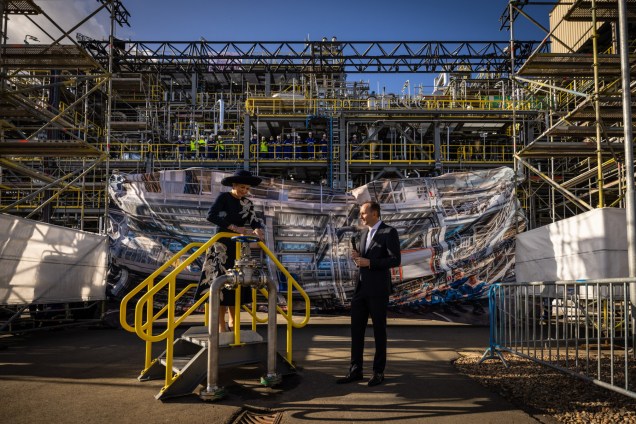
CEO Tom Van Aken and Her Majesty Queen Maxima. Source: Avantium
Avantium N.V., a leading company in renewable and circular polymer materials, signed a joint development agreement with Amcor Rigid Packaging USA, a leader in responsible packaging solutions. This partnership aims to explore the use of Avantium’s plant-based polymer PEF – branded as releaf® – in rigid containers for various products, including food, beverage, pharmaceutical, medical, home, and personal care.