
The French energy ministry issued a decree on Dec. 31 that raised the maximum level of biofuels in diesel sold at services stations in France to 8 percent by volume, higher than the EU-agreed limit of 7 percent.
The French energy ministry issued a decree on Dec. 31 that raised the maximum level of biofuels in diesel sold at services stations in France to 8 percent by volume, higher than the EU-agreed limit of 7 percent.
Finnish dairy producer, Valio, becomes the first company in the world to sell products to consumers in carton packaging made entirely from plant-based materials. Consumers are able to buy these packages at retail shops in Finland from this week.

Avantium, a leading technology company specialized in the area of advanced catalytic research and renewable chemistry, announces today the successful sale of its crystallization systems business to the Technobis Group, a group of companies providing development and supply of high-tech instruments and modules for companies worldwide.

According to a new report by Allied Market Research titled “Global Second Generation Biofuels -Size, Industry Analysis, Trends, Opportunities, Growth and Forecast, 2013 – 2020”, the global second generation biofuels (Advanced Biofuels) market would reach $23.9 billion by 2020, registering a CAGR (Compound Annual Growth Rate) of 49.4% during 2014 – 2020.


North America’s advanced biofuel industry reached a production capacity of more than 800 million gallons in 2014, up from the previous year and almost double the capacity in 2011, according to a new market report unveiled yesterday by the national nonpartisan business group Environmental Entrepreneurs (E2), a nonpartisan, national community of business leaders who promote sound environmental policies that grow the economy.

In Ireland a multi-disciplinary research team, led by Teagasc (Agriculture and Food Development Authority), and including the Technology Centrefor Biorefining and Bioenergy (TCBB) at NUI Galway, Crop Science & Biosystems Engineering at UCD and the Environmental Sustainability & Health Institute at Dublin Institute of Technology, has been funded by a 2014 DAFM/Stimulus research grant to address how Ireland can maximise national income, exports and job creation thanks to the bioeconomy.
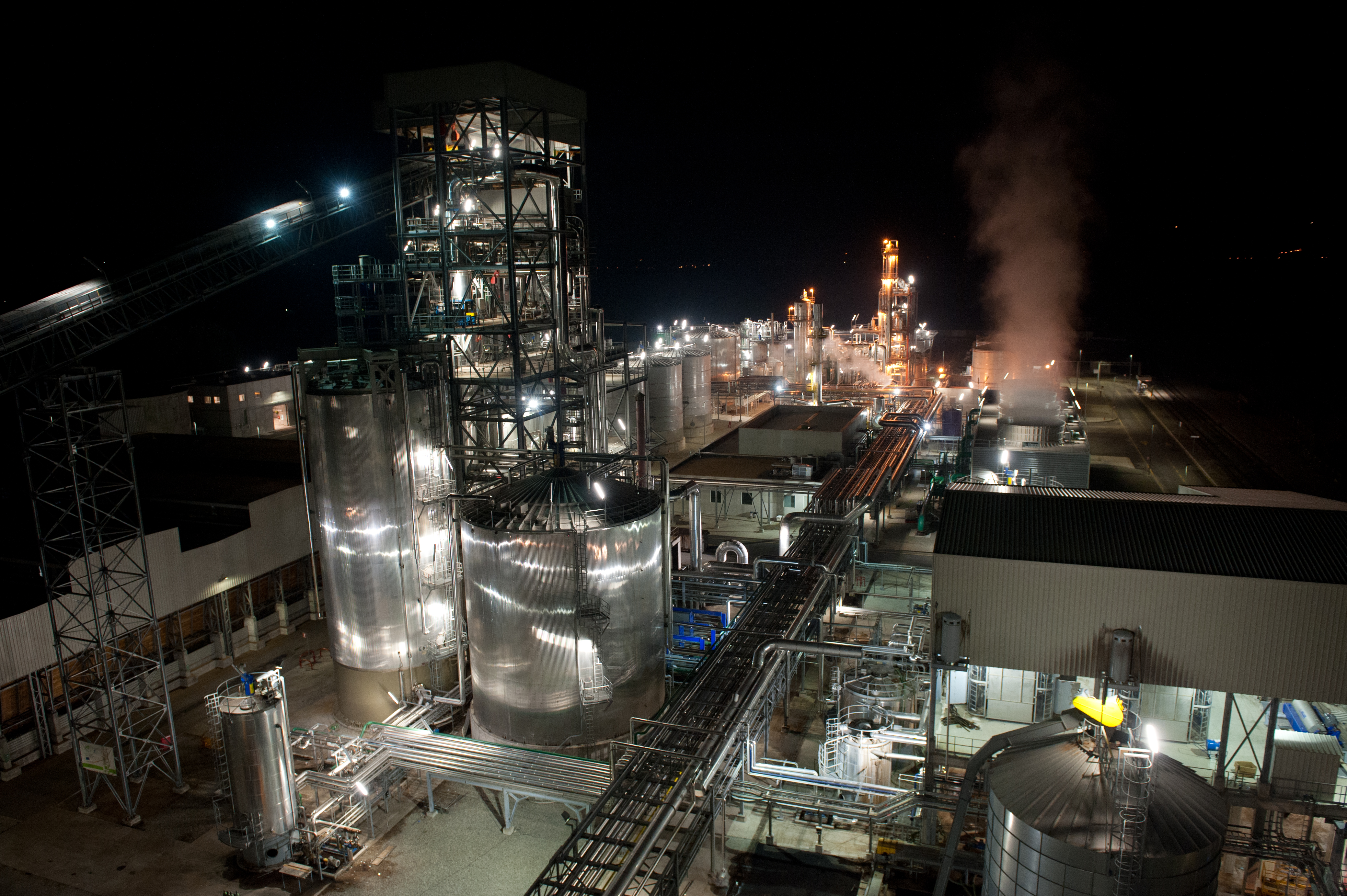
In addition to Italy, Brazil, Malaysia and China, also Slovak Republic will have a biorefinery to produce second-generation bioethanol, which will use Proesa technology developed by the Mossi Ghisolfi Group. Biochemtex and Beta Renewables signed a definitive agreement with Energochemica SE – a Slovakian chemical and power industry holding company – for the construction of a 2nd Generation Ethanol plant and the annexed Energy Block for the generation of power and steam.

Evolva Holding SA has completed the placing of all shares earmarked to satisfy certain liabilities and transaction expenses related to the Allylix acquisition, a privately held yeast fermentation company with a focus on high-value ingredients, as announced on 16 December 2014. A total of 6.1 million shares were sold between 16 and 19 December. One Swiss investment fund acquired a block of five million shares. The transaction has no impact on the number of outstanding Evolva shares.
Denmark’s Novozymes , the world’s largest enzymes producer, will stick to its plans to develop transportation fuel made from agricultural waste, despite an oil price rout that has left oil-based products cheaper for consumers. Some analysts have expressed concern that a lower crude oil price might dampen investor interest in alternatives, but Novozymes said on Thursday that it aims to provide enzymes to 15 advanced bioethanol plants by 2017, up from five, generating 1 billion Danish crowns ($165.7 million) in revenue.

