The BMW Group has chosen to use BASF Coatings’ CathoGuard® 800 ReSource e-coat at its plants in Leipzig, Germany, and Rosslyn, South Africa, and the iGloss® matt ReSource clearcoat throughout Europe. Using these more sustainable product versions for vehicle coatings enables CO2 avoidance of around 40% per coating layer; this will reduce the amount of CO2 emitted in the plants by more than 15,000 metric tons by 2030.
With a new project organization, BASF is bundling and accelerating its extensive cross-company activities to reduce its CO2 emissions by 25 percent by 2030 compared with 2018 and become climate neutral by 2050. The unit, called “Net Zero Accelerator”, focuses on implementing and accelerating projects relating to low-CO2 production technologies, circular economy and renewable energies. “With the new project organization, we are continuing to accelerate and create more powerful structures within BASF to achieve our ambitious goals,” said Martin Brudermüller, Chairman of the Board of Executive Directors of BASF SE. “This further step demonstrates the determination to drive forward our transformation to a climate-neutral company.”
The production processes of the most important basic chemicals are responsible for around 70 percent of the greenhouse gas emissions in the chemical industry. “BASF experts – the German chemical giant claims – are working intensely on new technologies to substantially reduce emissions in these processes. The company has bundled all of this work under the roof of its ambitious Carbon Management Program”.
BASF yesterday notified Avantium of its exit from their Synvina joint venture, effective 15 January 2019. Avantium continues to disagree with BASF’s interpretation of the joint venture agreement. The two companies are still discussing the terms and conditions of an exit.
“Avantium is a big story in the bioeconomy, but the relationships with big companies as investors are not easy”. To say it at the Sustainable & Circular Bioeconomy Conference in Brussels on October 22 was Jos Peeters, managing partner, founder and director of Capricorn Venture. Indeed, Avantium and BASF are in a dispute about the future of their Synvina joint venture. The companies disagree on the timing for the fulfilment of the criteria to invest in the commercial-scale plant for FDCA (furandicarboxylic acid).
The chemical giant BASF and bse Engineering have signed an exclusive joint development agreement for BASF to provide custom made catalysts for a new chemical energy storage process. This process will enable economically viable transformation of excess current and off-gas carbon dioxide (CO2) into the chemical energy storage methanol in small-scale, delocalized production units.
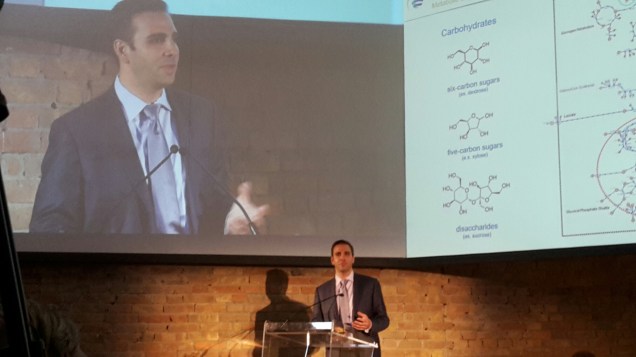
Christophe Schilling, CEO of Genomatica, at the Grand Opening of Mater Biotech’s plant in Bottrighe di Adria, Italy
“Biotech is becoming increasingly important to the mainstream chemical industry as the demand for more sustainable solutions intensifies. Biotech is especially well-suited to help with some of the industry’s biggest challenges”. To say it – in this exclusive interview with Il Bioeconomista – is Christophe Schilling, founder and CEO of Genomatica, a widely-recognized bioengineering leader for the chemical industry. The San Diego-based biotechnology company develops and licenses bio-based manufacturing processes for the production of intermediate and basic chemicals.
Since being named CEO in May 2009, Christophe Schilling has led Genomatica to widespread recognition as a leader in industrial biotechnology, with a commercialized first process, top-tier licensees, strong investors and an unrivaled string of awards for engineering (Kirkpatrick), science (EPA Presidential Green Chemistry), industry leadership (voted #1 Hottest three years in a row by Biofuels Digest), and company culture (The Scientist as a Best Place to Work). Schilling frequently speaks on industry trends at major conferences and serves as a member of the World Economic Forum Global Agenda Council on Biotechnology.
BASF and the Dutch leading chemical technology company Avantium yesterday announced that they have established a joint venture (JV) called Synvina for the production and marketing of furandicarboxylic acid (FDCA) produced from renewable resources (fructose from plants as feedstock rather than conventional oil derivatives), as well as marketing of polyethylenefuranoate (PEF), based on this new chemical building block.
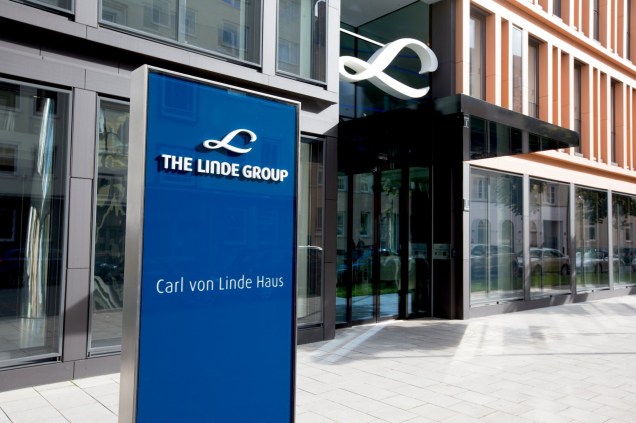
Linde AG Head Office, Munich, Germany Exterior of Carl von Linde Haus, Klosterhofstrasse 1
German chemical colossus Basf and The Linde Group, one of the leading gases and engineering companies in the world, successfully completed a joint pilot project to improve capture of carbon dioxide (CO2) from flue gas at a coal fired power plant at the National Carbon Capture Center (NCCC). The NCCC is a U.S. Department of Energy (DOE) research facility managed and operated by Southern Company, in Wilsonville, Alabama. Since January 2015, the project operated a pilot plant under a cooperative agreement with DOE’s National Energy Technology Laboratory (NETL). Based on the successful completion, Basf and Linde will begin larger-scale testing and explore commercial opportunities.
The German chemical giant BASF and the Dutch leading chemical technology company Avantium today announced that they have signed a letter of intent and entered into exclusive negotiations to establish a joint venture (JV) for the production and marketing of furandicarboxylic acid (FDCA) produced from renewable resources, as well as marketing of polyethylenefuranoate (PEF), based on this new chemical building block.



 IL BIOECONOMISTA