 Waste can be base of new bioplastics. There are many waste resources hidden in our communities. Municipal solid waste (MSW), agricultural residues and sewage sludge from water treatment plants contains lots of reusable carbon fractions. To recover them means recovering a valuable product as well as preserving the environment. The European Commission is working in order to develop the Synpol (“Biopolymers from syngas fermentation”) project, that is funded under the Food, agriculture and fisheries, and biotechnology Theme of the EU’s Seventh Framework Programme (FP7) to the tune of € 7.5 million.
bioeconomy
Versalis and Genomatica together for the production of butadiene from non-food biomass
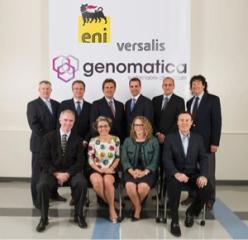 Versalis (Group Eni) and Genomatica announced the signing of a definitive joint development and licensing agreement to establish a technology joint venture for bio-based butadiene.
The two companies will work together to develop a complete ”end-to-end’ process for the production of butadiene from non-food biomass.
The resulting process will be licensed across Europe, Asia and Africa by the newly-created joint venture. Future Licensees of the process, including Versalis, will provide the capital required for the construction and operation of their own plants, and be responsible for the use and sale of the resulting butadiene.
Versalis will provide over $20 million in funding to Genomatica to support development of the integrated end-to-end process. It will also aim to be the first to license the process and build commercial plants.
European Bioplastics publishes data on land-use for bioplastics
 The surface required to grow sufficient feedstock for today’s bioplastic production is less than 0.006 percent of the global agricultural area of 5 billion hectares. This is the key finding published by European Bioplastics (the association representing the interests of Europe’s bioplastics’ industry), based on figures from the Food and Agriculture Organization of the United Nations (FAO) and calculations of the Institute for Bioplastics and Biocomposites (IfBB, University Hannover, Germany).
In a world of fast growing population with an increasing demand for food and feed, the use of feedstock for non-food purposes is often debated controversially. The new brochure “ Bioplastics- facts and figures” published by European Bioplastics, moves the discussion on to a factual level.
Of the 13.4 billion hectares of global land surface, around 37 percent (5 billion hectares) are currently used for agriculture. This includes pastures (70 percent, approximately 3.5 billion hectares) and arable land (30 percent, approximately 1.4 billion hectare).
UK’s Biome Bioplastics to investigate new source of organic chemicals for bioplastic manufacture
 The UK’s innovation agency, the Technology Strategy Board, has awarded a grant to a consortium led by Biome Technologies, to investigate a bio-based alternative for the oil derived organic chemicals used in the manufacturer of bioplastics.
The research will be undertaken by the group’s bioplastic division Biome Bioplastics, one of the UK’s leading developers of natural plastics, in conjunction with the University of Warwick’s Centre for Biotechnology and Biorefining.
The £150,000 grant (approximately 215,000 €) is part of the Technology Strategy Board’s ‘Sustainable high value chemical manufacture through industrial biotechnology’ technical feasability competition, which funds projects that apply sustainable bio-based feedstocks and biocatalytic processes in the production of chemicals.
Sprin Technologies: Trieste’s response to the Danish giant Novozymes
 “Currently what happens is that innovation created in Italy is then exploited abroad, due to a lack of direct access to on-site manufacturing facilities or industrial pilot plants. Closer cooperation between SMEs and large companies could accelerate the scale-up and industrialization steps, which often represent demanding investments for SMEs and –in particular at this rather difficult economical stage that translate in very unlikely access to credit, making it not always affordable”.
To say it is Sara Cantone, co-founder and Chief Operating Officer of Sprin, a spin-off of the University of Trieste founded in December 2007 that operates in the research, development, production and commercialization of advanced products for implementing sustainable chemical processes. In particular, Sprin – that since 2010 has had the participation of Venture Capital, AlAdInn Venture – is focused on the production of immobilized enzymes and the supply of services for the development of bio-catalyzed processes. With Cantone, we talk about the bioeconomy and in particular the role played by the enzymes in its development.
Interview by Mario Bonaccorso
New enzyme reduces the cost of cellulosic sugar production for biofuels and bio-based chemicals
 Codexis, Inc., a developer of engineered enzymes for pharmaceutical, biofuel and chemical production, announced during the World Biofuels Conference in Rotterdam (The Netherlands) the launch of CodeXyme 4 and CodeXyme 4X cellulase enzyme packages for use in producing cellulosic sugar for production of biofuels and bio-based chemicals.
Codexis’ latest generation of advanced cellulase enzymes, CodeXyme4 for dilute acid pretreatments and CodeXyme 4X for hydrothermal pretreatments, exhibits excellent performance, converting up to 85% of available fermentable sugars at high biomass and low enzyme loads. Combined with high strain productivity using the CodeXporter enzyme production system, this allows for a cost-in-use that the company believes will be among the lowest available once in full-scale commercial production.
Marine animal tunicates as a renewable source of biofuel
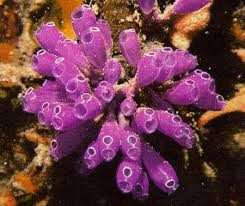 A group of researchers at the University of Bergen (UiB) and Uni Research (Norway) – engaged in research and development in the fields of marine biology, the environment, climate, petroleum, culture and the social sciences – have found that a certain type of tunicate – ascidiacea – can be used as a renewable source of biofuel and fish food. This is particularly good news for the growing aquaculture industry, which for years has struggled to find enough quality feed for its fish. There also is the prospect of reducing emissions from traffic.
It is the cellulose, the protein, and the Omega-3 fatty acids in the ascidiacea that is the cause for its many uses. Its mantle consists of cellulose, which is a collection of sugars. When cellulose is cleaved, one can obtain ethanol. And ethanol can be used for biofuel in cars. The animal’s body consists of large amounts of protein and Omega-3. This can be used for fish feed, says professor Eric Thompson at UiB’s Department of Biology.
Guayule-based natural rubber materials for Pirelli’s tire production
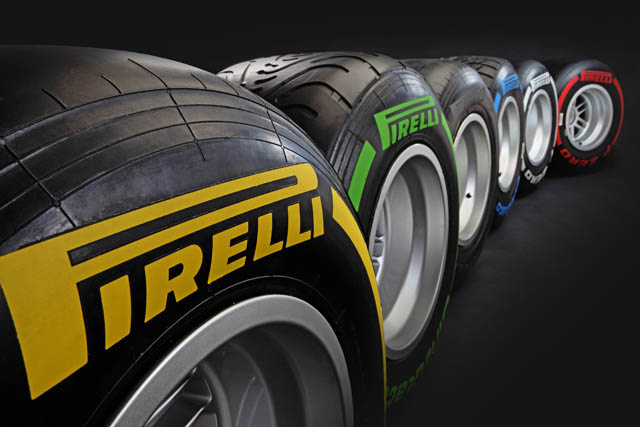 Versalis (Eni) and Pirelli have entered into a Memorandum of Understanding (MoU) to kick off a joint research project for the use of guayule-based natural rubber in tire production.
The research project will run over a period of three years. On an exclusivity basis, Versalis will provide an innovative range of guayule-based natural rubber materials, while Pirelli will carry out trial tests to validate the performance of the materials for tire production.
As soon as new industrial quantities become available, Versalis will supply Pirelli with guayule-based natural rubber to complement the current set of synthetic rubber that Versalis is already supplying to Pirelli for the production of conventional tires.
The thistle, a new resource for the bioeconomy
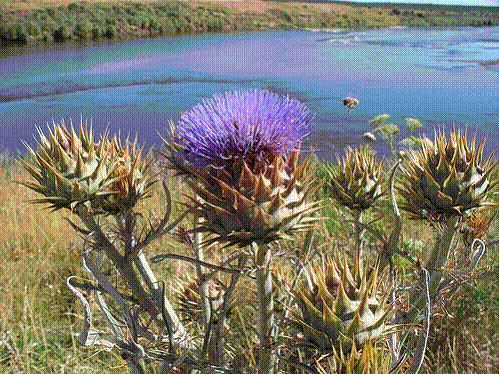 From thistle a new era for the agricultural and industrial value chains. An innovative business model, which combines the industrial needs of Matrica, a joint venture between Versalis-Eni and Novamont, with those of farmers located in northern Sardinia. An agro industrial relationship model, aimed at creating a integrated value chain rooted in the territory in synergy with local biodiversity. These the key issues discussed last Monday in Porto Torres at the second technical meeting on thistle which was attended by numerous high level representatives of the Sardinian agricultural world and by representatives of research and local institutions, including the mayor of Porto Torres, Beniamino Scarpa, and the dean of the University of Sassari, Attilio Mastino.
Bioplastics: the Italian holistic approach to bioeconomy
 Brussels spoke Italian last Wednesday. On the eve of the official presentation of the “Green paper on plastic waste” by the European Commissioner for the Environment Janez Potočnik, Kyoto Club presented on 6 March the European Parliament with “Bioplastics: A case study of Bioeconomy in Italy. A smart chemistry for a smarter life in a smarter planet”, a book – edited by Walter Ganapini – on the Italian experience of regulating the distribution of disposable plastic bags, in order to reduce environmental pollution.
The book presents the “Italian case” of bioeconomy, whose roots lie in the evolution of research and innovation in the biodegradable bioplastics sector on the one hand, and the virtuous development of the quality compost industry and separated municipal waste collection on the other. The connections between these two developments over the years have set in motion a whole series of virtuous modes of action and collaboration initiatives between various stakeholders (enterprises, institutions, research bodies, trade associations, consultancy companies and regional authorities) generating a connective tissue that is ideal to promote a change in the development model, putting the efficient use of resources at the centre.
 IL BIOECONOMISTA