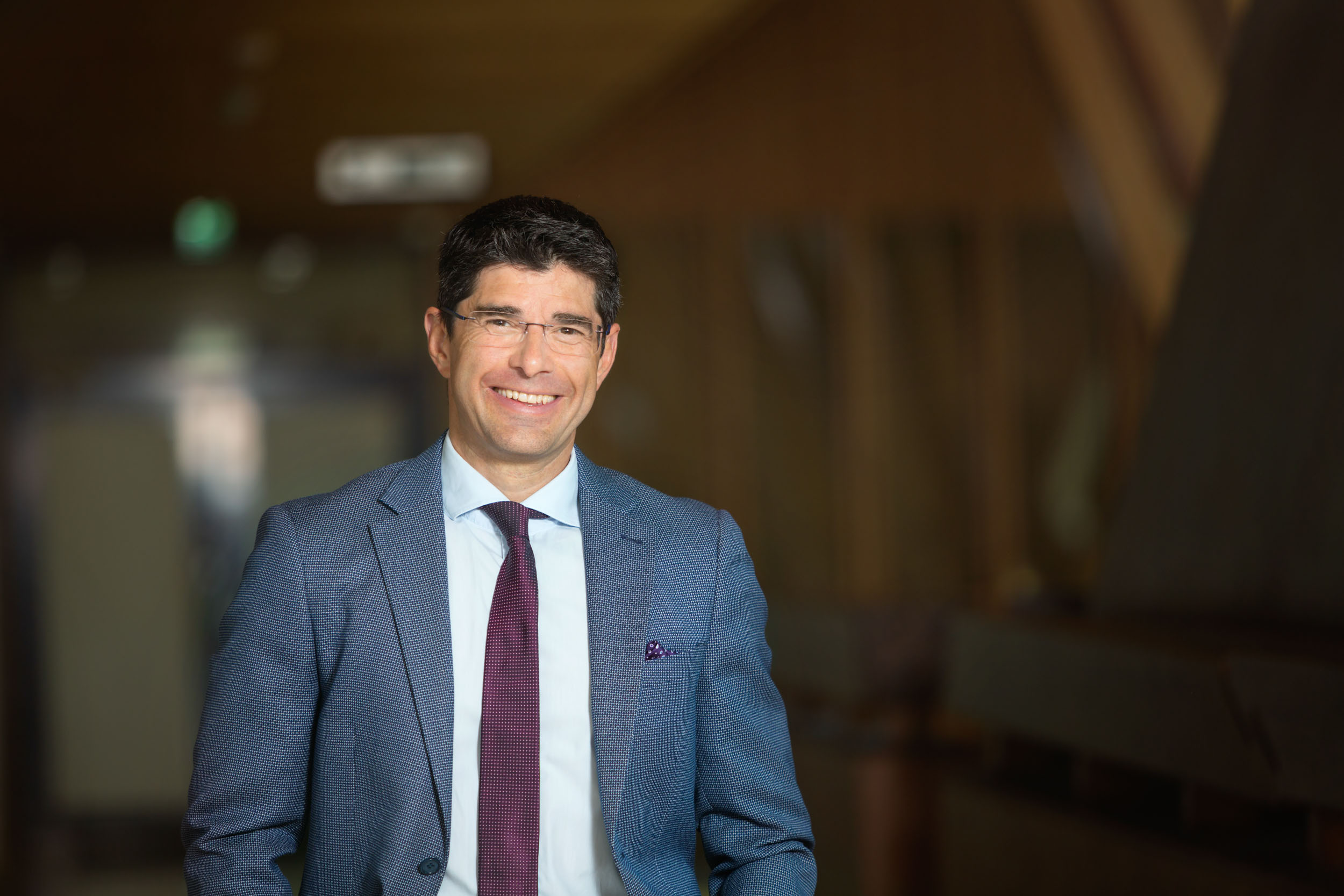
“The bioeconomy can be a catalyst for sustainable systematic change and transition, tackling key economic, societal and environmental challenges”. To say it – in this exclusive interview with IlBioeconomista – is Nicolò Giacomuzzi-Moore, Executive Director ad interim of CBE JU, Circular Bio-based Europe Joint Undertaking.
EFI Director Marc Palahí, Joensuu 21.6.2021. Photo: Johanna Kokkola
“One of the greatest advantages of the circular bioeconomy is the fact that it relies on renewable biological resources and renewable energy which we can develop, manage and process in Europe, which is not a continent rich in fossil resources or rare earth materials.” To say it – in this exclusive interview with Il Bioeconomista – is Marc Palahí, director of the European Forest Institute. He talks about circular bioeconomy, the role played by the forest-based sector, the Circular Bioeconomy Alliance founded by His Majesty King Charles III (formerly The Prince of Wales) and the next event focused on Biocities, which will take place in Rome on April 20.
Berlaymont, European Commission’s Headquarter in Brussels
The Commission presented last week a package of European Green Deal proposals to make sustainable products the norm in the EU, boost circular business models and empower consumers for the green transition. As announced in the Circular Economy Action Plan, the Commission is proposing new rules to make almost all physical goods on the EU market more friendly to the environment, circular, and energy efficient throughout their whole lifecycle from the design phase through to daily use, repurposing and end-of-life.
“I think the overall policy framework is clear about the strategic role of bio-based industries in achieving the EU sustainability objectives. There is also clarity about the direction of EU support in the coming decade.” Philippe Mengal, executive director of the Bio-based Industries Joint Undertaking talks to Il Bioeconomista.



 IL BIOECONOMISTA