
The bioeconomy is alive and is set to grow. This is the strong message coming from Vicenza, Italy, where last Thursday and Friday was held the sixth edition of IFIB, the Italian Forum on Industrial Biotechnology and Bioeconomy.
About 300 participants. Among them some of the big global companies active in the bioeconomy: Braskem, Dow, Novamont, NatureWorks, Mossi Ghisolfi, Clariant, GFBiochemicals and Carlsberg. Innovative start-ups, universities and research centers, as well as clusters such as Clib2021 (Germany), IAR Pole (France) and Bio-based Delta (Netherlands). And again: OECD, European Investment Bank, German Bioeconomy Council.
“Sustainability – Rafael Cayuela, Chief Economist at Dow Chemical, stated – is a huge technological challenge but also the single largest business opportunity of this generation”.


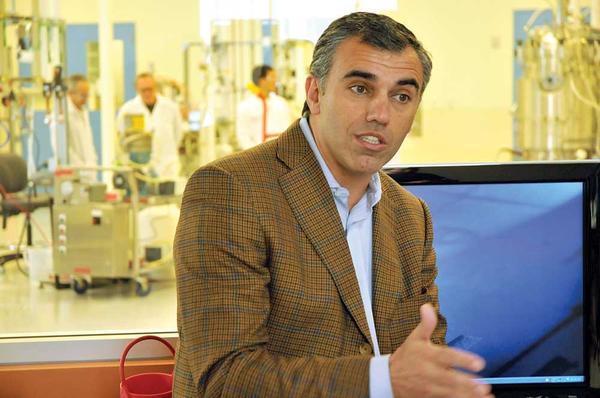
 “The bioeconomy can and should be the path for the re-industrialization of Brazil, fostering much needed innovations and development of products and processes that will fast-track the establishment of the this new norm in a global scale”. To say this – in this exclusive interview with Il Bioeconomista – is Bernardo Silva, Executive President at Brazilian Industrial Biotechnology Association (in Portuguese ABBI – Associação Brasileira de Biotecnologia Industrial), a trade association that brings together companies and institutions developing and using microorganisms and its derivatives to deliver renewable products for industries and consumers worldwide. The founding members of ABBI are Amyris, BASF, BioChemtex, BP, Centro de Tecnologia Canavieira, Dow, DSM, DuPont, GranBio, Novozymes, Raízen and Rhodia. With Silva we talk about Brazilian bioeconomy and the country’s national strategy to support the field. “The ambition to establish a vibrant bioeconomy in Brazil, which values our comparative advantages and is able to realize the opportunities arising from this new model of development, entails a joint effort between government, business and civil society to discuss, define and practice a plan that ensures the alignment of policies in place and long-term strategies, paving the way for Brazil fulfill its role as a leader a global bio-based economy.”
 IL BIOECONOMISTA