There is persistent concern that biofuels compete with food production, drive up food prices and price volatility and so cause hunger.
Many people, including very dignified authorities, accept this simple causality chain. The reality is far more complex.
Michael Carus, managing director of the nova-Institut
“A comprehensive analysis of hurdles carried out by nova-Institut shows that the RED (which will in future be associated with the FQD – Fuel Quality Directive 9870 – in the transport sector) is one of the main causes of the longstanding and systematic discrimination between material and energy uses. The RED hinders the development of material use and therefore that of the whole bio-based economy. Unfavorable framework conditions combined with high biomass prices and uncertain biomass supplies deter investors from putting money into bio-based chemistry and plastics – even though these would produce higher value and greater resource efficiency”. To say it is Michael Carus, physicist and managing director of the nova-Institut, the German private and independent Scientific Institute specialized in the bioeconomy, one of the most prestigious at the European level. In this interview with Il Bioeconomista, Carus uses the phrase “Misallocation of biomass” to define the effects of the RED (Renewable Energy Directive), since “this is blocking higher value material uses like chemicals and plastics from coming to fruition”. And explains his point of view on the first generation vs. second generation biofuels issue.
EFIB returns to Brussels. From 30th September to 2nd October the European Forum for Industrial Biotechnology and the Biobased Economy (EFIB) returns to Europe’s capital, where it was first launched 5 years ago. Since then, the event has grown tenfold in size but remains true to its goal of providing the premier meeting place for business and policy throughout the biobased value chain.
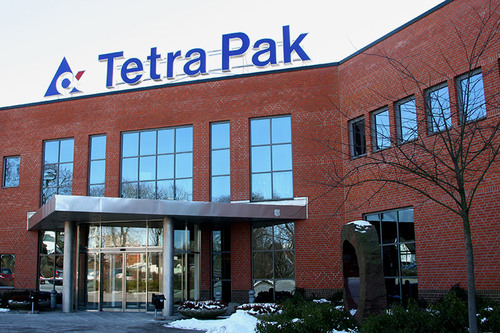
The bio-based revolution extends to the carton packaging industry. In a first for this field, Tetra Pak, the Swedish multinational giant with net sales in 2012 of 11.15 billion euros, plans to sign an agreement with Braskem, the largest thermoplastic resins producer in the Americas, for the supply of low-density polyethylene (LDPE) made from sugar cane to its packaging material factories in Brazil.
According to the Global Renewable Fuels Alliance, a global biofuels federation representing over 65% of the world’s renewable fuels production from 44 different countries, 62 countries now have biofuels friendly policies in place whose ethanol production alone has replaced the need for over 2 million barrels of crude oil per day.
A fungus and E. coli bacteria have joined forces to turn tough, waste plant material into isobutanol, a biofuel that matches gasoline’s properties better than ethanol. University of Michigan research team members said the principle also could be used to produce other valuable chemicals such as plastics.
Naples, Southern Italy. In that part of the country that governments, since the Unification of Italy, have consciously and culpably left behind. Naples, a city that is the mirror of the Italic contradictions and of a South which is struggling to emerge: Naples the Rich, Naples the Poor, Naples the Noble, Naples the Plebeian, Naples and its many colors, Naples in black like the pitch which is brought by the boats of its sea.
PRAJ-Matrix – The Innovation Center (a division of Praj Industries)
Praj Industries – the Indian global process solutions company for bioethanol, alcohol and brewery, water and wastewater – has emerged as the first Company in South Asia to set up an integrated 2nd Generation (2G) Cellulosic ethanol plant. Praj’s Executive Chairman, Pramod Chaudhari, did the groundbreaking at Shirala in Sangli District in Maharashtra (India) along with Chairman of Viraj Alcohols & Allied Industries Limited (VAAIL), Mansinghrao Naik.
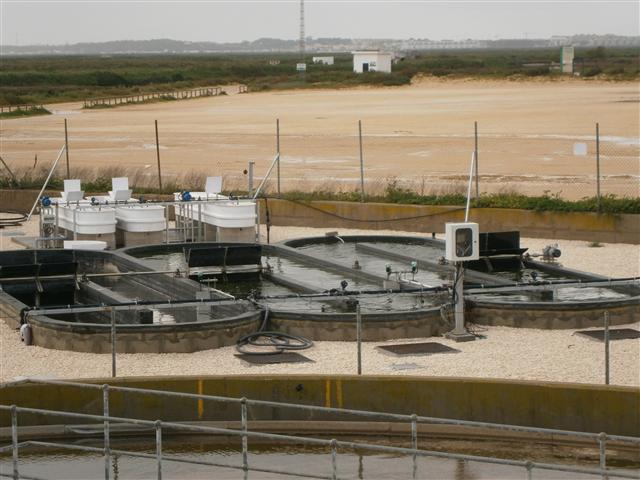
The raceways located at the Chiclana WWTP (march 2013)
A European Union-backed project to produce biofuels from algae moved a step forward last Thursday by producing its first crop of algae biomass at its site in Southern Spain. The “All-gas” project will cultivate fast-growing micro-algae by using the nutrients in wastewater and then by further processes generate biomethane which can be captured and used in transport fuel. Continue reading →
It’s a revolution in the world of plastics: plastic coming from food waste. To achieve it is an Italian company in the province of Bologna: Bio-On. The owners of the company, set-up in 2007, are Marco Astorri and Guy Cicognani, former entrepreneurs in the field of electronic components for ski passes. Where is the link? Seeing those little cards abandoned in the valley, never decomposing, Astorri wondered if they could melt, like snow in the sun.




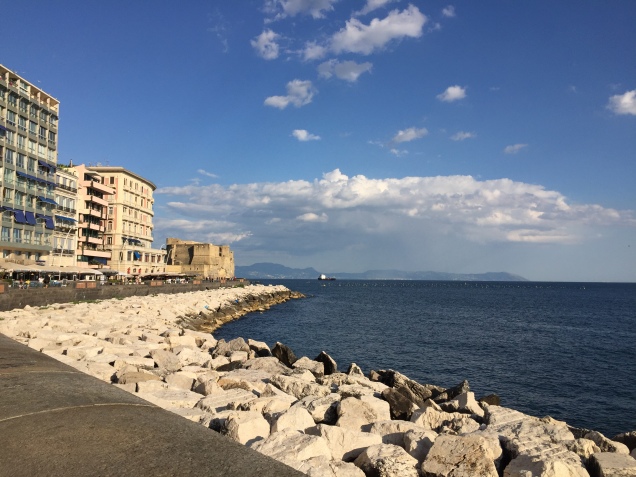 Naples, Southern Italy. In that part of the country that governments, since the Unification of Italy, have consciously and culpably left behind. Naples, a city that is the mirror of the Italic contradictions and of a South which is struggling to emerge: Naples the Rich, Naples the Poor, Naples the Noble, Naples the Plebeian, Naples and its many colors, Naples in black like the pitch which is brought by the boats of its sea.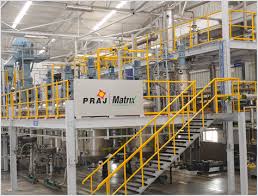

 IL BIOECONOMISTA