
Royal Dutch Shell will join a consortium of world-leading companies comprising Air Liquide, Nouryon (formerly AkzoNobel Specialty Chemicals), Enerkem and the Port of Rotterdam as a partner in Europe’s first advanced waste-to-chemicals facility in Rotterdam, the Netherlands. Shell will become an equal equity partner in the proposed commercial-scale waste-to-chemicals (W2C) project, which will be the first of its kind in Europe to make valuable chemicals and bio-fuels out of non-recyclable waste materials.
 Nouryon (formerly AkzoNobel Specialty Chemicals) and Gasunie have agreed to supply green hydrogen to BioMCN for the production of renewable methanol from CO2. The companies say it marks the next step in the sustainability of processes in the industry.

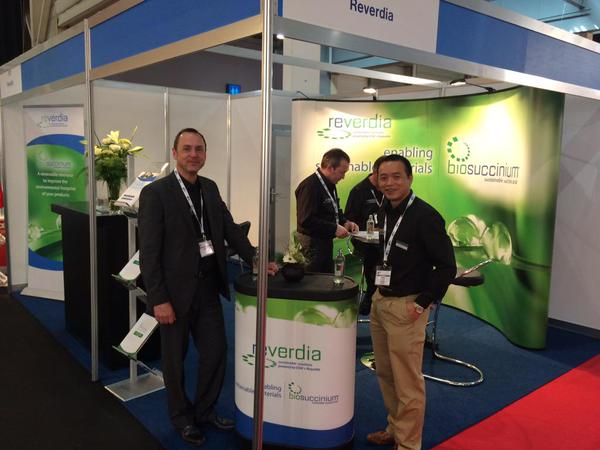 Effective 1 April 2019, the joint venture between Royal DSM and Roquette, Reverdia, will be dissolved and the partners will transfer the rights and obligations related to Reverdia’s Biosuccinium® plant in Cassano, Italy to Roquette. Under a non-exclusive license from DSM, Roquette will operate the plant and continue serving customers of Biosuccinium®. Customer service, order processing, and marketing and sales will be integrated into Roquette’s existing business to ensure a smooth transition. DSM, the original developer of the Biosuccinium® technology, will assume the role of exclusive licensor, in line with its business model in this field.
 According to a recent study conducted by Research Nester, the market for global waste to energy is expected to grow at CAGR of 8.7% during the forecast period 2018-2027. Worldwide awareness regarding depleting natural resources is major reason behind the fueling of global waste to energy market and is anticipated to generate USD 45 billion in revenue by the end of 2027. Based on technology type, the global waste to energy market is segmented into biological technology and thermal technology where thermal technology is estimated to dominate global waste to energy market in forecast period.
 IL BIOECONOMISTA