Invista launches bio-based Lycra

image
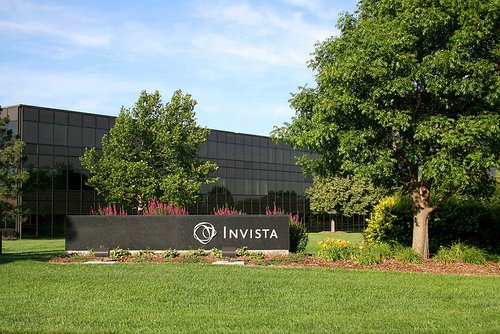
Headquarter of Invista in Wichita, Kansas

Invista, one of the world’s largest integrated producers of polymers and fibers, and owner of the Lycra brand, introduces the only commercial offering of a bio-derived spandex available globally and for use in a wide variety of apparel fabrics and garments. Approximately 70% by weight of the new Lycra bio-derived spandex fiber comes from a renewable source made from dextrose derived from corn. The use of a renewable feedstock in the making of this new Lycra bio-derived fiber results in a lower CO2 emissions footprint than spandex produced using traditional raw materials.

Continue reading

The upcoming elections are crucial for the future of the bioeconomy in the European Union

European Parliament, Brussels

From Thursday to Sunday we European Union citizens will be called to elect a new parliament. These elections are important, not only because for the first time will decide who will lead the European Commission. But mostly because the next 5 years represent a crucial point to understand whether the European Union will remain nothing more than a geographical expression (as Metternich called Italy in the Nineteenth century, before its Unification), or will be able to achieve a common economic and monetary policy, and with it a tax policy, a labor policy, etc. In one word: Policies.

Continue reading

Tetra Pak: “All of the packages we produce in Brazil are now bio-based”

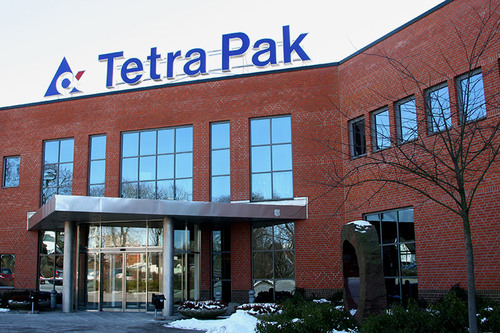
Tetra Pak Headquarter in Lund (Sweden)

Tetra Pak, the world leader in food processing and packaging solutions, headquartered in Sweden, announced that all of the packages it produces in Brazil are now using bio-based low-density polyethylene (LDPE). ​​Combined with paperboard, the use of bio-based LDPE made from sugar cane increases the content of materials from renewable sources to as much as 82% in a Tetra Brik Aseptic​ 1000ml Base package, the world’s best selling carton package range for beverages.​​

Continue reading

Dyadic launched a new enzyme to enhance paper and textile quality

image
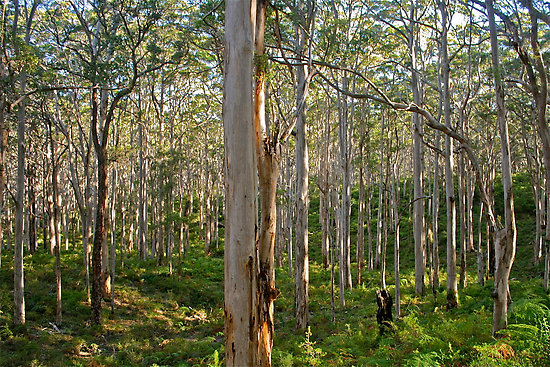
South Australian Forest

Dyadic International, a global biotechnology company focused on the discovery, development, manufacture and sale of enzymes and other proteins for the bioenergy, bio-based chemicals, biopharmaceutical, food and feed industries, announced that it has launched Fibrezyme® G4, a high performance cellulase enzyme product designed to enhance paper and textile quality, while improving the economics of our customers’ manufacturing processes.

Continue reading

Exclusive interview with Jukka Kantola, NISCluster: EU policies for the use of biomass are short-sighted

image

“At the moment focus in European policies is to endorse biomass utilization for the energy applications. This is short-sighted, as on those applications biomass does not bring the best added value. Also there is not enough biomass in Europe to meet up all energy and climate target in EU-level. Biomass is more valuable on chemical and material applications”. To say it, in this exclusive interview with Il Bioeconomista, is Jukka Kantola, CEO of NISCluster, a Finnish private bioeconomy company with a focus on the woody biomass. With Kantola we talk about the bioeconomy in Finland, the EU policies and the different uses of biomass.

Interview by Mario Bonaccorso

Continue reading

Air travel is more biobased: Lufthansa will test Gevo’s isobutanol-derived jet fuel

image

Air travel is more bio-based. Gevo, Inc., the world’s only commercial producer of renewable isobutanol, announced last Tuesday that it has come to an agreement with Lufthansa to evaluate Gevo’s renewable jet fuel with the goal of approving Gevo’s alcohol-to-jet fuel (ATJ) for commercial aviation use. Lufthansa’s testing is being supported through work with the European Commission. 

Continue reading

US study: biofuels from the leftovers of harvested corn plants worse than gasoline for global warming in the short term

US Energy Secretary Ernest Moniz

“Removal of corn residue for biofuels can decrease soil organic carbon  and increase CO2 emissions because residue C in biofuels is oxidized to CO2 at a faster rate than when added to soil. Net CO2 emissions from residue removal are not adequately characterized in biofuel life cycle assessment”. A $500,000 study – paid for by the U.S. federal government and released last Sunday in the peer-reviewed journal Nature Climate Change – concludes that biofuels made with corn residue release 7% more greenhouse gases in the early years compared with conventional gasoline.

Continue reading

Bio-based chemicals: Rivertop Renewables has raised $26 million from Cargill and others investors

Missoula, Montana: here is located the headquarter of Rivertop

Rivertop Renewables, a U.S. producer of novel chemicals derived from natural plant sugars, based in Montana, has raised $26 million from Cargill (an international producer and marketer of food, agricultural, financial and industrial products and services), First Green Partners (an enterprise focused on commercializing advanced technologies in the carbon value chain) and existing investors.

Continue reading

The biopolymers market is expected to generate global revenue of 3.67 billion US dollars by 2018

Novamont's Headquarter in Novara (Italy)
Novamont’s Headquarter in Novara (Italy)

The biopolymers market growing at a compound annual growth rate of 14.5% is expected to generate global revenue of 3,668.6 million US dollars by 2018. It’s what emerges from the new Report on “Biopolymers/Bioplastics Market by Type (Bio PET, Bio PE, PLA, PHA, Bio PBS, Starch Blends, and Regenerated Cellulose), by Application (Packaging, Bottles, Fibers, Agriculture, Automotive, and Others) & by Geography – Trends & Forecasts to 2018” published by Research and Markets, the Irish company which is the leading source for international market research and market data.

Continue reading

Scotland aims at playing a leading role in the £360 bln global industrial biotechnology market

John Swinney, Finance Secretary of Scotland

A new innovation centre for industrial biotechnology is forecast to increase industrial biotechnology-related turnover to up to £3 billion by 2030, create 1500 jobs within five years and put Scotland at the forefront of a global transformation. Funded by the Scottish Funding Council and supported by Scottish Enterprise and Highlands & Islands Enterprise, the new Industrial Biotechnology Innovation Centre (IBioIC) – hosted at the University of Strathclyde – is a key element of the National Plan for Industrial Biotechnology – Towards a Greener, Cleaner 2025. It brings together academic and private sector partners to play a leading role in the potential £360 billion global industrial biotechnology market. Industrial biotechnology is the use of biological substances, systems and processes to produce intermediate and final products such as pharmaceuticals, chemicals, materials and energy – both cost-effectively and with minimal adverse environmental impact.

Continue reading