
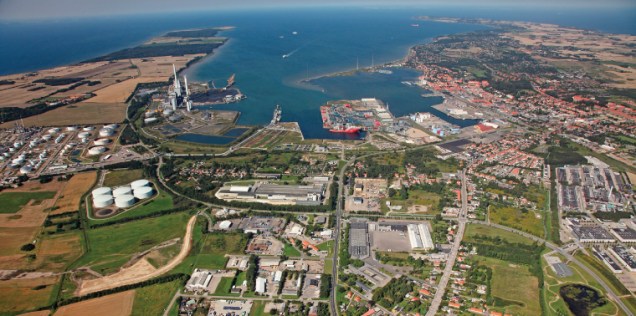
Avantium, the Dutch forerunner in renewable chemistry, locates a new pilot biorefinery at Chemie Park Delfzijl, in the Netherlands. Avantium and chemical giant AkzoNobel have signed a contract for the pilot plant accommodation and the supply of various facilities and services. The pilot plant will validate the technical and economic feasibility of Avantium’s Zambezi process, which aims to convert woodchips and other second generation biomass into raw materials for the chemical industry. This is an essential step in scaling up the technology from lab to commercial operations.
 Arkema will invest some 300 million euros over five years in the biosourced polyamide 11 chain. This major investment will enable the French chemical group to increase by 50% its polyamide 11 global production capacities. The project falls in line with Arkema’s strategy to speed up its development in advanced materials, one of the key pillars of its future growth, sustained by a unique portfolio of innovations around the main sustainable development trends.


 ExxonMobil, the largest publicly traded petroleum and petrochemical enterprise in the world, and Synthetic Genomics Inc., a global leader in the fields of synthetic biology and synthetic genomics, achieved a breakthrough in joint research into advanced biofuels involving the modification of an algae strain that more than doubled its oil content without significantly inhibiting the strain’s growth.
 Used vegetable oils can be transformed into biofuels. Eni and CONOE, the Italian Consortium for the Collection and Treatment of Used Oils and Fats, signed a Memorandum of Understanding to promote and increase the collection of vegetable oils that will supply Eni’s Venice biorefinery and, from 2018, Gela. The Minister for the Environment and the Protection of Land and Sea Gian Luca Galletti and the Director General for Energy Supply Security and Infrastructure of the Ministry of Economic Development Gilberto Dialuce were present at the event.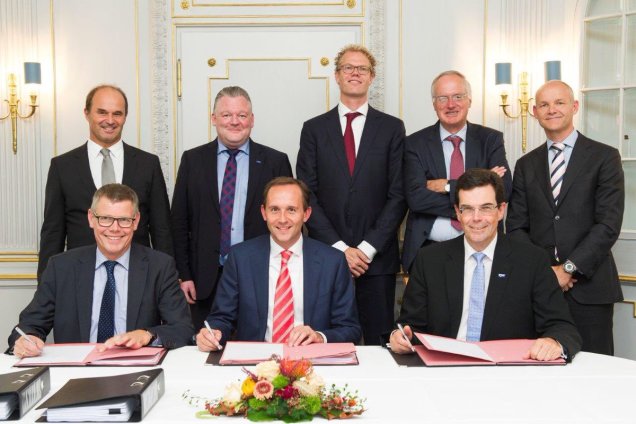
 IL BIOECONOMISTA