Bio-on produced bioplastic used in this new version of Flos’ Miss Sissi lamp
The bioeconomy is innovation, the result of the skills and passion of researchers and managers able to create value and new high-qualified jobs. Starting from this year, Il Bioeconomista launches a new initiative: we asked a panel of world bioeconomy experts to tell us the Chief Executive Officers that stood out as the most innovative in 2014.
Virent has successfully produced bio-paraxylene, bio-toluene and bio-benzene at demonstration scale and has confirmed that all three chemicals meet typical industry specifications. Virent has also produced sample volumes of bio-Aromatic 100, an aromatic solvent widely used in paint, industrial, and agricultural solvent applications. The company has broadened its product offerings for renewable chemicals through this process.
Missoula, Montana: here is located the headquarter of Rivertop
Rivertop Renewables, a Montana-based producer of novel performance chemicals derived from all natural resources, has begun construction of its first commercial plant, located at DanChem Technologies, Inc.’s (DTI) facility in Danville, Virginia.
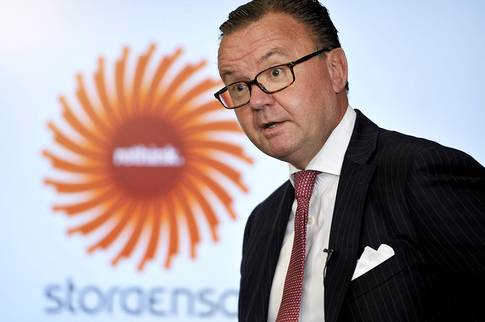
Stora Enso, the Finnish pulp and paper manufacturer, will concentrate its new biomaterials business development in an Innovation Centre that will be located in the Stockholm area in Sweden. The centre, which will open during the second quarter of 2015, will host research, application, business development, and strategic marketing. The centre will boost innovation by identifying business opportunities in the renewable materials market and linking them with leading innovation and research centres in business and academia. It will be staffed with Stora Enso employees currently working in Sweden, Finland and Germany. It will initially employ a little less than 60 people and is estimated to employ around 75 people by year end 2015. Stora Enso’s other R&D units are not affected by this change and will remain in their current locations.
“At the regulatory level, US and EU are focused primarily on biofuels and neither has created significant incentives for bio-based chemicals that play an equally important role in the bioeconomy. The US has made tremendous investments in biofuel technology development, in pilot and demonstration biofuel facilities, and in feedstock production, logistics and infrastructure. The EU appears to be investing more in the development of Bioproducts than the US at the moment.” To say it, in this exclusive interview with Il Bioeconomista, is Jennifer Holmgren, Chief Executive Officer of Lanzatech, the company, set up in 2005 in New Zealand and based now also in the US, which is revolutionizing the way the world thinks about waste carbon by treating it as an opportunity instead of a liability. LanzaTech’s novel gas-to-liquid technology has opened up vast new sources for making low-carbon chemicals and fuels that displace petroleum without the environmental concerns associated with crop- and land-based bioproducts. This flexible technology has the potential to disrupt the current highly centralized petroleum-based energy system by enabling regional production of low-cost, energy from local wastes and residues.
UPM and WWF Finland have engaged in a dialogue on the status of wood-based liquid biofuels in Finland and present a list of joint measures to be carried out to promote sustainability.
Marc Delcourt, co-founder and Ceo of Global Bioenergies
Marc Delcourt, co-founder and Chief Executive Officer of Global Bioenergies, has clear ideas: “Our aim is to take advantage of the existing infrastructures of the petrochemical industry by producing exactly the same molecules through sustainable processes. By this way, the end of oil will not mean the end of the existing industrial world”.
His company is one of the most dynamic industrial biology companies in Europe. It is developing more efficient ways to convert renewable resources such as agricultural waste, sugar and starch into chemical key building blocks and drop-in fuels, drastically decreasing C02 emissions as well as generating new jobs in rural areas.
After his scientific training (Ecole Normale Supérieure, PhD in Molecular Biology in Canada), Delcourt turns towards R&D activities in the field of bioprocesses and founds in 1997 the industrial biotech company Biométhodes. He leaves Biométhodes in 2008 to found Global Bioenergies. In this interview we talk with him about Global Bioenergies and the bioeconomy.
Biofore Concept Car premiered at the Geneva International Motor last spring. Copyright: UPM. Photographer: Sami Kulju
“Biofuels are expected to play a major role in road transport but the regulatory environment remains uncertain. Legislation is required for the EU to grow in locally produced sustainable biofuels. Therefore the rules need to extend beyond 2020. The long lasting policy processes are now creating uncertainty. Industry and investors need a stable, long term regulatory framework for biofuels”. To say this was Marko Janhunen, Vice President of Stakeholder Relations, UPM Biorefining, last Thursday in Brussels in the framework of CEPI European Paperweek, where the Finnish company presented its Biofore Concept Car, an example of how new biomaterials can be applied in the automotive industry.
Global Bioenergies, one of the few companies worldwide and the only one in Europe that is developing a process to convert renewable resources into hydrocarbons through fermentation announces having succeeded in the production of bio-sourced butadiene by direct fermentation. It is the first time ever an entirely biological production process – i.e. without any chemical step – is reported for butadiene, one of the most important petrochemical building blocks.
The Mossi Ghisolfi Biorefinery in Crescentino, Italy
The next economic development of Malaysia will be biobased. Brooke Renewables and Hock Lee Group – which has experience in manufacturing of industrial glue and plywood and has investment in oil palm plantation – have presented a Letter of Intent (LOI) to the state government, marking their intention to invest in the 2G (second generation) bioethanol and biochemical plant as the first phase of the Sarawak Biomass Hub project.







 IL BIOECONOMISTA