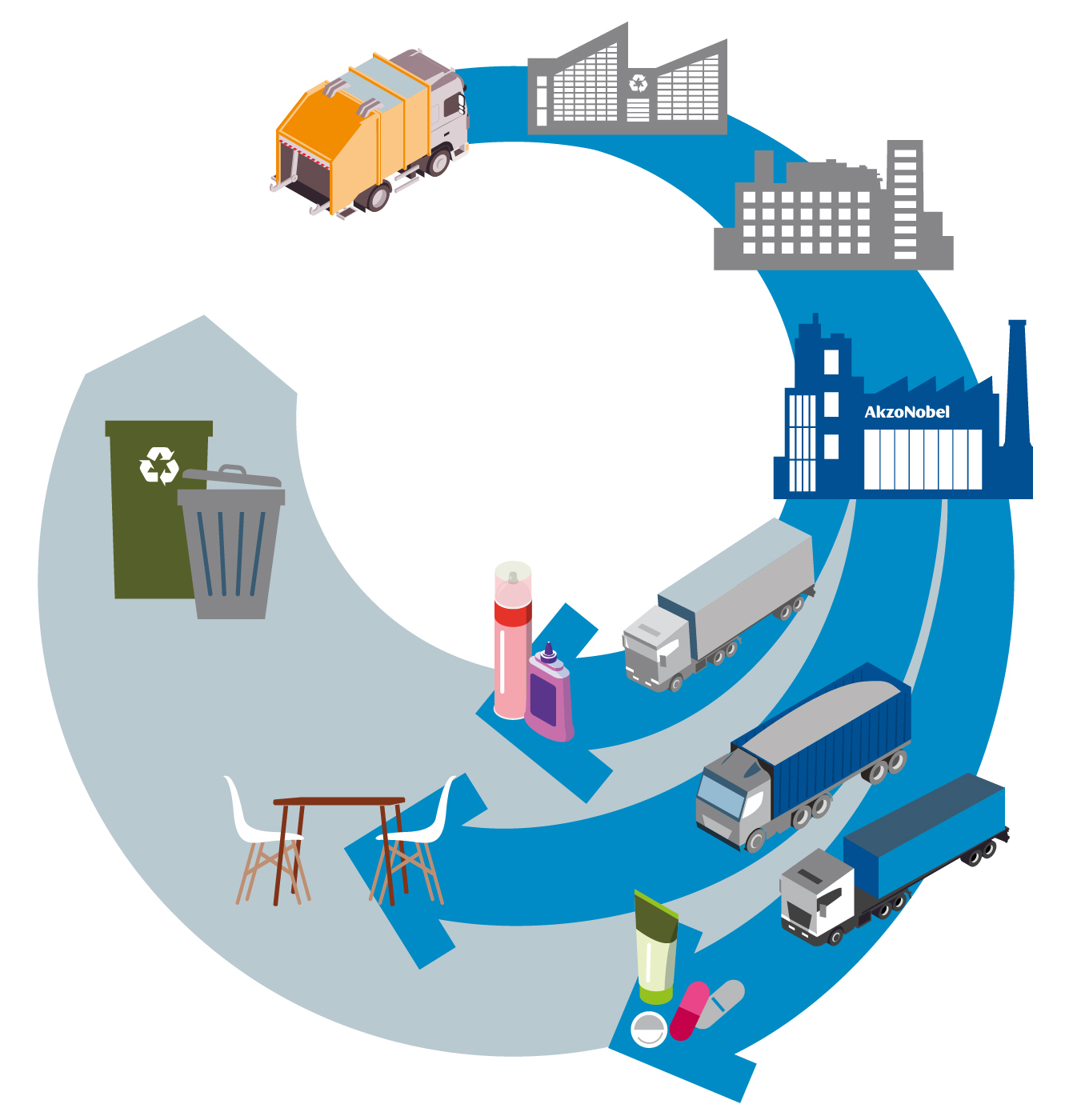
A major Dutch initiative designed to investigate how waste can be used as a raw material to produce chemicals has more than doubled in size since being launched late last year. Initially formed by AkzoNobel, Enerkem and four regional partners, the collaboration has since attracted eight more commercial parties.
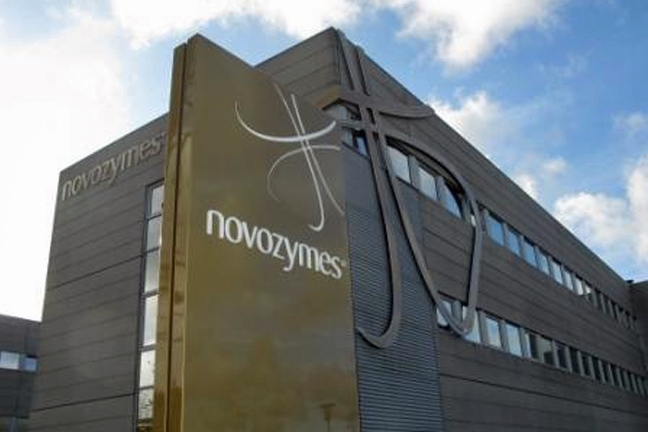
Adisseo, a world leader in nutritional solutions and additives for animal feed, and Novozymes have entered into a partnership to develop and market probiotics for poultry.
This week the global bioenergy community gathers in Vienna. From today to 4th June, more than 1,200 registered participants from 76 countries and 40 associations and International organizations will animate the 23rd European Biomass Conference and Exhibition. With over 803 presentations from 2,650 authors and co-authors, 3 parallel events and 7 workshops, the EUBCE has become a world leading event to get the latest results from top research organizations, as well as to discover the most innovative bioenergy applications from industry and to hear from international subject experts about the state of play and the policy context that are shaping this sector.
The EU-28 bioeconomy is worth 2 trillion euro, providing 19 million jobs, according to a new study by nova-Institute that Il Bioeconomista can publish in preview. The two authors of the study, Stephan Piotrowski and Michael Carus, present an estimation of employment and turnover in the European bio-based economy mainly based on available statistical information from Eurostat (referring to 2011).
“Most of the sectors – Piotrowski and Carus say – can be regarded as fully bio-based (agriculture, forestry and fishery as well as the manufacture of food products, beverages, tobacco products, paper and paper products, forest-based industry and biofuels).
As part of the 2nd Annual Sustainable Energy for All (SE4ALL) Forum, a new multi-stakeholder coalition, co-chaired by the UN Food and Agricultural Organization (FAO) and the Roundtable on Sustainable Biomaterials (RSB), announced last week its intention to speed up the development and deployment of sustainable bioenergy in order to contribute to meeting the SE4ALL goals of doubling the global use of renewable energy and ensuring universal energy access by 2030.
With the bioplastic developed by Bio-on, it is now possible to create capsules for controlled drug administration inside the human body or for gradual release of active substances in agriculture. The properties of MINERV PHA bioplastic, completely “biobased” and 100% naturally biodegradable, enable the creation of micro and nano particles, both full and hollow, in which the trapped active substance is released gradually, even after months, exploiting the biodegradability of bioplastic. In this way, it is possible to administer directly in the human body numerous types of drugs such as anaesthetics, antibiotics, anti-inflammatories, antitumor, hormones, steroids and vaccines. Cosmetic or agricultural use is equally broad.
Novozymes announced a deal to supply enzyme technology to a new biorefinery that will be built by St1 Biofuels in Kajaani, Finland. The facility will be co-located at a sawmill site, and will be the first facility in the world to use sawdust (sawdust or wood dust is a by-product of the forestry industry and is composed of fine particles of wood) from softwood as feedstock to produce cellulosic ethanol at commercial scale. The process uses steam-explosion to open up the cellulosic structures of the sawdust, followed by enzymatic hydrolysis to extract the sugars for ethanol fermentation.
For as long as we can remember, oil has been the key source to fueling factories, heavy machinery, vehicles, and airplanes. However these days, investors are looking at renewable energy producers, hoping that they would come up with sustainable solutions that could possibly work as a substitute for oil. With companies perfecting a new technique in making silicon wafers that will reportedly cut future solar power costs by 20 percent, most of those that switched to alternative markets have directed their attention toward solar energy.
Marc Delcourt, co-founder and CEO of Global Bioenergies
French biotech company Global Bioenergies and Audi announce that the first batch of renewable gasoline has been produced. It will be presented to Audi by Global Bioenergies during a press conference to be held in Pomacle on the 21st of May.
Avantium and Coca-Cola together to produce bio-based bottles
The production capacity for bio-based polymers boasts very impressive development and annual growth rates, with a compound annual growth rate (CAGR) of almost 20% in comparison to petrochemical polymers, which have a CAGR between 3-4%. The 5.1 million tonnes bio-based polymer production capacity represent a 2% share of overall structural polymer production at 256 million tonnes in 2013 and a bio-based polymer turnover of about €10 billion (5 Mio. t (production capacity) x 2.50 €/kg (estimated average bio-based polymer price) x 0,8 (capacity utilization rate).




 IL BIOECONOMISTA