
Chemical giant Basf has decided to exit the current R&D collaboration with Novozymes and Cargill to develop a bio-based process for producing 3-hydroxypropionic (3-HP) and acrylic acid from renewable raw materials.
Chemical giant Basf has decided to exit the current R&D collaboration with Novozymes and Cargill to develop a bio-based process for producing 3-hydroxypropionic (3-HP) and acrylic acid from renewable raw materials.

“A project to establish an agricultural sector which respects the region, which enhances the value of abandoned and unirrigated land in order to feed into the first integrated biorefinery model in the region. It will be in synergy with the food production chain and centred on high value-added products which can reduce and replace higher-impact raw materials sourced from further afield.” This is the core of the agreement signed by Catia Bastioli, CEO of Novamont and Matrìca (a 50/50 joint venture between Novamont and Versalis), Roberto Moncalvo, chairman of Coldiretti, and Mauro Tonello, chairman of Consorzi Agrari d’Italia (CAI), for the creation of innovative agro-industrial chains to create short-chain biolubricants and bioplastics.

Alkol Biotech – a Spanish research company focused on the development of new plant varieties adapted to the needs of specific biofuel markets – has started shipping of its EUnergyCane sugarcane hybrid grown in Spain. The customer, a danish provider of cellulosic ethanol technologies, will use the hybrid to test its technologies aiming to the increasingly large cellulosic ethanol in Brazil, and is receiving it as dry bagasse.
 Led by growth in the U.S. and Brazil, the global capacity to produce bio-based materials and chemicals (BBMC) from emerging technologies will rise to over 7.4 million metric tons in 2018, more than tripling from 2008 levels, according to Lux Research.

The French energy ministry issued a decree on Dec. 31 that raised the maximum level of biofuels in diesel sold at services stations in France to 8 percent by volume, higher than the EU-agreed limit of 7 percent.
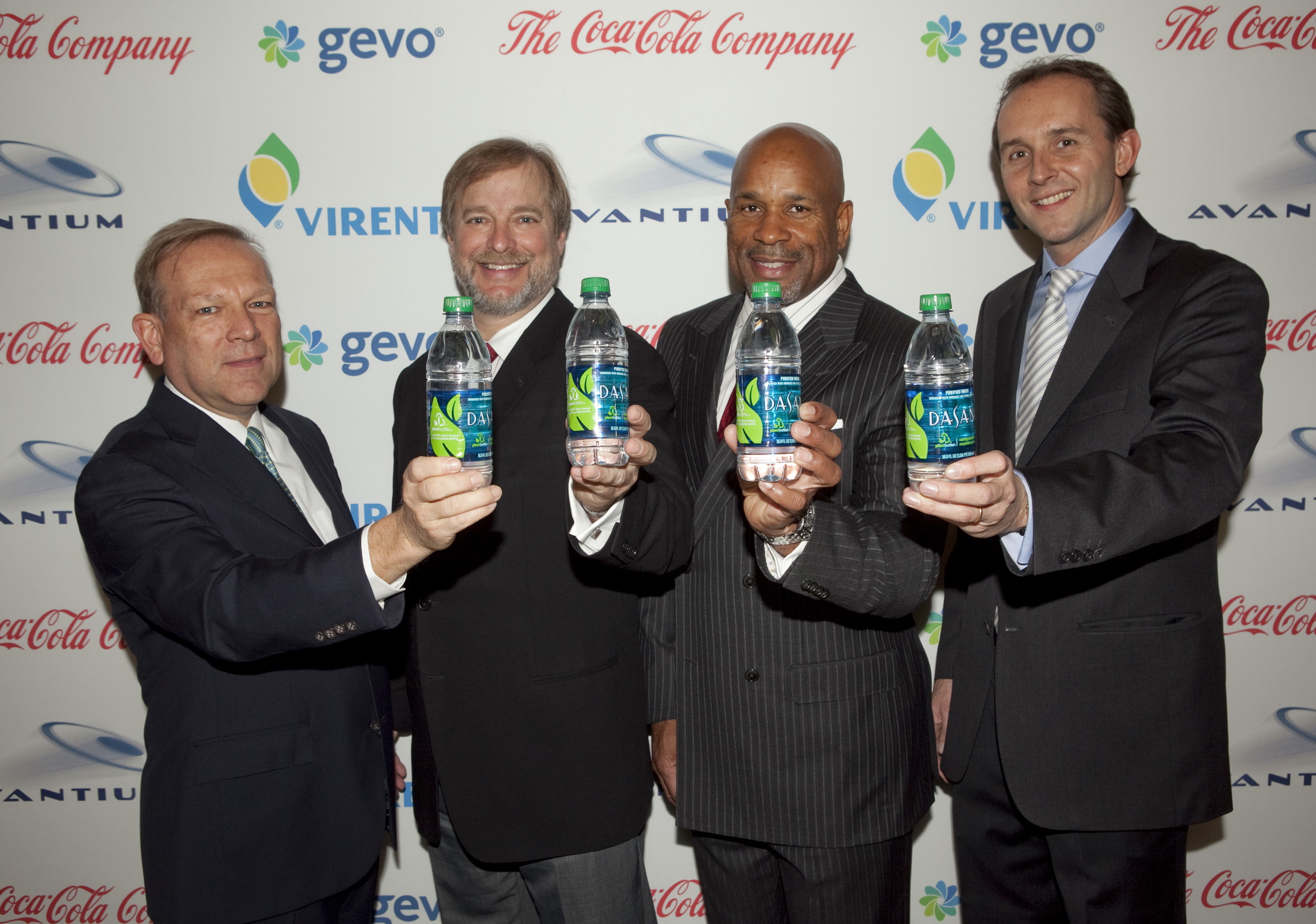
Avantium, a leading technology company specialized in the area of advanced catalytic research and renewable chemistry, announces today the successful sale of its crystallization systems business to the Technobis Group, a group of companies providing development and supply of high-tech instruments and modules for companies worldwide.

According to a new report by Allied Market Research titled “Global Second Generation Biofuels -Size, Industry Analysis, Trends, Opportunities, Growth and Forecast, 2013 – 2020”, the global second generation biofuels (Advanced Biofuels) market would reach $23.9 billion by 2020, registering a CAGR (Compound Annual Growth Rate) of 49.4% during 2014 – 2020.


North America’s advanced biofuel industry reached a production capacity of more than 800 million gallons in 2014, up from the previous year and almost double the capacity in 2011, according to a new market report unveiled yesterday by the national nonpartisan business group Environmental Entrepreneurs (E2), a nonpartisan, national community of business leaders who promote sound environmental policies that grow the economy.

In Ireland a multi-disciplinary research team, led by Teagasc (Agriculture and Food Development Authority), and including the Technology Centrefor Biorefining and Bioenergy (TCBB) at NUI Galway, Crop Science & Biosystems Engineering at UCD and the Environmental Sustainability & Health Institute at Dublin Institute of Technology, has been funded by a 2014 DAFM/Stimulus research grant to address how Ireland can maximise national income, exports and job creation thanks to the bioeconomy.

