Exclusive interview with Jukka Kantola, NISCluster: EU policies for the use of biomass are short-sighted

image

“At the moment focus in European policies is to endorse biomass utilization for the energy applications. This is short-sighted, as on those applications biomass does not bring the best added value. Also there is not enough biomass in Europe to meet up all energy and climate target in EU-level. Biomass is more valuable on chemical and material applications”. To say it, in this exclusive interview with Il Bioeconomista, is Jukka Kantola, CEO of NISCluster, a Finnish private bioeconomy company with a focus on the woody biomass. With Kantola we talk about the bioeconomy in Finland, the EU policies and the different uses of biomass.

Interview by Mario Bonaccorso

Continue reading

Air travel is more biobased: Lufthansa will test Gevo’s isobutanol-derived jet fuel

image

Air travel is more bio-based. Gevo, Inc., the world’s only commercial producer of renewable isobutanol, announced last Tuesday that it has come to an agreement with Lufthansa to evaluate Gevo’s renewable jet fuel with the goal of approving Gevo’s alcohol-to-jet fuel (ATJ) for commercial aviation use. Lufthansa’s testing is being supported through work with the European Commission. 

Continue reading

US study: biofuels from the leftovers of harvested corn plants worse than gasoline for global warming in the short term

US Energy Secretary Ernest Moniz

“Removal of corn residue for biofuels can decrease soil organic carbon  and increase CO2 emissions because residue C in biofuels is oxidized to CO2 at a faster rate than when added to soil. Net CO2 emissions from residue removal are not adequately characterized in biofuel life cycle assessment”. A $500,000 study – paid for by the U.S. federal government and released last Sunday in the peer-reviewed journal Nature Climate Change – concludes that biofuels made with corn residue release 7% more greenhouse gases in the early years compared with conventional gasoline.

Continue reading

The EU Parliament voted on new legislation aimed at reducing the use of single-use plastic carrier bag

image
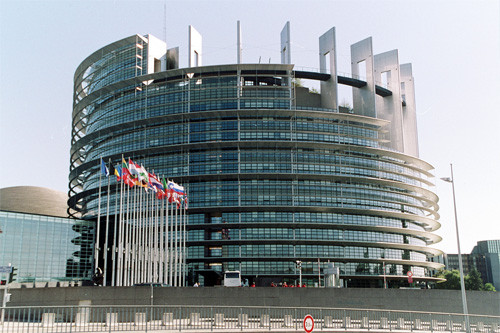
European Parliament, Strasbourg

Europeans use about 100 million plastic carrier bags every year. Some of these are dropped as litter, ending up in the environment, where long-standing plastics accumulate and harm wildlife. The European Parliament today voted on new EU legislation aimed at reducing the use of single-use plastic carrier bags.

Continue reading

Bio-based chemicals: Rivertop Renewables has raised $26 million from Cargill and others investors

Missoula, Montana: here is located the headquarter of Rivertop

Rivertop Renewables, a U.S. producer of novel chemicals derived from natural plant sugars, based in Montana, has raised $26 million from Cargill (an international producer and marketer of food, agricultural, financial and industrial products and services), First Green Partners (an enterprise focused on commercializing advanced technologies in the carbon value chain) and existing investors.

Continue reading

From Cologne the European bioindustry calls for a policy that encourages more biochemicals

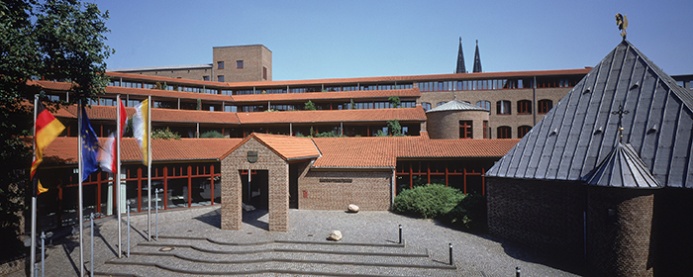
Maternushaus, venue of the conference
Maternushaus, venue of the conference in Cologne

Three days of interesting debate with regard to the future development of bio-based materials. This was the Seventh International Conference on bio-based materials, organized by the nova-Institut from April 8 to 10 in Cologne. With the presence of some of the major European players – companies, univerties and research centers – the three days in the beautiful German city on the Rhine have been an opportunity to discuss on the progress of research on bio-based materials, the political support to the bio-based economy in Europe and in the member states and what measures are necessary to enable the Old Continent to be competitive in international markets.

Continue reading

The biopolymers market is expected to generate global revenue of 3.67 billion US dollars by 2018

Novamont's Headquarter in Novara (Italy)
Novamont’s Headquarter in Novara (Italy)

The biopolymers market growing at a compound annual growth rate of 14.5% is expected to generate global revenue of 3,668.6 million US dollars by 2018. It’s what emerges from the new Report on “Biopolymers/Bioplastics Market by Type (Bio PET, Bio PE, PLA, PHA, Bio PBS, Starch Blends, and Regenerated Cellulose), by Application (Packaging, Bottles, Fibers, Agriculture, Automotive, and Others) & by Geography – Trends & Forecasts to 2018” published by Research and Markets, the Irish company which is the leading source for international market research and market data.

Continue reading

Scotland aims at playing a leading role in the £360 bln global industrial biotechnology market

John Swinney, Finance Secretary of Scotland

A new innovation centre for industrial biotechnology is forecast to increase industrial biotechnology-related turnover to up to £3 billion by 2030, create 1500 jobs within five years and put Scotland at the forefront of a global transformation. Funded by the Scottish Funding Council and supported by Scottish Enterprise and Highlands & Islands Enterprise, the new Industrial Biotechnology Innovation Centre (IBioIC) – hosted at the University of Strathclyde – is a key element of the National Plan for Industrial Biotechnology – Towards a Greener, Cleaner 2025. It brings together academic and private sector partners to play a leading role in the potential £360 billion global industrial biotechnology market. Industrial biotechnology is the use of biological substances, systems and processes to produce intermediate and final products such as pharmaceuticals, chemicals, materials and energy – both cost-effectively and with minimal adverse environmental impact.

Continue reading

UN Report: Rising demand for energy, from biofuels to shale gas, is a threat to freshwater supplies

The UN Building in New York City

Rising demand for energy, from biofuels to shale gas, is a threat to freshwater supplies that are already under strain from climate change, the United Nations said in a report last Friday. March 22 was World Water Day in the UN calendar. It urged energy companies to do more to limit use of water in everything from cooling coal-fired power plants to irrigation for crops grown to produce biofuels.

Continue reading

Bio-based tourism in the Maldives

image

Cardia Bioplastics, a global developer, manufacturer and marketer of sustainable resins derived from renewable resources based in Melbourne (Australia), announced the delivery of 60,000 large waste management bags as initial order by Maldives Truly Green, an entrepreneurial start-up venture in the Maldives, dedicated to both the awareness of and fight against environmental degradation of the Maldives. As an initial step towards a greener Maldives, Truly Green offers environmentally friendly products that are made from renewable resources with a lower carbon footprint replacing traditional plastics packaging and waste management products. The Cardia Biohybrid waste management bags will be used throughout Maldives resorts and by the expansive tourism sector, with annual orders of more than 1,000,000 bags expected.

Continue reading