 Enzymes could break down cell walls faster – leading to less expensive biofuels for transportation – if two enzyme systems are brought together in an industrial setting, new research by the Energy Department’s National Renewable Energy Laboratory suggests. A paper on the breakthrough, “Fungal Cellulases and Complexed Cellulosomal Enzymes Exhibit Synergistic Mechanisms in Cellulose Deconstruction,” appears in the current edition of Energy and Environmental Science. Co-authors include five scientists from NREL, the U.S. Department of Energy’s primary national laboratory for renewable energy and energy efficiency research and development, and one from the Weizmann Institute in Israel.
Economy
The Italian new government and the bioeconomy: everything needs to change, so everything can stay the same
 Italy’s new government has been sworn in, ending two months of political deadlock, after politicians agreed on Saturday to form a three-party coalition, which will also include technocrats in key positions.
The impression, however, is to be faced with a handful of men and women engaged in a desperate defense of a power gained in many ways fortuitously, on the verge of sinking at any time in front of a chaos which is hard to dominate. With Silvio Berlusconi came out again as big winner and ready to pull the plug as soon as the polls will comfort him about the possibility of winning elections (even with the current electoral law, which does not guarantee the governability and for no other called by its author, Senator of Lega Nord Roberto Calderoli, like “a crap”). In short, it seems that once again in Italy, to quote from The Leopard by Giuseppe Tomasi di Lampedusa, “everything needs to change, so everything can stay the same”. Continue reading
PoliKompleks invests 30 million euros to construct a bioplastics plant in Russia
 PoliKompleks, a Russian industrial biotechnology company, plans to invest around 1,2 billion rubles, 30 million euros, to construct a bioplastics production complex in Russia’s far western enclave of Kaliningrad. To say it is Nikolai Tsukanov, governor of the Kaliningrad Region.
PoliKompleks has reached agreement to establish plants for products based on lactic acid and polylactides (PLA) for the manufacture of some 50,000 tpa of biocomposites. The complex will also have a biodegradable de-icing reagents plant with a capacity of around 12,000 tpa. The Russian company expected to reach an annual turnover of 1,4 billion rubles, approximately 34 million euros.
Shopping in Denmark for the Norwegian Seaweed Energy Solutions
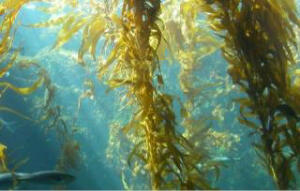 Seaweed Energy Solutions, a Norwegian company focused on seaweed-to-fuel business, has reached an agreement to acquire 100 percent of Denmark’s Seaweed Seed Supply AS, a move that sharply reinforces SES’ position as Europe’s leading player in large-scale seaweed cultivation for renewable energy and other uses.
The acquisition of Seaweed Seed Supply marks a key step for SES in its strategy of pioneering large-scale seaweed farming due to Seaweed Seed Supply’s position as Denmark’s leading commercial producer of seaweed for fish and livestock feed on a sustainable basis. Financial terms of the agreement were not disclosed.
With the purchase, Seaweed Seed Supply’s goal of increasing production to 100,000 tons by 2017 from the current 5,000 tons capacity can become a reality. SES technology will be introduced in Denmark and the two companies will jointly improve and adapt the technology to the local environment.
US and Israel collaborate on advanced biofuels development
 More than a dozen of Israel’s top academic and industrial biofuels research scientists and innovators are in Washington to begin a week-long dialogue with their American counterparts at the U.S. Departments of Energy and Agriculture, and the Navy, FAA and the private sector. They will be meeting with White House officials and with top government energy program managers and scientists in Washington, DC and at DOE labs in Oak Ridge Tennessee and in California. The scientific exchange, April 17th – 25th, has been designed to help build U.S.-Israel collaboration mechanisms for research and innovation to produce alternative fuels (“advanced biofuels”) that can substitute for petroleum-based gasoline, diesel oil and aviation fuel currently produced from imported oil.
Mossi & Ghisolfi acquires IntegRex PTA technology license for use in Texas PTA-PET new plant
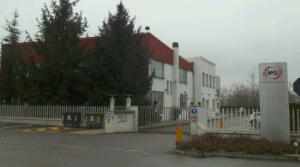 Mossi&Ghisolfi Group announced last Wednesday a Licensee Agreement with Alpek, the largest petrochemical company in Mexico and the second largest in Latin America, for IntegRex PTA, Purified terephthalic acid, technology. The technology will be used in the construction of M&G’s previously announced 1,200,000 MT per annum PTA plant at Corpus Christi, Texas. M&G also announced, Alpek purchased for a price of $350 million a multiyear sourcing agreement covering rights 400,000 MT of PET, Polyethylene terephthalate, (made with 336,000 MT of integrated PTA) per year.
Martin Schnee, Breslin AG: “Investments into alternative sources might be re-thought”
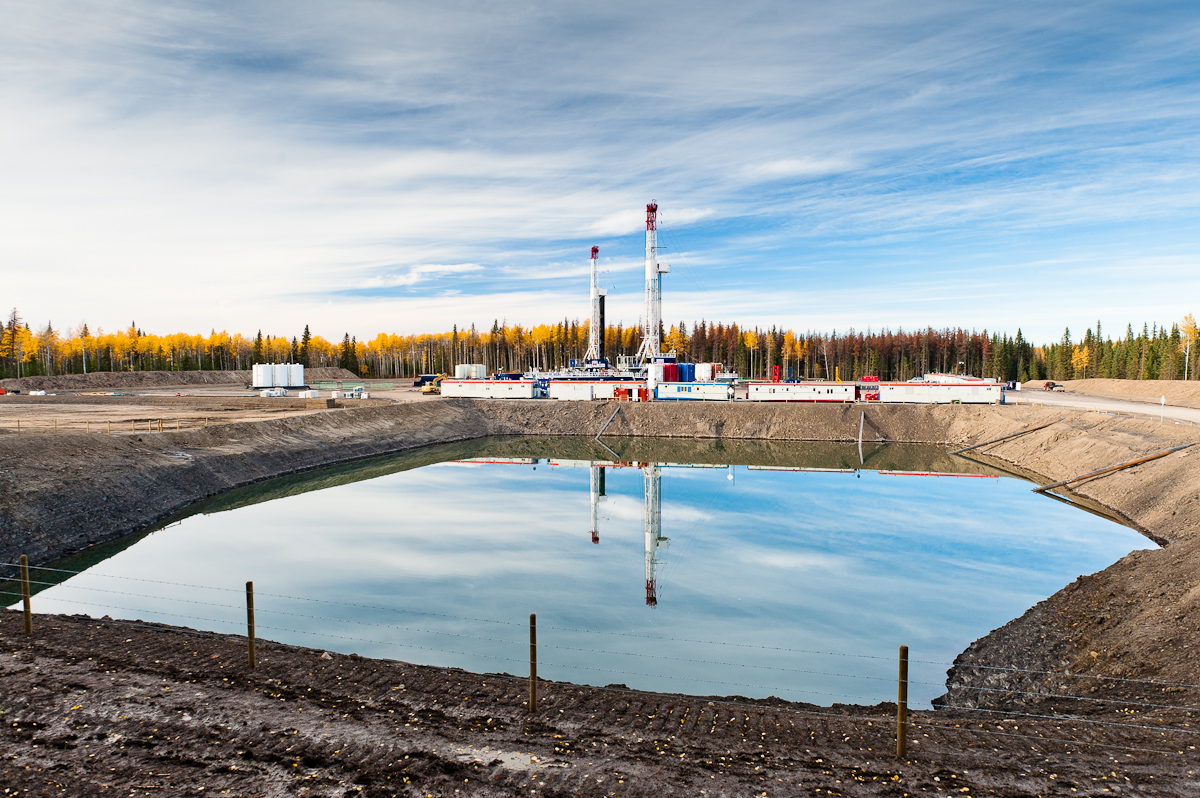 “Shale gas might be a game changer by bringing gas, coal and finally oil prices down. And cheap oil will no drive industries to make high investments into alternative raw materials”. To say it is Martin Schnee, partner of Breslin, one of the most important transaction strategic advisory companies in Europe in the field of bioeconomy, with offices in Zurich, London, Frankfurt am Main and Munich. In the context of the development of the bioeconomy, Schnee warns against the increasingly important role played by shale gas, a natural gas that is found trapped within shale formations. Shale gas has become an increasingly important source of natural gas in the United States since the start of this century, and interest has spread to potential gas shales in the rest of the world. In 2000 shale gas provided only 1% of U.S. natural gas production; by 2010 it was over 20% and the U.S. government’s Energy Information Administration predicts that by 2035, 46% of the United States’ natural gas supply will come from shale gas. Schnee speaks with us about bioeconomy from an investment point of view, considering that “alternative energy and biomaterials from alternative sources might make a large contribution to Europe’s future growth”.
Interview by Mario Bonaccorso
Chatham House: UK biofuel policy may need to be modified
 UK biofuel policy may need to be modified. To say it is a report published by Chatham House, a british think tank focused on “Costs and Consequences of Expanding Biofuel Use in the United Kingdom”. According to Rob Bailey, author of the report, “in its present form the RTFO (Renewable Transport Fuel Obligation, editor’s note) may not be an appropriate instrument for achieving the RED (Renewable Energy Directive, editor’s note) target economically. Its volumetric target incentivizes suppliers to minimize cost per litre by supplying ethanol, thereby also minimizing the amount of energy supplied by biofuels. This runs counter to the objective of the RED to increase the share of energy from biofuels.
In EU Synpol project aims at converting waste into bioplastics
 Waste can be base of new bioplastics. There are many waste resources hidden in our communities. Municipal solid waste (MSW), agricultural residues and sewage sludge from water treatment plants contains lots of reusable carbon fractions. To recover them means recovering a valuable product as well as preserving the environment. The European Commission is working in order to develop the Synpol (“Biopolymers from syngas fermentation”) project, that is funded under the Food, agriculture and fisheries, and biotechnology Theme of the EU’s Seventh Framework Programme (FP7) to the tune of € 7.5 million.
Versalis and Genomatica together for the production of butadiene from non-food biomass
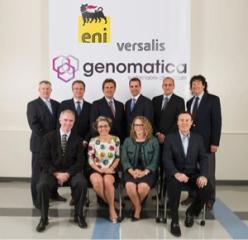 Versalis (Group Eni) and Genomatica announced the signing of a definitive joint development and licensing agreement to establish a technology joint venture for bio-based butadiene.
The two companies will work together to develop a complete ”end-to-end’ process for the production of butadiene from non-food biomass.
The resulting process will be licensed across Europe, Asia and Africa by the newly-created joint venture. Future Licensees of the process, including Versalis, will provide the capital required for the construction and operation of their own plants, and be responsible for the use and sale of the resulting butadiene.
Versalis will provide over $20 million in funding to Genomatica to support development of the integrated end-to-end process. It will also aim to be the first to license the process and build commercial plants.
 IL BIOECONOMISTA