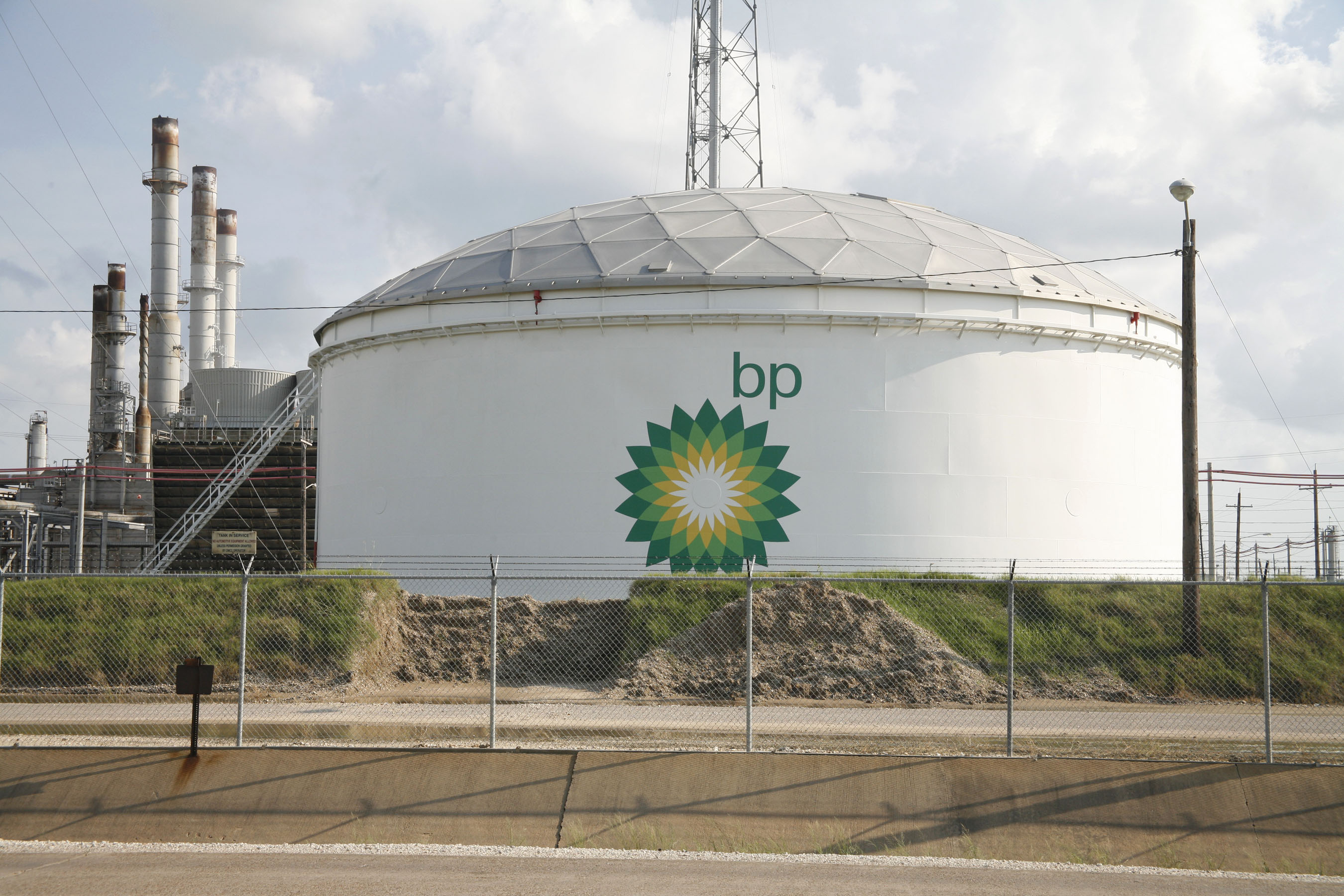
Oil major BP is directing investment in advanced biofuels to the United States and South America due to uncertainty about the European Union’s future regulatory environment.
“At the moment we are not contemplating investing in second-generation cellulosic (ethanol) in Europe simply for the reason that there is not enough certainty on what the market conditions will be like,” Phil New, head of BP Biofuels, said in an interview with Reuters UK.
Novamont, the Italian leading company in the development and production of materials and biochemicals, with a turnover of 135 million euros in 2012, has unveiled the first product made from 4th generation Mater-Bi®, the family of biodegradable and compostable bioplastics designed to go beyond the product itself and become an opportunity to develop circular bioeconomies. It also aims to stimulate reindustrialisation through the development of integrated Biorefineries. It’s what was announced by the company in a statement.
A Scottish energy start-up commercialises a process for producing a superior next generation biofuel (and other high value sustainable products) from the by-products of biological industries. The company – Celtic Renewables is its name – is initially focused on the £4 billion Scottish Malt Whisky industry as a ripe resource for developing bio-butanol – a next generation biofuel. Biobutanol has 25% more energy per unit volume than bioethanol; it has a lower vapour pressure and higher flashpoint (making it easier to store and safer to handle); it can be blended without requiring modifications in blending facilities, storage tanks or retail station pumps; in sharp contrast to ethanol, it can run in unmodified engines at any blend with petrol and may also be blended with diesel and biodiesel; it is less corrosive than bioethanol and can be transported using existing infrastructures. Biobutanol was legally recognised as a biofuel by incorporation in the 2009 amendment to the Road Transport Fuel Obligation (the UK implementation of the EU Renewable Energy Directive, which dictates that 5% of the UK’s transport fuel comes from a renewable source by 2013, and 10% by 2020).
The California Council on Science and Technology has released the seventh and final report in its California’s Energy Future (CEF) project, “California’s Energy Future: The Potential for Biofuels”. The CEF project seeks ways the State could meet the mandated reductions of the state’s greenhouse gas (GHG) emissions to 80 percent below 1990 levels by 2050, exploring possible energy strategies for California through in-depth examinations of different technology scenarios. The focus of this report is an assessment of the potential for fuels produced from renewable biological resources to contribute to the energy needs of California, particularly for transportation.
Novozymes and Novo Nordisk, Danish big companies, have in collaboration installed a 36 meter tall, high-performance biogas reactor. The new biogas reactor utilizes wastewater from both Novo Nordisk and Novozymes’ large production in Kalundborg for an efficient production of biogas.
There are two specific reasons for Novozymes’ investment in the new biogas reactor. “Firstly, we can reduce CO2 emissions from our production. This enables us to reduce our CO2 emission with 21,000 tons annually, equivalent to emissions from 12,000 households or 1000 trucks each driving a 1000 kilometers,” explains Line Sandberg, Vice President in Novozymes’ Danish production.
At the Vienna University of Technology, genetic engineers have found a trick, thanks to which fungi can be used for the production of biofuels far more cost effectively than before.
Lignocellulosic waste such as sawdust or straw can be used to produce biofuel – but only if the long cellulose and xylan chains can be successfully broken down into smaller sugar molecules. To do this, fungi are used which, by means of a specific chemical signal, can be made to produce the necessary enzymes. Because this procedure is, however, very expensive, Vienna University of Technology has been investigating the molecular switch that regulates enzyme production in the fungus. As a result, it is now possible to manufacture genetically modified fungi that produce the necessary enzymes fully independently, thus making biofuel production significantly cheaper.
The Canadian Government, led by Stephen Harper, is enabling a company to commercialize a “green” bio-plastic, using innovative technology that was developed at the University of Guelph, Member of Parliament Dave Van Kesteren (Chatham-Kent-Essex) announced yesterday, on behalf of Agriculture Minister Gerry Ritz.
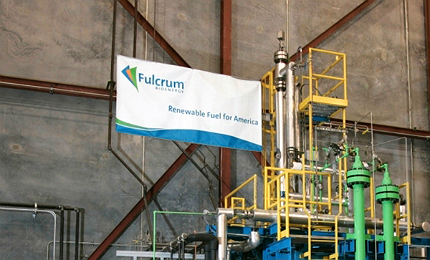
Fulcrum BioEnergy, Inc. announced last Wednesday that it has successfully demonstrated the conversion of municipal solid waste (“MSW”) – household garbage – into jet and diesel fuels. This demonstrated process adds fuel diversity to Fulcrum’s products and complements its previously demonstrated MSW to ethanol process. Fulcrum’s ability to produce drop-in fuels from MSW opens up an 80 billion gallon per year fuel market and expands its customer base for its national development program.
“Fuel diversity adds an integral component to our innovative business plan, creating a platform to offer customers the product they want, in the market they want. Our process is now capable of producing jet fuel, diesel and ethanol from residential garbage that would otherwise be landfilled,” said E. James Macias, Fulcrum’s President and Chief Executive Officer.
The municipality of Shanghai in China plans to turn recycled cooking oil, some of it seized by authorities, into an environmental asset by converting it into fuel for vehicles.
The country has been rocked by a series of food safety scandals including the re-use of waste oil recycled from restaurants and called “gutter oil”, a term used in China to describe illicit cooking oil which has been recycled from waste oil collected from sources such as restaurant fryers, drains, grease traps and slaughterhouse waste. Processed gutter oil is expected to be used as bus fuel within two years , as part of efforts to advance a circular economy and prevent recycled cooking oil from returning to the kitchen.
Ground-breaking Australian research on the viability of aviation biofuels was released last Friday, at the culmination of almost three years of work by The University of Queensland, James Cook University, The Boeing Company, Virgin Australia, Mackay Sugar and IOR Energy.
The results of the unique study as part of the Queensland Sustainable Aviation Fuel Initiative have been published in the international journal Biofuels, Bioproducts and Biorefining and were presented at the Boeing-hosted Aero Environment Summit in Sydney.
Researchers at the Australian Institute for Bioengineering and Nanotechnology, based at The University of Queensland, looked at the engineering and associated financial viability of biofuel production.