Californian biotech company Genomatica (Geno) alongside longtime collaborator Aquafil successfully completed the first demonstration scale production runs for plant-based nylon-6. The material is intended to reshape the $22 billion nylon industry, enabling brands to meet demand from consumers for sustainable everyday materials from apparel to automotive parts to carpets.
Basf Venture Capital GmbH, the corporate venture arm of Basf, has invested in Climentum Capital’s first €150 million venture fund. Both organizations will engage in a strategic relationship fostering knowledge sharing, deal sharing and co-investment opportunities. The fund is backed by other renowned corporate investors, banks, industrial conglomerates as well as prominent family offices and successful tech entrepreneurs, all of which share the ambition to combat climate change through investing in disruptive technologies. The investors also include the Danish growth fund Vaekstfonden and Arbejdernes Landsbank.
Versalis, the chemical division of Italian oil giant Eni, met last week in Rome with representatives of national and local trade unions to present its business plan for the next four years. According to the company, more than 1.1 billion euros have been spent in the last four years and the plan is to continue with investments focused on four strategic areas: specialization, circularity, chemistry from renewables and efficiency.
Finnish giant Neste and Fly Victor, the on-demand private jet company, started a partnership which sets a new sustainability benchmark in business aviation. Victor members can now purchase Neste MY Sustainable Aviation Fuel™ (SAF) for every private jet booking globally. This enables private jet charterers to reduce the carbon footprint of their private air travel in a credible and measurable way.
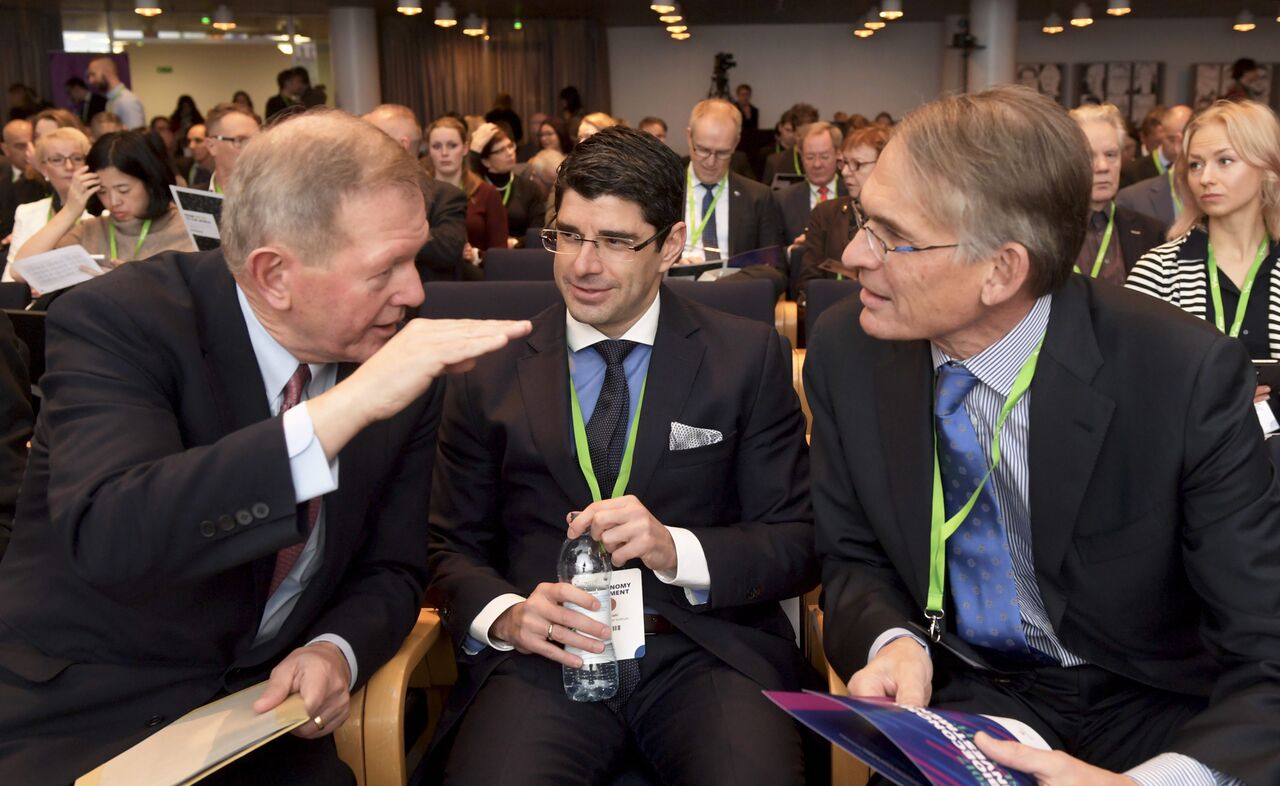
Former EU Commissioner Máire Geoghegan-Quinn speaks to delegates during the Bioeconomy conference in Dublin on February 14, 2013.
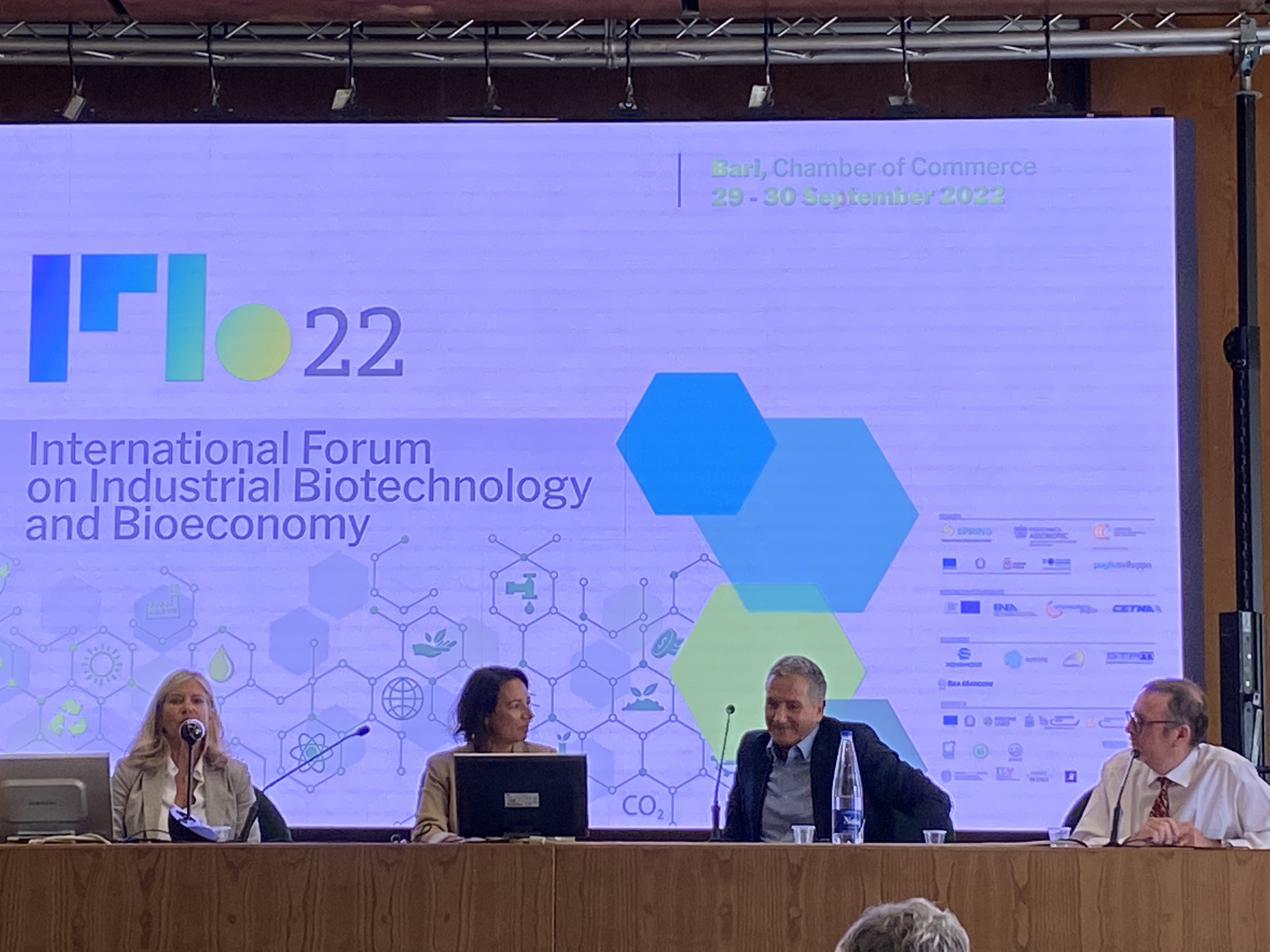
In 2021, the bioeconomy in EU4 (France, Germany, Italy and Spain) has reached a value of production of €1,500 billion, employing over 7 million people. Germany is confirmed as a leader with a value of €436.6 billion, then France (379.4 billion), Italy (364.3 billion) and Spain (251.5 billion). This is according a new Report realized by the Intesa Sanpaolo Research Department (Intesa Sanpaolo is one of the major banking group in Europe), in collaboration with Italian Circular Bioeconomy Cluster SPRING and Assobiotec, and today presented in Salerno (South Italy), which is dedicated to bioeconomy, which, in line with the definition of the European Commission, was defined as the set of activities using renewable natural resources to produce goods and energy, generating great advantages in terms of sustainability.
Mathieu Flamini, CEO GFBiochemicals. He played as a midfielder for Olympique de Marseille, Arsenal FC, AC Milan, Crystal Palace FC and Getafe Club de Fútbol. Picture: courtesy of Flamini
I met Mathieu Flamini in Milano during the Design Week. Milano is vibrant again after the dark years of the pandemic. AC Milan won the championship, eleven years after the last success of which Mathieu was one of the architects. We do not talk about football, also because I cheer for the other team based in Milano. I am totally black and blue and I can’t share his joy for the AC Milan’s Scudetto. We talk about the bioeconomy, starting from his new role as CEO of GFBiochemicals, which he is enthusiastic about. Mathieu is a friend, so I immediately declare that this is a somewhat unusual interview. With Mathieu we talk about the need to accelerate on the path of the paradigm shift that leads us from fossils to the use of renewable biological sources, the importance of communicating the damages produced by industrial activity on the environment in order to promote sustainable solutions, the role of the sport’s world in a campaign that highlights the contradictions of a development model based on profit at all costs and the waste of resources.
Novozymes, world’s leading industrial biotech company, and AgroFresh, a global leader in post-harvest freshness solutions, are forming a research and commercialization partnership towards developing biological solutions that can improve post-harvest food quality and minimize waste by fighting fungal pathogens. Resulting products, which will be developed for post-harvest applications, will benefit growers, retailers, and consumers, as well as the environment.
Suzano, the world’s largest hardwood pulp producer and a global reference in developing sustainable and innovative solutions from renewable sources, launched Suzano Ventures, a global corporate venture capital initiative. It will invest US$70 million in a range of businesses with the potential to revolutionize their sector and beyond, by addressing some of the world’s most pressing environmental challenges. The initiative will focus on companies operating within at least one of four bioeconomy applications: improving the measurement and management of carbon sequestration, accelerating and maximizing agroforestry yield, developing new technologies and applications for pulp biomass, and creating more efficient pulp packaging from renewable sources.
Mathieu Flamini, CEO GFBiochemicals. In Greenland. Courtesy of Mathieu Flamini
After announcing its €15 million Serie A funding round, the sustainable chemical company GFBiochemicals entered into an agreement with German chemical giant BASF. Specifically, BTC Europe GmbH, BASF’s European distribution organization, and NXTLEVVEL Biochem, a joint venture and manufactoring arm of GFBiochemicals, signed an agreement on the distribution of biobased and biodegradable solvents derived from levulinic acid for the European market.
A consortium, including LanzaTech and Danone, led to the discovery of a new route to monoethylene glycol, (MEG), which is a key building block for polyethylene terephthalate, (PET), resin, fibers and bottles. The technology converts carbon emissions from steel mills or gasified waste biomass directly into MEG. The carbon capture technology uses a proprietary engineered bacterium to convert carbon emissions directly into MEG through fermentation, bypassing the need for an ethanol intermediate, and simplifying the MEG supply chain. The direct production of MEG was proven at laboratory scale and the presence of MEG was confirmed by two external laboratories.