
India’s Prime Minister Shri Narendra Modi unveiled first Indian 2G Ethanol Bio-Refinery at Panipat Haryana. This project is based on Praj’s proprietary technology processing rice straw as feedstock for production of Ethanol.
India’s Prime Minister Shri Narendra Modi unveiled first Indian 2G Ethanol Bio-Refinery at Panipat Haryana. This project is based on Praj’s proprietary technology processing rice straw as feedstock for production of Ethanol.

Royal DSM, a global purpose-led science-based company, pledges to purchase all of its electricity worldwide from renewable sources as well as further reduce greenhouse gas (GHG) emissions from its own operations faster with stringent new 2030 sustainability targets.
AFYREN, a French greentech company that offers manufacturers bio-based, low-carbon products made using technology based on natural micro-organisms, has signed two new commercial contracts for organic acids produced at its AFYREN NEOXY factory. The deals, involving a European and an American player, are for applications in the field of cosmetics and nutraceuticals.
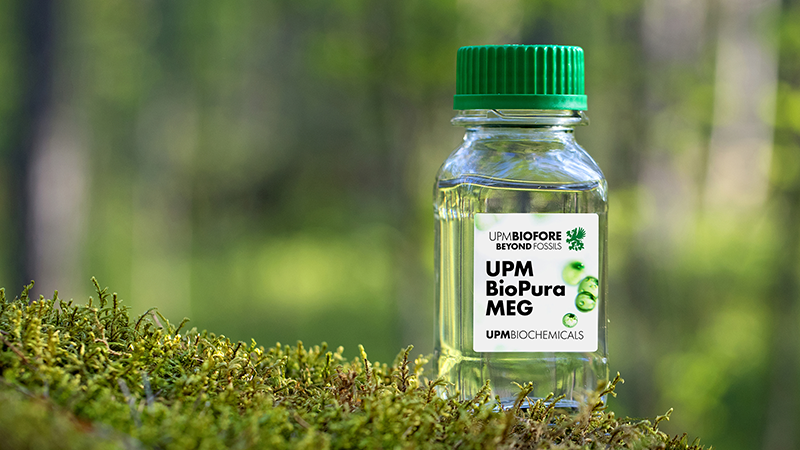
UPM and Dongsung Chemical announce a development partnership that will accelerate the introduction of renewable, sustainable forest-sourced materials into the Asian market and reduce fossil resource consumption.

Avantium N.V., a leading technology company in renewable chemistry, signed an offtake agreement with AmBev, the Brazilian brewing company, part of the AB InBev Group, the largest beer company in the world. AmBev will purchase PEF (polyethylene furanoate) – a 100% plant based and recyclable alternative to plastic – from Avantium’s Flagship Plant and will use it to make bottles for its soft drinks portfolio.

Agriculture Secretary Tom Vilsack announced the U.S. Department of Agriculture is accepting applications for a new pilot program created under President Biden’s historic Bipartisan Infrastructure Law to support the development of biobased products that have lower carbon footprints and increase the use of renewable agricultural materials, creating new revenue streams for farmers. This $10 million investment is part of the Biden-Harris Administration’s ongoing work to rebuild our infrastructure and create good-paying jobs and economic opportunity in our rural communities.

The EU Commission will celebrate the 10th anniversary of the first Bioeconomy Strategy, by organizing a high-level conference in Brussels. The conference “The Bioeconomy – Enabling the European Green Deal in Challenging Times” will take place on 6 and 7 October in the Charlemagne building. In addition, all sessions will also be live-streamed to allow everyone to get involved from anywhere.

Bari, in South-eastern Italy, will be the capital of circular bioeconomy from 28 to 30 September. The International Forum on Industrial Biotechnology and Bioeconomy (IFIB) will be held in this city this year at the Kursaal Santalucia Theather. And it will be completely in presence.

Advanced Biochemical Thailand launched its new product brand, Epinity™, with a new website. EPINITY™ is the new brand name for ABT’s Epichlorohydrin (ECH), a bio-based, drop-in, and competitive ECH for use in a wide range of downstream industries.
Eni completed the construction of the oilseed collection and pressing plant (agri-hub) in Makueni, Kenya, and started production of the first vegetable oil for bio-refineries. The first agri-hub will have an installed capacity of 15,000 tons with an expected production of 2,500 tons in 2022.

