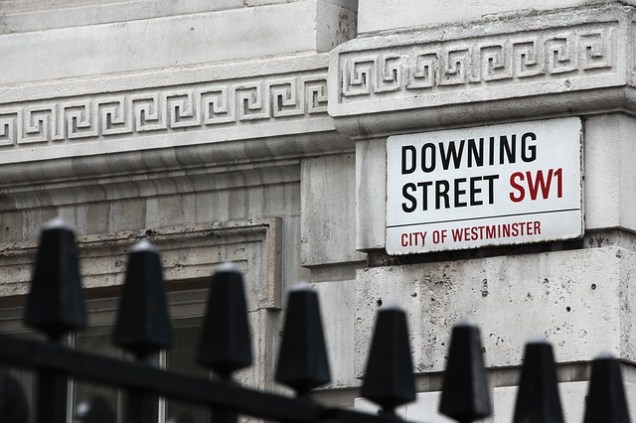
UK is finally on board. The government led by Theresa May launched last week the National Bioeconomy Strategy “Growing the Bioeconomy. Improving lives and strengthening our economy: A National Bioeconomy strategy to 2030”.
UK is finally on board. The government led by Theresa May launched last week the National Bioeconomy Strategy “Growing the Bioeconomy. Improving lives and strengthening our economy: A National Bioeconomy strategy to 2030”.

Our readers have voted: the most innovative bioeconomy CEO 2018 is Jürgen Eck, CEO of BRAIN AG, the industrial biotech company headquartered in Zwingenberg (Germany) which is developing innovative solutions and products for successful applications in chemistry and in the cosmetics and food industries.. He succeeds to Ken Richards (Leaf Resources) and Tony Duncan (Circa Group), respectively most innovative CEO 2016 and 2017, both from Australia.
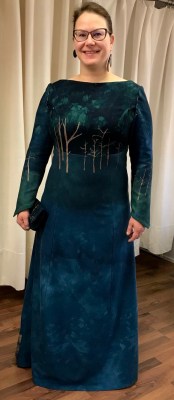
Today is the Independency Day of Finland. And the bioeconomy is one of the protagonists of the celebration: Marisanna Jarva, member of Finnish parliament is dressing on Arbron™, a highly processed and ecologically produced textile fiber raw material that is designed by Finnish company KaiCell Fibers to fulfil the fiber demand in the growing textile industry.

Total Corbion PLA, a 50/50 joint venture between French oil giant Total and Dutch biochemical company Corbion, yesterday announced the start-up of its 75,000 tons per year PLA (Poly Lactic Acid) bioplastics plant in Rayong, Thailand. The plant has successfully produced Luminy® PLA resins, a bioplastic that provides a valuable contribution towards the circular economy being biobased and biodegradable and offering multiple environmentally-friendly waste solutions.
 The bioeconomy is innovation, the result of the skills and passion of researchers and managers able to create value and new high-qualified jobs. At the end of 2014 Il Bioeconomista launched a new initiative: The 10 Most Innovative Bioeconomy CEOs.
We have asked a panel of world bioeconomy experts to tell us the Chief Executive Officers that have stood out as the most innovative during the last year.
Now we ask you to choose the most innovative CEO responding to our survey (open till December 8 at 2 pm, Western European Time).
The most innovative CEO 2016 was Ken Richards (CEO of Leaf Resources)
The most innovative CEO 2017 was Tony Duncan (CEO of Circa Group)
This is the result in 2018 (in alphabetical order)
Catia Bastioli, Novamont (Italy)
Vincent Chornet, Enerkem (Canada)
Veronique de Bruijn, Photanol (Netherlands)
Marc Delcourt, Global Bioenergies (France)
Jürgen Eck, BRAIN AG (Germany)
Jennifer Holmgren, LanzaTech (New Zealand-USA)
E. James Macias, Fulcrum Bioenergy (USA)
David Sudolsky, Anellotech (USA)
Sean Sutcliff, Green Biologics (UK)
Stéfanie Triau, Bioserie (Hong Kong)

The U.S. Environmental Protection Agency granted oil major Chevron Corp a 2017 hardship waiver from U.S. biofuel laws for its Utah refinery earlier this year, according to a source familiar with the company’s operations. This is what the International press agency Reuters makes known.
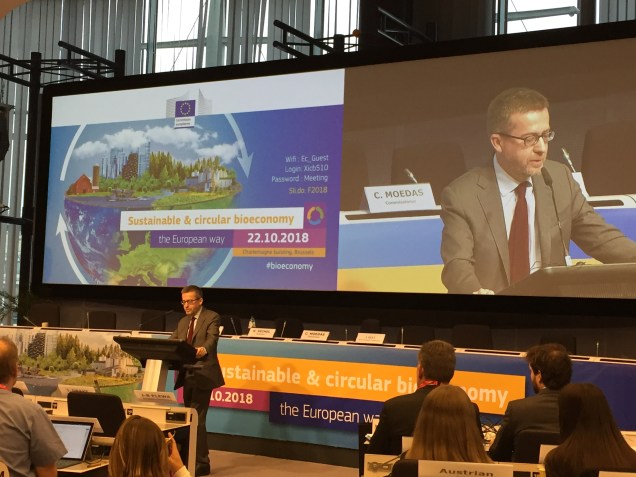
There is a new initiative in the European bioeconomy. The universities of Hohenheim (Germany), Bologna (Italy), Eastern Finland (Finland), AgroParisTech (France), BOKU Vienna (Austria) and Wageningen University and Research (Netherlands), some of leading European universities in the field of the bioeconomy, are planning to join forces in research, teaching/education, and innovation in this subject area.
 Yesterday, in an event under the umbrella of the Austrian EU-presidency, the “FTP (Forest-based Sector Technology Platform) Vision 2040 of the European Forest-based Sector” was launched. The venue, the very prestigious Marmorsaal in the premises of the Federal Austrian Ministry of Sustainability and Tourism, was fully packed with representatives from some 20 European countries.

It’s a bad time for the bioenergies companies in UK. Due to the difficult market conditions, CropEnergies will pause production in its plant in Wilton, North East England, operated by Ensus from the end of November 2018 on.

Nouryon (formerly AkzoNobel Specialty Chemicals), Tata Steel and the Port of Amsterdam have joined together to study the feasibility of a large green hydrogen cluster in the Amsterdam region. The three parties consider green hydrogen as vital for reaching climate targets and building a more circular economy, for example by combining it with emissions from steel manufacture to make new products.
 IL BIOECONOMISTA