UPM moves forward with the development of biochemicals business in Germany

Biofore Concept Car. Full rights owned by UPM. Photographer: Sami Kulju

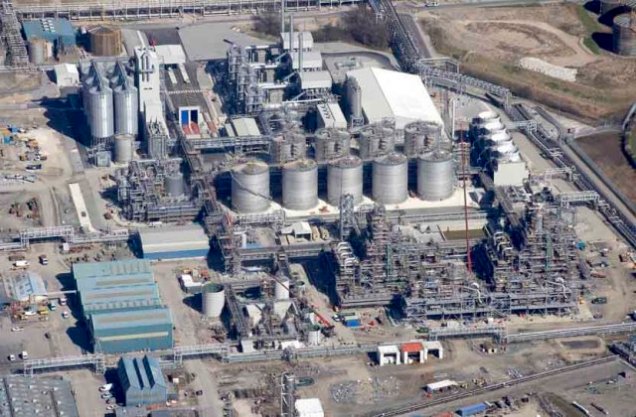
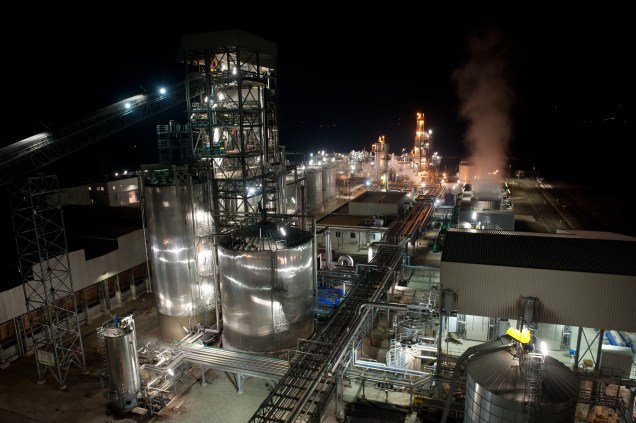
Finnish pulp and paper giant UPM moves forward with the development of biochemicals business by evaluating the potential of building a biorefinery in the Chemical Park Frankfurt-Höchst in Germany. The new-to-the-world biorefinery would combine novel technologies and utilize sustainable wood raw material in an innovative way. This opportunity is the outcome of more than five years of extensive technology development and piloting.

Continue reading

Leaf Resources enters biodegradable packaging market leveraging Glycell strategy

Ken Richards, CEO of Leaf Resources

Australia-based Leaf Resources has secured a license for an innovative biodegradable coating product for the packaging market. The product is based on lignin and also utilizes glycerol, two of the products that Leaf’s Glycell process will produce. According to the company, “Leaf’s Glycell process break down plant biomass at lower temperature and pressure and generate a higher yield of cellulose than conventional approaches”.

Continue reading

Irish Ethanol Europe Renewables works with UN to accelerate shift to low carbon

Ahead of the UN Climate Conference in Bonn, COP 23, 6-17 November, the Irish company Europe Renewables Ltd and UN Climate Change have partnered to boost the deployment of biofuels in the transport sector.

Continue reading

The U.S. bioeconomy moves forward in Arizona

The U.S. bioeconomy moves forward (despite of Trump). The University of Arizona has received a five-year grant of up to $15 million from the U.S. Department of Agriculture’s National Institute of Food and Agriculture to lead a new center focusing on the mass production of biofuels and bioproducts in the Southwestern U.S.

Continue reading

Statoil, Shell and Total entered CO2 storage partnership to meet the global climate target

Statoil Headquarter in Oslo

Statoil, Shell and Total entered CO2 storage partnership. The three partners aims at maturing the development of carbon storage on the Norwegian continental shelf (NCS). The project is part of the Norwegian authorities’ efforts to develop full-scale carbon capture and storage in Norway.

Continue reading

Rome: the eternal city becomes the bioeconomy city

More than 300 delegates from EU, USA, Russia, Turkey, Israel, Latin America and Canada, 40 presentations, 20 scientific posters and a round table on “The role of Shared pilot facilities in fostering the bioeconomy”. These are the numbers of IFIB, the Italian Forum on Industrial Biotechnology and Bioeconomy, which opens today to the world in Rome at Palazzo Rospigliosi.

Continue reading

An interview with Marco Astorri, CEO of Bio-on. “It is necessary to make a step forward to more circular processes”

Marco Astorri
“Bio-on’smission’ is to contribute to the protection of ecosystems and natural resources management in an integrated approach, environmentally, economically, socially, technically sustainable”. Marco Astorri, founder and CEO of Bio-on, one of the most dynamic and innovative biotech companies in Europe, talks to Il Bioeconomista. In this long and exclusive interview, the CEO of Bio-on talks about the bioeconomy, the bioplastics and the next steps of the company headquartered in Bologna. “It is necessary – he states – to make a step forward to more circular processes where wastes and co-products of already existing production systems could become raw materials of innovative industrial processes, obtaining added values, reducing emissions and requiring as less oil as possible.”

Interview by Mario Bonaccorso

Continue reading

nova-Institute: First generation bioethanol is climate-friendly as second generation bioethanol

Berlaymont, European Commission’s Headquarter in Brussels

A New study conducted by nova-Institute and ordered by CropEnergies, which will be presented and discussed for the first time in Brussels on 26 September 2017, conducts quantitative and qualitative sustainability assessment of biofuels against the background of the EU’s REDII negotiations. This comprehensive sustainability assessment carried out by the German company led by Michael Caurs “shows that first generation bioethanol is as advantageous as second generation bioethanol for a feasible climate strategy”. According the nova-Institute “the results clearly indicate that the systematic discrimination against first generation biofuels of the current Commission proposal is in no way founded on scientific evidence. It would be counterproductive to further lower the share of first generation fuels in the EU’s energy mix”.

Continue reading

IFIB 2017: Rome will be the world capital of bioeconomy next October

Trevi Fountain

Rome will be the Euro-mediterranean capital of the bioeconomy for a couple of days. The Italian Forum on Industrial Biotechnology and Bioeconomy (IFIB) goes to the Italian capital from 5 to 6 October at the Palazzo Rospigliosi, in front of the House of the President of the Republic.

Continue reading

Helsinki to host the European Bioeconomy Investment Summit next December

Chris Patermann at the first edition of the Bioeconomy Investment Summit, Brussels, 9-10 November 2015

The second edition of the Bioeconomy Investment Summit will take place on 14-15 December in Helsinki, Finland, organized by the European Commission and the European Forest Institute. Over 30 speakers from across the globe will share their views on how we can bring together the economy and the environment. “New advances in technology – the organizers say – mean that everything that can be made out of oil can be made from renewable, biological resources. There are huge environmental and business opportunities for a wide range of industries: construction, chemicals, textiles, energy, plastics”.

Continue reading