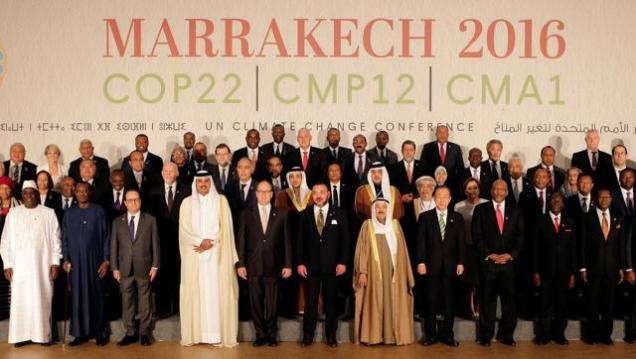
Yesterday, at COP22, in Marrakech (Morocco), a coalition of leading countries in the clean energy and the bioeconomy fields announced the launching of the Biofuture Platform, a new collective effort to accelerate development and scale up deployment of modern sustainable low-carbon alternatives to fossil based solutions in transport fuels, industrial processes, chemicals, plastics and other sectors.
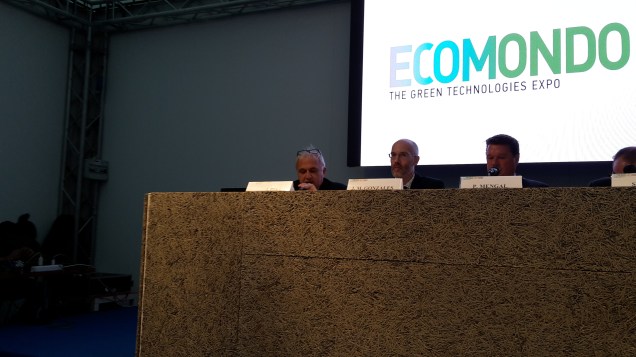
Finally Italy has its own strategy on bioeconomy. This was announced by Paolo Bonaretti, representative of the Ministry of Economic Development, last week in Rimini, Emilia Romagna Region, during an event on the bioeconomy in the Mediterranean organized within the Ecomondo Fair, with the presence, among others, of John Bell, Director for BioEconomy, DG Research & Innovation EU Commission, and Philippe Mengal, executive director of the Bio-based Industries Joint Undertaking. Good news, then, for the bioeconomy in Italy. The new strategy will be published on the web site www.agenziacoesione.gov.it starting from 20th November for an open public consultation, which will last a month.
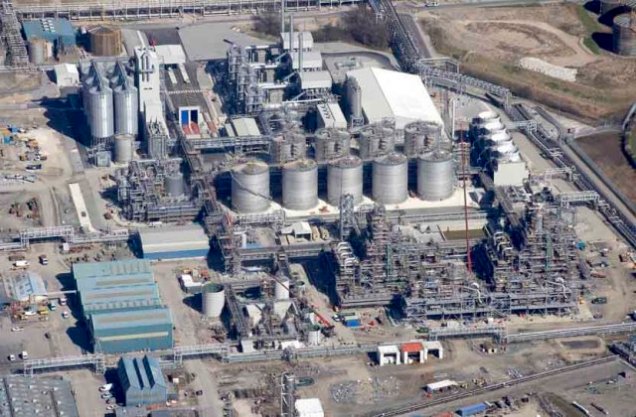
Vivergo Fuels, the UK’s largest producer of bioethanol and high protein animal feed, has been chosen as one of the Government’s new official Northern Powerhouse partners and is the only Humberside-headquartered private business to be named on the list.
The Biotechnology Innovation Organization (BIO) urges U.S. Congress to advance a multi-year extension of renewable energy tax credits slated to expire at the end of 2016.
Another brick towards the European Bioeconomy, starting from regions. The European Commission together with the Slovak Presidency, and under the auspices of Standing Committee of Agricultural Research (SCAR), organised today in Bratislava a conference on the role of EU regions in developing a sustainable European Bioeconomy. The aim of the conference was “to discuss with national and regional stakeholders the new bioeconomy context for the agriculture, forestry and fisheries, the role of research and innovation to overcome the big societal challenges ahead of us and also to identify the barriers in the regions in adapting the bioeconomy strategy”.
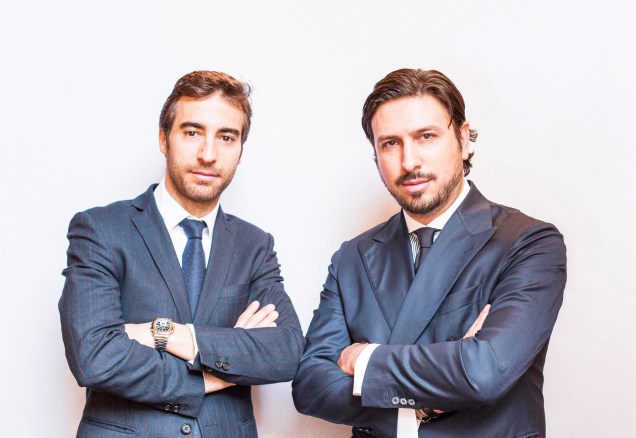
Mathieu Flamini and Pasquale Granata launch The BioJournal
Published “to take part in a severe contest between intelligence, which presses forward, and an unworthy, timid ignorance obstructing our progress.”
We can borrow this mission statement written on the contents page of the first issue of The Economist, published by James Wilson in September 1843, to define exactly the reason that today, 173 years later, leads to the launch of The BioJournal.
She has created the Italian bioeconomy. Thanks to her passion, her tenacity, her ability, Italy today can rightly claim to be a leading country in this field. All this in the total lack of an Italian strategy on bioeconomy.
The inauguration last Friday of Mater Biotech’s plant in Bottrighe di Adria, the first in the world capable of producing butanediol from renewable sources, is her umpteenth great victory. The demonstration that the bioeconomy is a reality, that creates wealth and jobs in an environmentally friendly way. That the goals can be achieved with passion and determination, putting into practice a new idea of sustainable enterprise.
The bioeconomy is alive and is set to grow. This is the strong message coming from Vicenza, Italy, where last Thursday and Friday was held the sixth edition of IFIB, the Italian Forum on Industrial Biotechnology and Bioeconomy.
About 300 participants. Among them some of the big global companies active in the bioeconomy: Braskem, Dow, Novamont, NatureWorks, Mossi Ghisolfi, Clariant, GFBiochemicals and Carlsberg. Innovative start-ups, universities and research centers, as well as clusters such as Clib2021 (Germany), IAR Pole (France) and Bio-based Delta (Netherlands). And again: OECD, European Investment Bank, German Bioeconomy Council.
“Sustainability – Rafael Cayuela, Chief Economist at Dow Chemical, stated – is a huge technological challenge but also the single largest business opportunity of this generation”.
The U.S. Biotechnology Innovation Organization (BIO) released the new report “Advancing the Biobased Economy: Renewable Chemical Biorefinery Commercialization, Progress, and Market Opportunities, 2016 and Beyond,” documenting substantial, ongoing growth in the renewable chemical industry and outlining federal and state policies that support the industry.