The U.S. Department of Agriculture selected the Safety Equipment Institute – a subsidiary of ASTM International – to manage the certification program that supports labeling thousands of products as “biobased.” The renewal of this five-year contract will mean that more and more people will be able to find and purchase products that are made and packaged using renewable materials.
Politics
IFIB 2016: Vicenza will be the center of gravity of the world bioeconomy on 22-23 September

Everything is ready in Altavilla Vicentina (Vicenza, Italy) to host the Italian Forum on Industrial Biotechnology and Bioeconomy. Taking place on 22-23 September at CUOA Business Center, IFIB 2016 will bring together the European bioeconomy stakeholders, from universities and research centers to big companies.
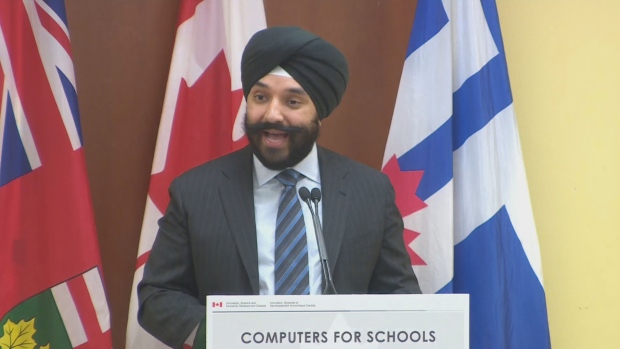
In Canada a new Centre for Commercialization of Sustainable Chemistry Innovation

Bioindustrial Innovation Canada (BIC) has launched the creation of the $27 million Centre for Commercialization of Sustainable Chemistry Innovation (COMM SCI) through a $12 Million non-repayable contribution from the Federal Economic Development Agency for Southern Ontario’s (FedDev Ontario) Investing in Regional Diversification (IRD) initiative, a $3 Million grant from the Province of Ontario and a minimum $12 Million in matching contributions from BIC and their partners.
Leaders of Sustainable Biofuels: It’s time to act quickly to decarbonise the EU transport sector

“It is time to act quickly and in a targeted manner in order to ensure the much needed decarbonisation of the European transport sector”. To say it is Piero Cavigliasso, director public affairs Biochemtex (Mossi Ghisolfi Group) and president of the Leaders of Sustainable Biofuels, an European group which brings together big companies such as Clariant, UPM, British Airways and Dong Energy
“Our companies – Cavigliasso writes in an note – re-confirm the willingness to further deploy and supply the most innovative technologies to produce advanced biofuels from currently unused, underutilized or otherwise wasted raw materials in order to contribute to the EU objectives outlined in the strategy (European Strategy for Low Emission Mobility, published by the European Commission last 20 July, editor’s note).”
Tom Vilsack: “The bioeconomy is a catalyst for economic development in rural America”

Agriculture Secretary Tom Vilsack last Monday announced that the U.S. Department of Agriculture (USDA) is seeking applications for funding to help support the development of advanced biofuels, renewable chemicals and biobased products.
“The bioeconomy is a catalyst for economic development in rural America, creating new jobs and providing new markets for farmers and ranchers,” Vilsack said. “Investing in the businesses and technologies that support the production of biofuels and biobased products is not only good for farm incomes. The whole economy benefits from a more balanced, diversified and consumer-friendly energy portfolio, less dependence on foreign oil and reduced carbon emissions.”
US biofuels compliance credits jumped to three-year highs last Monday

Prices in the niche market for biofuels compliance credits jumped to three-year highs last Monday as traders fretted about supplies because of higher U.S. government mandates to increase the use of biofuels next year.
Trading in the opaque market for Renewable Identification Numbers (RIN) – the paper credits that can be bought and sold to meet government requirements for biofuels – has picked up in recent days.
The development of the European bioeconomy needs Great Britain and viceversa

British voters have voted in favor of Brexit: British exit from the European Union. That means that in the coming months, British and European leaders will begin negotiating the terms of Britain’s departure. Britain’s exit will affect British and EU economies, and also the bioeconomy. It will take years for the full consequences to become clear. From our point of view, as Europeans, it is an absurd. Obviously we do not put in discussion the result of the vote. We simply think that Great Britain is an integral part of the European Union. The development of the European bioeconomy needs Great Britain and viceversa.
Murray McLaughlin, Bioindustrial Innovation: Canada is working on a bioeconomy strategy

“The government is working on a national bioeconomy strategy, which started with our new federal government attending the COPS meeting in Paris. Discussions and consultations are now taking place with the provinces and the Canadian public with the intent to have a federal strategy in draft form later this year.” To say it – in this long exclusive interview with Il Bioeconomista – is Murray McLaughlin, executive director of Bioindustrial Innovation Canada, who was recognized in the top 100 global leaders in the Advanced Bioeconomy at Biofuels Digest Conference in Washington, 2016. With him we talk about bioeconomy in Canada, climate change, biomass, Green public procurement, carbon tax and other policies. Murray McLaughlin has held various positions in the private, government and non-profit sectors such as director of Business Development for the Canadian Light Source, president of Ontario Agri-Food Technologies, deputy minister of Saskatchewan Agriculture and Food, and president of Ag-West Biotech Inc. He co-chairs the Industrial Bioproducts Value Chain Roundtable which is a partnership between Industry and AAFC for the bioeconomy. He is a graduate of Nova Scotia Agricultural College, McGill (B. Sc. Agr.) and Cornell (MSC and PhD), and has an Honorary Doctorate Degree from Dalhousie University.
Interview by Mario Bonaccorso
The Dutch government is planning to join the Mission Innovation coalition

The Dutch government is planning to join the Mission Innovation coalition. The global initiative aims to accelerate public and private innovation in order to make clean energy affordable for consumers, as well as creating “green” jobs and commercial opportunities. Mission Innovation was announced by former Microsoft leader Bill Gates at the United Nations Climate Change Conference (COP21) in Paris last year. At the launch, 20 countries – Australia, Brazil, Canada, Chile, China, Denmark, EU, France, Germany, India, Indonesia, Italy, Japan, Mexico, Norway, Republic of Korea, Saudi Arabia, Sweden, UAE, UK and US – committed to doubling their respective clean energy R&D by 2020.
