Obama Administration announces $21 million to strengthen the bioeconomy

image
Tom Vilsack and Barack Obama

The bioeconomy in the United States of America takes another relevant step forward, investing not only in the development of bioproducts but also in education and training. The U.S. Department of Agriculture (USDA) yesterday announced the availability of $21 million to support the development of regional systems in sustainable bioenergy and biobased products, as well as education and training for the next generation of scientists that will expand availability of renewable, sustainable goods and energy. This funding is available through the Agriculture and Food Research Initiative (AFRI), authorized by the 2014 Farm Bill and administered by USDA’s National Institute of Food and Agriculture (NIFA).

Continue reading →

Bioeconomy in Transport Decarbonisation: an offer they can’t refuse

Marlon Brando as don Vito Corleone in The Godfather


During my ten years at Accenture in Rome my boss always made a point of checking that in our bids for client work we were making them offers they couldn’t refuse. He’d been inspired by Marlon Brando in the Godfather, without the gun parts clearly. Our business grew from 300 to 3000 people.

The guys and gals at the European Commission in Brussels are right now putting the finishing touches to a Communication on Transport Decarbonisation, due out this summer. A Commission Communication is the closest thing there is to an EU law without actually being a law. If it’s any good it will set direction on transport decarbonisation for the next twenty years and go a long way to saving the planet from catastrophic climate change.

by James Cogan*

Continue reading →

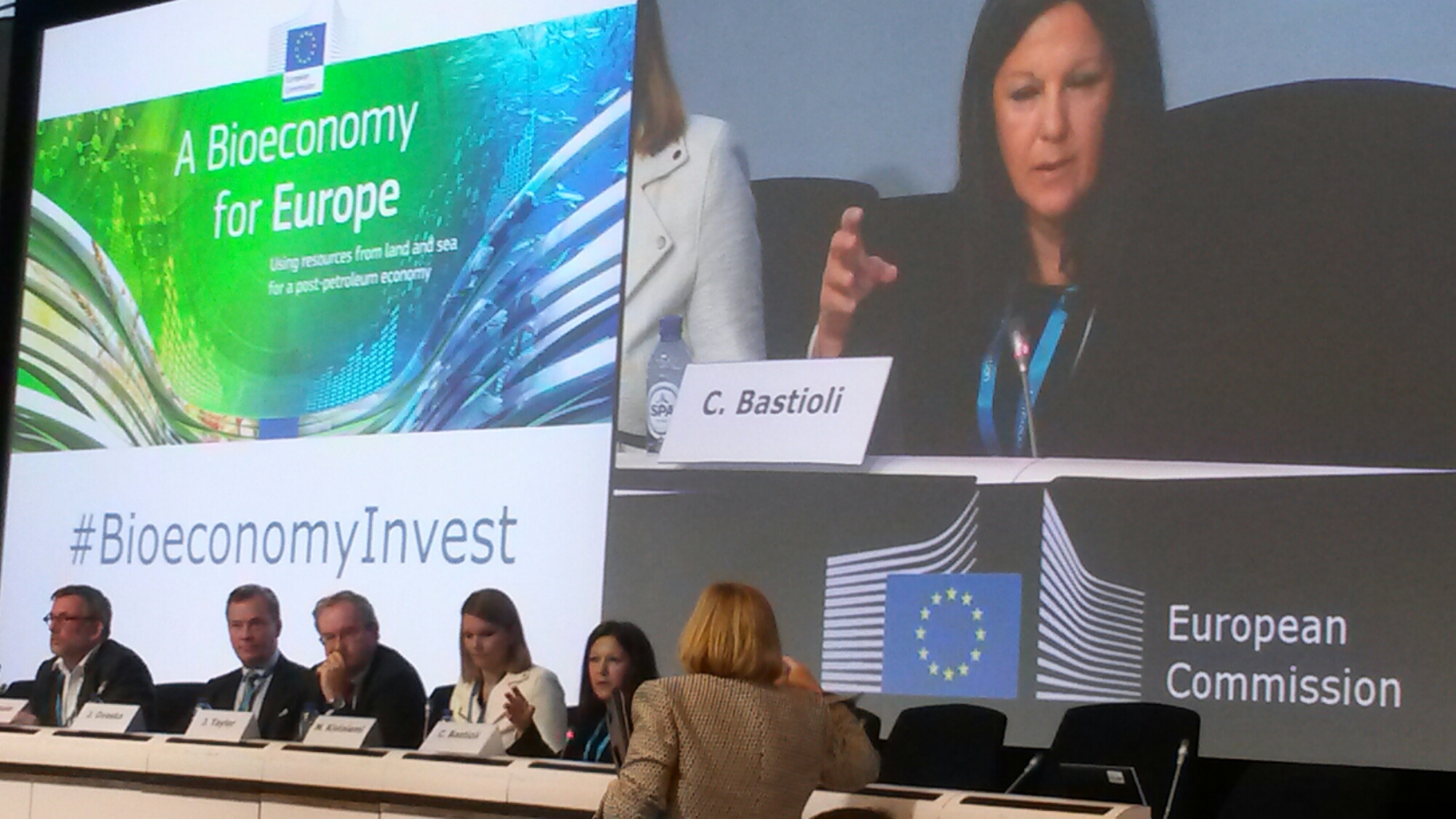
Catia Bastioli talks to Il Bioeconomista. An exclusive interview with the Ceo of Novamont

image

“To pass laws that can make a difference means overcoming the braking action of those who defend and feed the advantageous position, put into practice the good industry and multiply virtuous cases there are in our country. Much of the Italian industry has invested and is investing in the development of new products and “green” technologies, and now considers sustainability as an opportunity rather than a constraint”. Catia Bastioli talks to Il Bioeconomista. In this exclusive interview with the Chief Executive Officer of Novamont, considered as the beacon of Italian bioeconomy, we talk about bioeconomy, circular economy and climate change. A few days before the 4th EU Bioeconomy Stakeholders’ Conference in Utrecht, Bastioli gives us her vision to fully realize in Italy and Europe the new economy based on biological resources, able to create wealth and jobs, starting from the local areas.

Interview by Mario Bonaccorso

Continue reading →

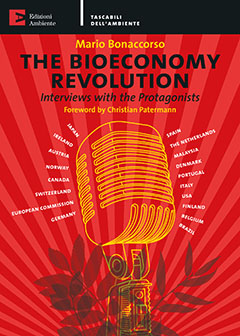
The Bioeconomy Revolution: the new ebook on world bioeconomy

The cover of the ebook

The Bioeconomy Revolution has just begun. The Bioeconomy Revolution is the new ebook on world bioeconomy published by Edizioni Ambiente, the main Italian publisher focused on green economy, bioeconomy and circular economy.

The ebook has the privilege of hosting the preface written by Christian Patermann, the man who is considered as the “father” of the European bioeconomy:

“The Bioeconomy Revolution” is not just another book to be added to the growing number of publications worldwide on the Bioeconomy and more recently on the so-called circular economy.

Continue reading →

Utrecht is ready to host the European Bioeconomy Stakeholders next Tuesday

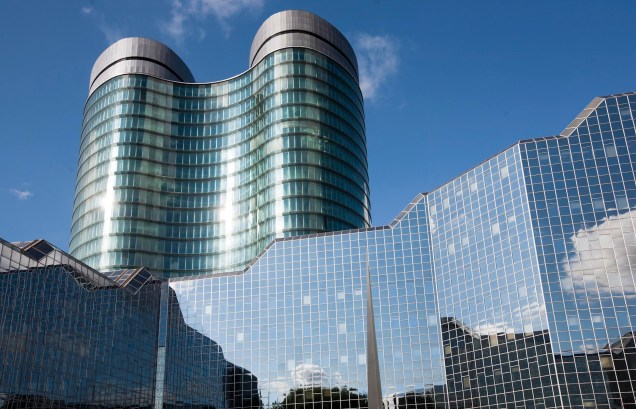
Rabo Nederland, Utrecht

Another brick towards the European Bioeconomy. The European Commission organises from 12 to 13 April in Utrecht, The Netherlands, the EU Bioeconomy Stakeholders’ Conference. Four years on from the launching of the EU’s Bioeconomy Strategy, Brussels in collaboration with the Dutch Presidency analyses the achievements and the opportunities ahead in the two-day conference.

Continue reading →

Italy will have its own strategy on bioeconomy by next summer

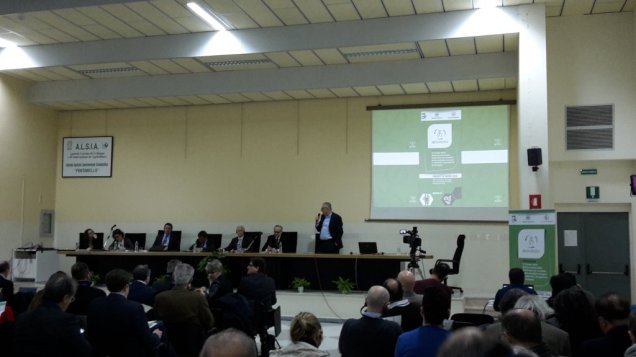
Raffaele Liberali in Metaponto (Basilicata, Italy)

Italy will have its own strategy on bioeconomy by next summer. This was announced by Mario Calderini, representative of the Ministry of Education, University and Research, yesterday in Metaponto, Basilicata, during the launch event of the regional bioeconomy cluster. Good news, then, for the bioeconomy in Italy, where it seems that the issue is increasingly on the agenda of the institutions.

Continue reading →

Bruce E. Dale, MSU: “Our current narrative about the way the world works is broken”

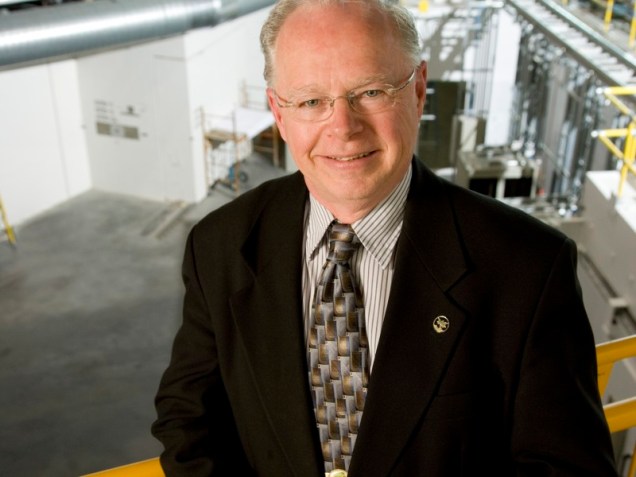
Bruce E. Dale in his lab at MSU

“They are on a journey of no return anyway. They are a “mining” industry, and all mines eventually become exhausted. The question is whether some or all of the petrochemical industry will realize this fact and act to change their feedstocks and practices so that their businesses can continue long term based on sustainable feedstocks and sustainable practices.” To say it – in this exclusive interview with Il Bioeconomista – is Bruce E. Dale, a highly-ranked academic in the Top 100 People in Bioenergy (Bioenergy Digest). Professor Dale received his doctorate in chemical engineering from Purdue University in 1979. He is currently University Distinguished Professor of Chemical Engineering at Michigan State University. He serves as Editor in Chief and Founding Editor of Biofuels, Bioproducts and Biorefining. Dale has won the Charles D. Scott Award (1996), the Sterling Hendricks Award (2007) and the Award of Excellence of the Fuel Ethanol Workshop (2011). He is a Fellow of the American Institute of Chemical Engineers (2011) and a Fellow of the American Institute of Medical and Biological Engineers (2016).

His research interests are cellulosic biofuels, the relationship between energy and societal wealth, life cycle assessment and the design of sustainable systems for producing fuels, chemicals, food and animal feed.

Interview by Mario Bonaccorso

Continue reading →

EU current policy suppresses measures that could greatly contribute to climate mitigation

Berlaymont, European Commission's Headquarter in Brussels
Berlaymont, European Commission’s Headquarter in Brussels

We receive and publish with pleasure this comment by James Cogan related to the land use impacts of biofuels comsumption in Europe. James is a technology, industry and policy analyst collaborating with PNO Innovation in Brussels and with a number of public and private organisations with stakes in the future of biofuels and transport energy.  We are delighted to promote the debate.

On March 10 2016 the European Commission was obliged to release an essential report on the land use impacts of biofuels consumption in Europe as determined by the Commission’s own policy on the matter. The Commission has had the report since the Summer of 2015. The report goes a long way to answering the question of how much better are biofuels for the environment than continued use of fossil fuels. In recent years some parts of the Commission have been sharply critical of conventional biofuels yet unable to produce evidence as to why. Reaching a fact-based consensus on the matter is essential for transport decarbonisation for 2030.

So what are the implications of the report findings for EU and member state transport energy planners who urgently require robust and practical guidance?

Continue reading →

A tribute to the 8 women who have distinguished themselves in the bioeconomy in 2015

mimoseFor International Women’s Day, we dedicate a tribute to the 8 women who have distinguished themselves in the bioeconomy in 2015. With their huge capacity and their infinite passion, they are the stars of the world bioeconomy. Of course, best wishes to all women.
Continue reading →

Leonardo Di Caprio: “Climate change is real. Let us not take this planet for granted”


“Making The Revenant was about man’s relationship with the natural world,” Di Caprio said. “A world that we collectively felt in 2015 was the hottest year in recorded history. Our production team needed to go to the southern tip of this planet just to be able to find snow; climate change is real, and it’s happening right now. It is the most urgent threat facing our entire species and we need to work together and stop procrastinating. We need to support leaders around the world who do not speak for the big polluters or the big corporations, but who speak for all of humanity; and for the indigenous people of the world; for the billions and billions of underprivileged people who will be most affected by this; for our children’s children; and for all the people out there whose voices have been drowned out by the politics of greed. Let us not take this planet for granted; I do not take tonight for granted.”