Photo: Emirates A380 taking off on 100% SAF. Source: Emirates
Emirates, one of the world’s largest international airlines, has become the first airline to operate an Airbus A380 demonstration flight with one of the aircraft’s four engines powered with Neste’s sustainable aviation fuel (SAF). Emirates’ flight demonstrates the potential of SAF as a more sustainable drop-in replacement for fossil-based jet fuel, matching its technical and chemical requirements. SAF can currently be used in up to 50% blends with conventional fossil jet fuel.
“The bioeconomy can be a catalyst for sustainable systematic change and transition, tackling key economic, societal and environmental challenges”. To say it – in this exclusive interview with IlBioeconomista – is Nicolò Giacomuzzi-Moore, Executive Director ad interim of CBE JU, Circular Bio-based Europe Joint Undertaking.
A new study reveals that coffee capsules made with Ingeo™️ PLA biopolymer from NatureWorks outperform aluminum, conventional plastics, and other compostable capsules when it comes to sustainability performance. The independent study conducted by Netherlands-based Wageningen Food & Biobased Research, a part of Wageningen University & Research (WUR), assessed the environmental impact and circularity of single-use coffee capsules made from compostable biobased materials, aluminum, and conventional plastics through multiple end-of-life scenarios including industrial composting, recycling, incineration, and landfill. The study also accounted for the fate of the spent coffee grounds within these capsules, finding that compostable capsules keep both the coffee grounds and capsule materials in the loop via organics recycling, making them the most sustainable option. The thermoformed Ingeo-based capsules used in the study were produced by NatureWorks’ partner and food packaging producer, Flo SpA.
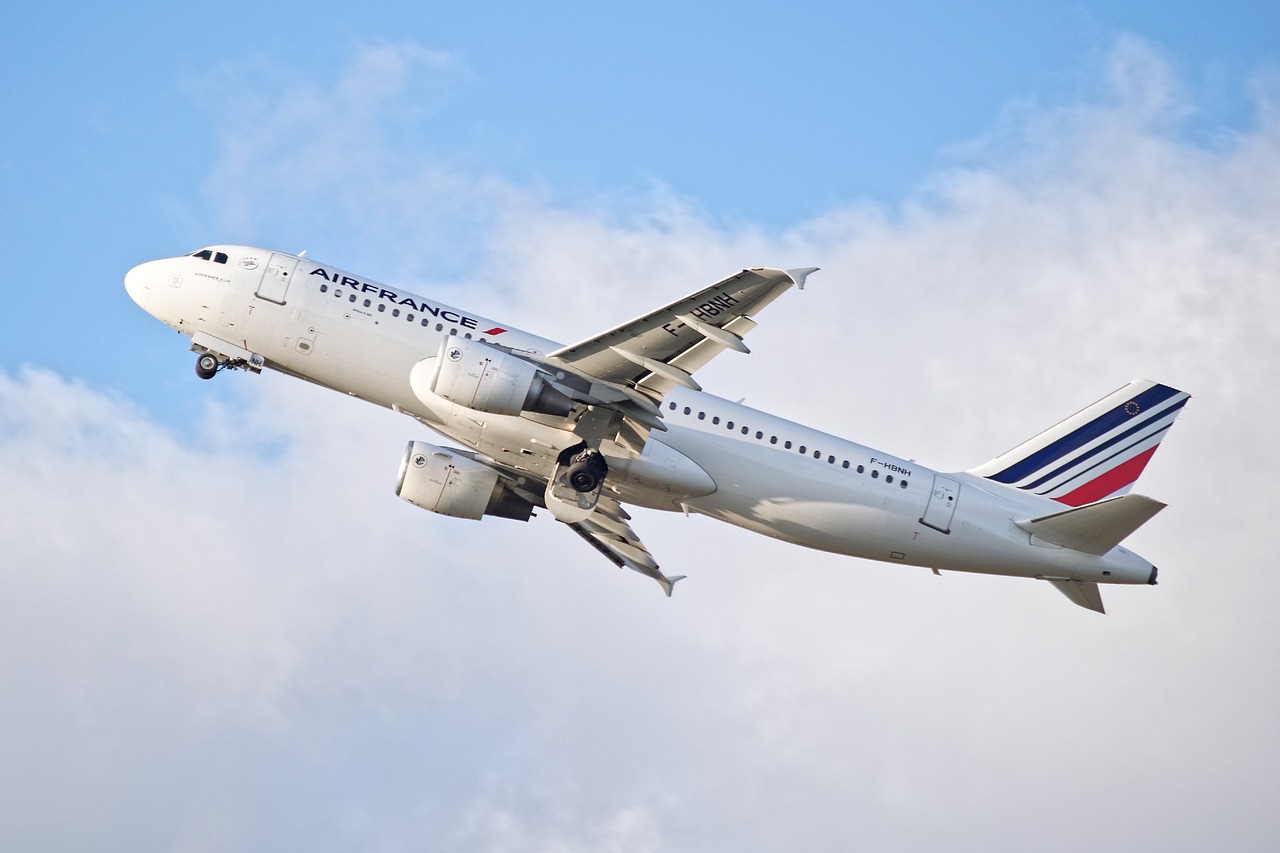
The Air France-KLM Group is fully committed to reducing its carbon footprint and aims to be a frontrunner in sustainable aviation. In 2022, the Group was the world’s largest user of SAF, representing 17% of the world’s total production. By comparison, the Group only accounts for 3% of the world’s consumption of conventional kerosene.
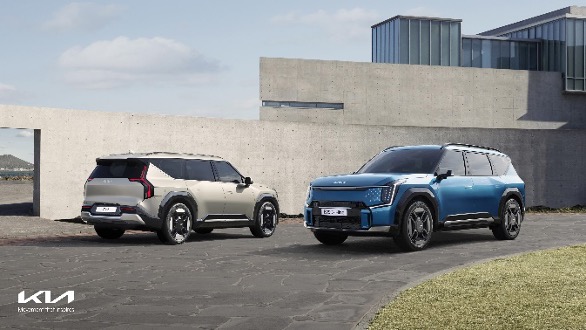
KIA Motors is using bio-based paint supplied by AkzoNobel for the inside of its new EV9 electric SUV. It’s the first time the vehicle manufacturer has specified an interior bio-based coating. Two kinds of bio-rosin (rosin is a solid form of resin) have been used to create the product, one extracted from rapeseed, the other from pine rosin. The paint can be found on the EV9’s interior door switch panels, with AkzoNobel also supplying coatings for the rest of the interior.
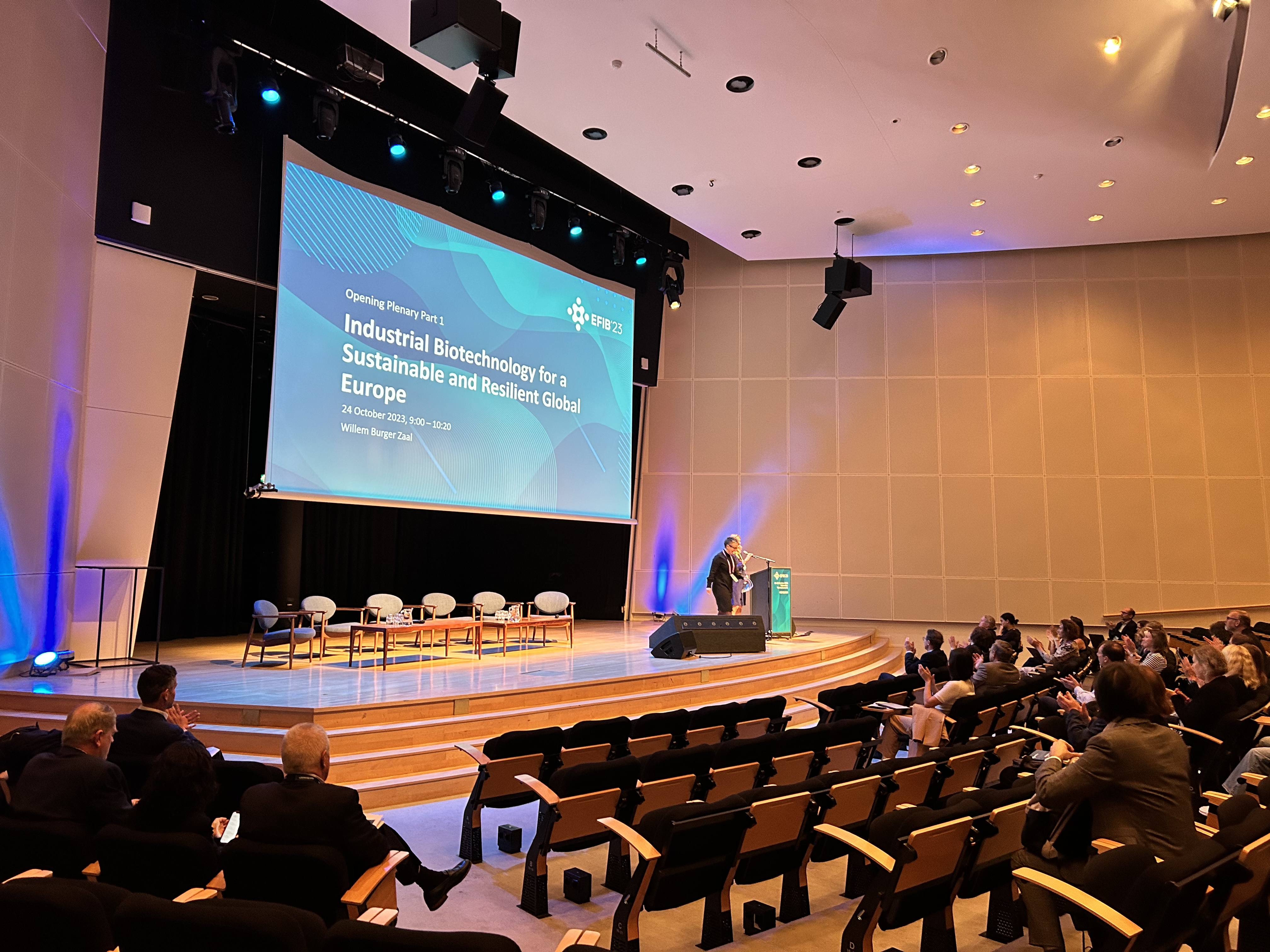
Rotterdam was the European capital of industrial biotechnology from Monday to Wednesday. More than 300 professionals from across the value chain, including researchers, policymakers, regulators, SME representatives, and global organisations met and discussed advancements in industrial biotechnology and its contribution towards positioning Europe as a global leader in addressing societal and sustainability challenges.
The two-day programme included inspiring plenaries, a start-up pitching hour, and thematic conference sessions ranging from food to sustainable finance and biomaterials – as well as new frontiers like biomanufacturing.
EFIB was a unique opportunity to boost networks, meet Europe’s SMEs, show innovations and discuss with businesses and decision-makers on the future of the European circular bioeconomy. The Forum ended with a statement, the so-called Rotterdam statement that will be published soon by EuropaBio.
Next year EFIB will take place in Marseille, France, from 4 to 5 November
Jukka Kantola, in the middle, at IFIB 2023 in Florence
Jukka Kantola talks to Il Bioeconomista. The CEO of the World Bioeconomy Forum was invited to a historic bioeconomy panel at UNFCC COP27 in Sharm el-Sheikh, Egypt, to present findings of the bioeconomy society to the climate mitigation discussion.
For this year “The World BioEconomy Forum Goes to the USA – Live from Washington D.C. “The United States is making significant strides in the global bioeconomy. USA is not alone in this space as there is a growing interest in the bioeconomy – like in China, India or Brazil. All in all it looks like that number of bioeconomy strategies is growing, bioeconomy is providing solutions for the mankind and its economic value is also multiplying. All these requires more collaboration over various sectors and regions.
World BioEconomy Forum has responded to this evolving environment – Kantola claims- by launching a digital survey last February and open until end of October. Results of the survey will be unfolded on December 12 in Washington D.C. at the conference whose title is “Creating a Global Hub for the Bioeconomy”.
“We need to grow the bio-based sector. Especially, if you look at the challenges the world is facing. That means, not just research and innovation, but actually scaling-up the production of our new bio-based products and processes in Europe. For that, we need more investment in new biorefineries in Europe.” Dirk Carrez, CEO of BIC (Biobased Industries Consortium), a non-profit organisation set up in Brussels in 2013 to represent the private sector in a Public-Private Partnership (PPP) with the European Commission, talks to Il Bioeconomista about present and future of the European bioeconomy.
Berlaymont, European Commission’s Headquarter in Brussels
For the first time, BIC has published a Trend Report on how Europe can unleash the full potential of the bioeconomy, enabling it to better contribute to the EU’s green transition. In 2012, the world admired Europe as a global frontrunner for launching its EU bioeconomy strategy. Today, the world and Europe look to other regions that are bolder in making the bioeconomy a strategic industry sector. In particular, the US with its recently-launched initiatives, but also China, India and the G20.
Virginia Puzzolo, Head of Program at CBE JU at IFIB 2023 in Florence
The CBE JU Stakeholder Forum 2023 will take place on 6-7 December in the Egg venue in Brussels, to discuss on the future of the European bio-based sector, visit the exhibition of innovative bio-based solutions and network with 600 CBE JU stakeholders. ’What next for the European bio-based sector?’ will be the main theme of the forum.




 IL BIOECONOMISTA