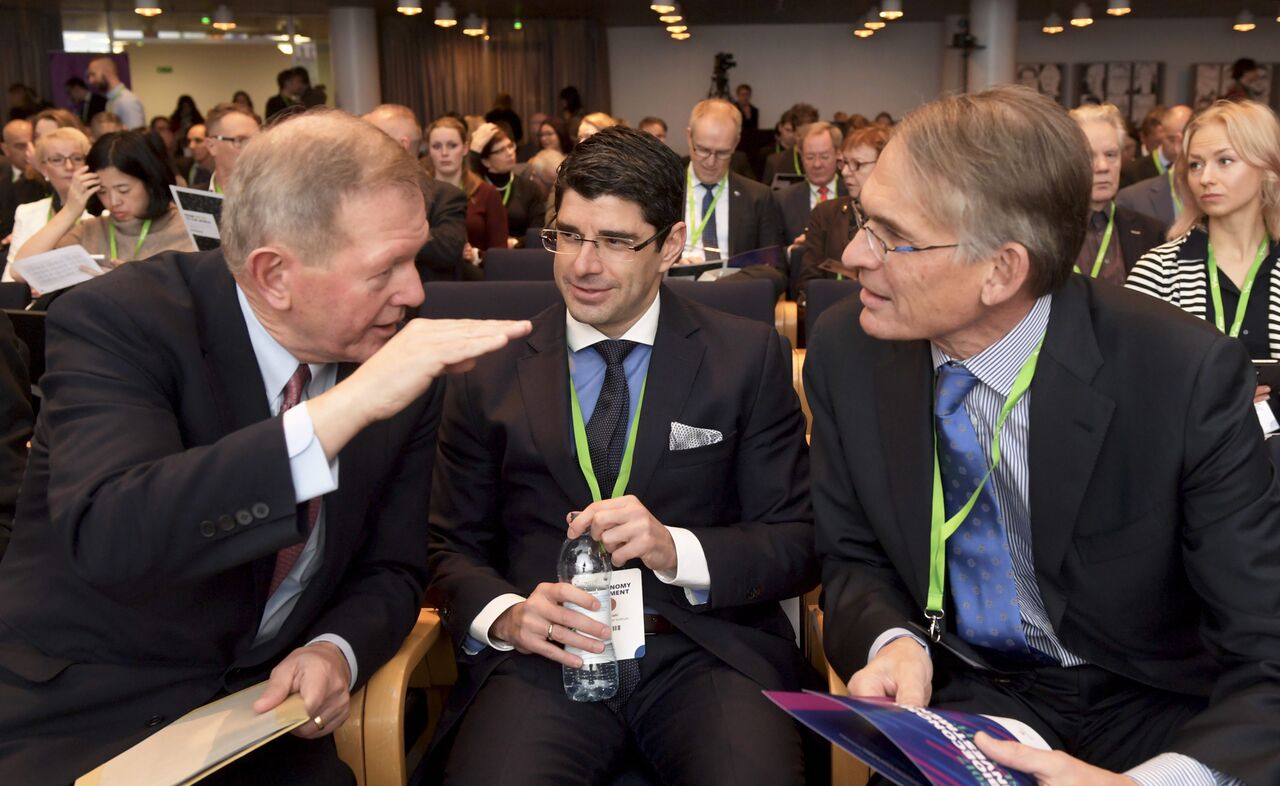
Marc Palahi at the European Bioeconomy Investment Summit in Helsinki (2017)
Forests and forestry play a key role in policy targets to achieve climate neutrality. In a comprehensive new European Forest Institute study, a multidisciplinary team of 12 authors from 7 countries have analysed how much forests and wood use can contribute to climate change mitigation, and how that contribution can be maximised.
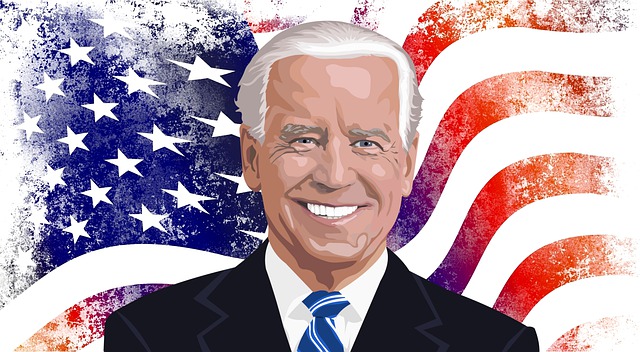
President Biden signed an Executive Order to launch a US National Biotechnology and Biomanufacturing Initiative that “will ensure we can make in the United States all that we invent in the United States. This Initiative will create jobs at home, build stronger supply chains, and lower prices for American families”. Yesterday, the White House hosted a Summit on the National Biotechnology and Biomanufacturing Initiative during which cabinet agencies announced a wide range of new investments and resources that will allow the United States to harness the full potential of biotechnology and biomanufacturing and advance the President’s Executive Order.
The market for bioplastics used in packaging is anticipated to reach USD 16.6 billion by 2027, with a CAGR of 9.5 percent from 2013 to 2021, and is now valued at USD 10.5 billion in 2022. According to the FMI analysis, the market for bioplastics used in packaging would grow by 1.7 times its value from the base year during the course of the forecast year, creating lucrative investment prospects for the industry.
Headquarter of Royal DSM in Heerlen (The Netherlands)
Royal DSM, a global purpose-led science-based company, pledges to purchase all of its electricity worldwide from renewable sources as well as further reduce greenhouse gas (GHG) emissions from its own operations faster with stringent new 2030 sustainability targets.
Avantium N.V., a leading technology company in renewable chemistry, signed an offtake agreement with AmBev, the Brazilian brewing company, part of the AB InBev Group, the largest beer company in the world. AmBev will purchase PEF (polyethylene furanoate) – a 100% plant based and recyclable alternative to plastic – from Avantium’s Flagship Plant and will use it to make bottles for its soft drinks portfolio.
Berlaymont, European Commission’s Headquarter in Brussels
The EU Commission will celebrate the 10th anniversary of the first Bioeconomy Strategy, by organizing a high-level conference in Brussels. The conference “The Bioeconomy – Enabling the European Green Deal in Challenging Times” will take place on 6 and 7 October in the Charlemagne building. In addition, all sessions will also be live-streamed to allow everyone to get involved from anywhere.
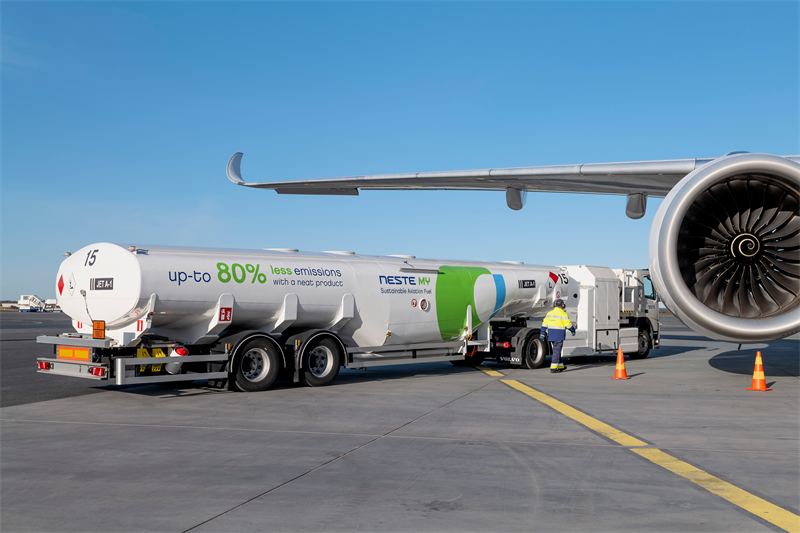
Neste and HELLENIC PETROLEUM Group have entered into an agreement for the commercial distribuito of Neste MY Sustainable Aviation Fuels on flights by Aegean Airlines, the leading air carrier in Greece. HELLENIC PETROLEUM Group, through its subsidiary EKO, will ensure the supply of Neste-produced sustainable aviation fuel (SAF) on AEGEAN flights departing from its Thessaloniki Airport “Makedonia” hub. Flights from Athens International Airport are expected to follow soon, as Neste announced.
Californian biotech company Genomatica (Geno) alongside longtime collaborator Aquafil successfully completed the first demonstration scale production runs for plant-based nylon-6. The material is intended to reshape the $22 billion nylon industry, enabling brands to meet demand from consumers for sustainable everyday materials from apparel to automotive parts to carpets.
Finnish giant Neste and Fly Victor, the on-demand private jet company, started a partnership which sets a new sustainability benchmark in business aviation. Victor members can now purchase Neste MY Sustainable Aviation Fuel™ (SAF) for every private jet booking globally. This enables private jet charterers to reduce the carbon footprint of their private air travel in a credible and measurable way.
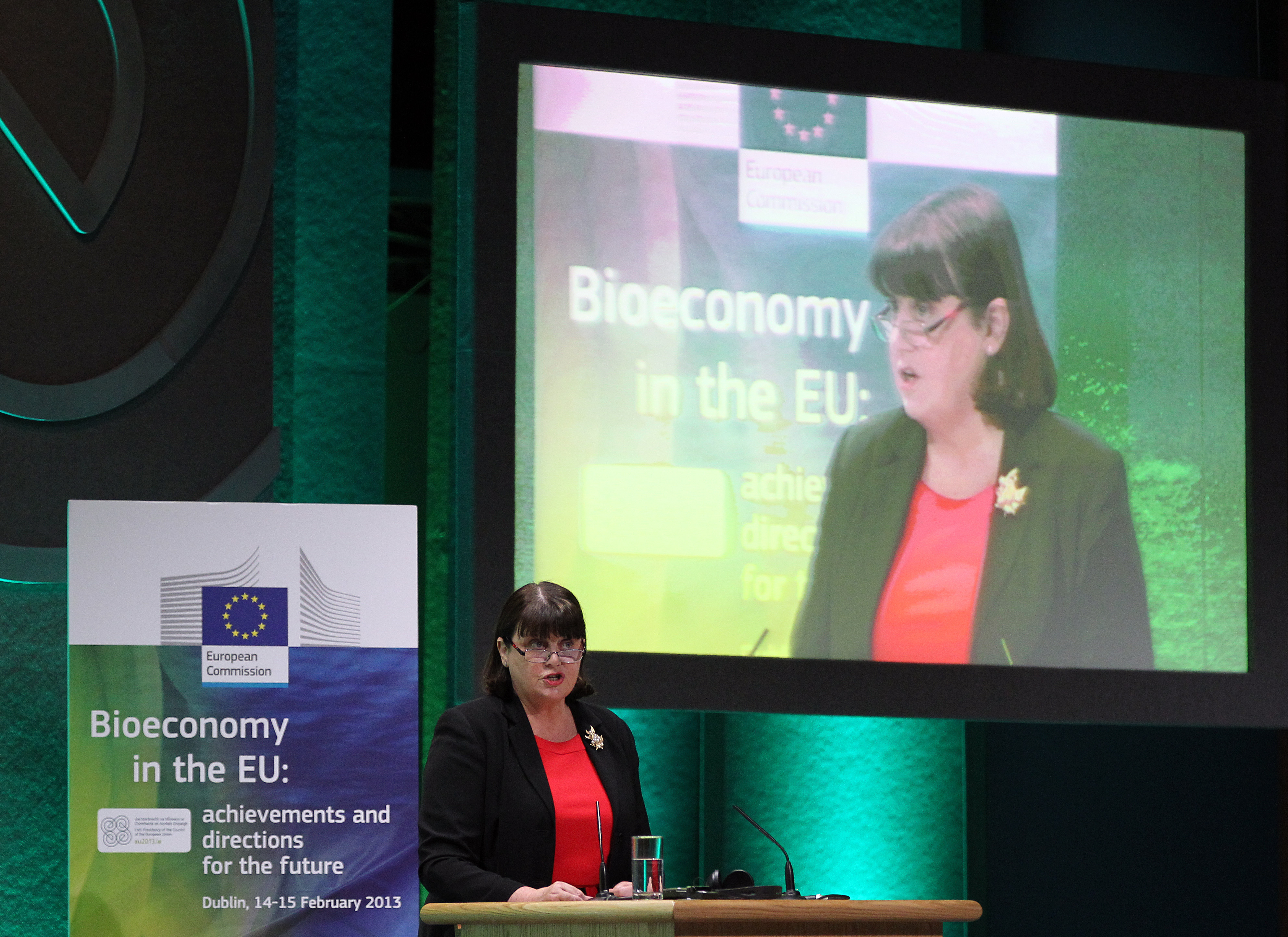
Former EU Commissioner Máire Geoghegan-Quinn speaks to delegates during the Bioeconomy conference in Dublin on February 14, 2013.
In 2021, the bioeconomy in EU4 (France, Germany, Italy and Spain) has reached a value of production of €1,500 billion, employing over 7 million people. Germany is confirmed as a leader with a value of €436.6 billion, then France (379.4 billion), Italy (364.3 billion) and Spain (251.5 billion). This is according a new Report realized by the Intesa Sanpaolo Research Department (Intesa Sanpaolo is one of the major banking group in Europe), in collaboration with Italian Circular Bioeconomy Cluster SPRING and Assobiotec, and today presented in Salerno (South Italy), which is dedicated to bioeconomy, which, in line with the definition of the European Commission, was defined as the set of activities using renewable natural resources to produce goods and energy, generating great advantages in terms of sustainability.