Stora Enso and Helsinki Olympic Stadium go green by promoting renewable materials

Helsinki, Finland

Stora Enso and Helsinki Olympic Stadium signed a partnership agreement to develop low-carbon, eco-friendly operations at the stadium by promoting the use of renewable materials and circular economy solutions. Stora Enso explores reusing products as well as recycling used materials to give high-quality wood fibers a second life in new products that will be available at the stadium for different services and operations.

Stora Enso and Helsinki Olympic Stadium share the aim of promoting the use of renewable materials in customer and food service packaging to reduce the climate impact of stadium operations. In addition, the aim is to ensure that materials get recycled to a high degree. Packaging made of renewable materials has a high recycling rate throughout Europe and it typically has a low carbon footprint that is further reduced when recycled. Continue reading

New German study: compostable biowaste bags are not a threat for the quality of compost

The Witzenhausen institute and the University of Bayreuth released a study proving that compostable biowaste bags are not a threat for the quality of compost. This field study shows that compostable bags are a suitable option for organic waste collection by completely disintegrating and reducing the plastic contamination.
Continue reading

Crescentino plant in Italy re-starts with the production of liquid hand disinfectant from bioethanol

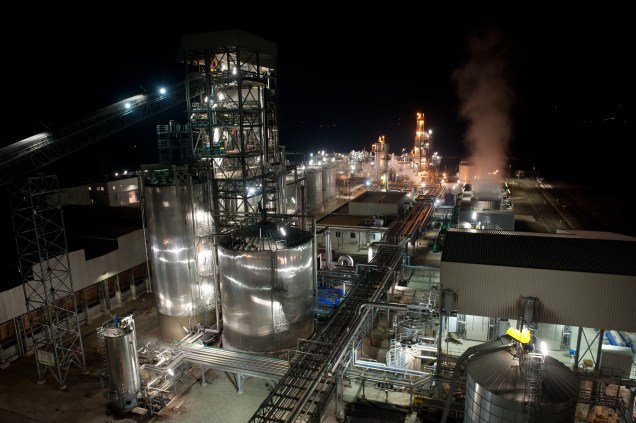
Crescentino Plant View: 2G biofuels biorefinery

Versalis, Eni’s chemical company, has launched a new line to produce liquid hand disinfectant marketed under the brand name Invix™ at its plant in Crescentino (Vercelli, North-western Italy), to meet the growing demand as a result of the current health situation across the nation.

Continue reading

Neste delivers its first batch of SAF to San Francisco International Airport via pipeline

San Francisco International Airport

Neste, the world’s largest producer of renewable diesel and sustainable aviation fuel (SAF) produced from waste and residue raw materials, has delivered its first batch of sustainable aviation fuel to San Francisco International Airport (SFO) via pipeline, where it will be used by major airlines committed to reducing carbon emissions.

Continue reading

The Italian bioeconomy is alive and well. New Report: €345 billion the value of production

Sustainable Intesa Sanpaolo’s Pavillion at Expo 2015 in Milan

In 2018, bioeconomy in Italy has shown a production potential amounting to 345 billion euro, equal to approximately 10% of the total value of national production, employing approximately 2 million people. Italy is in third position at EU level. Germany is first with a production worth €414 billion and France second with €359 billion. Spain is fourth (€237 billion) followed by the UK (€223 billion). In these five countries, the bioeconomy is worth €1.568 trillion. Continue reading

HRH Prince of Wales calls for a ‘green and human-centric recovery’ based on circular bioeconomy

Windsor Castle, UK

Your Excellencies, Ladies and Gentlemen, I must say how grateful I am to have been invited to be with you here today as we bring together the United Nations and the Commonwealth to discuss what we are calling The Great Reset.  I would also like to thank the Permanent Representatives of Canada and Jamaica for convening this meeting and Prime Minister Trudeau for his inspiring leadership on the Green Recovery.

Continue reading

Amyris launched “Baby Cream to Powder” under its bio-based Pipette baby brand

John Melo, President and Ceo of Amyris

Amyris, Inc., a leading synthetic biotechnology company based in Emeryville (California), launched “Baby Cream to Powder” under its Pipette™ baby brand giving caring parents more choice and keeping babies safe. This safe, talc-free alternative to baby powder goes on as an easy-to-apply cream to prevent and treat diaper rash and irritation and transforms into a silky powder on skin, eliminating the risk of powder inhalation. The announcement by Amyris comes on the heels of news that the largest and leading provider of baby care products will stop selling talcum-based baby powder in the U.S. and Canada amidst questions about its product safety.

Continue reading

The world re-starts with the Circular Bioeconomy of Wellbeing

The need to react to the COVID-19 crisis is a unique opportunity to transform our economy and put forward the change that our society needs to create a sustainable and desirable future. A Circular Bioeconomy Roundtable convened by HRH The Prince of Wales last week discussed how this should be done: not just by designing recovery packages, but by transformative action to trigger mission-oriented innovation, attract investments and rethink business models and markets. Leading figures from science, the investment community and industry discussed how a circular bioeconomy offers game-changing solutions and is a crucial concept to move towards a carbon-neutral, renewable and inclusive economy that prospers in harmony with nature.

Continue reading

LanzaTech has successfully launched LanzaJet to produce sustainable aviation fuel

Jennifer Holmgren at IFIB 2018 in Turin, Italy

LanzaTech, a leading biotech company and carbon recycler headquartered in Illinois (USA), has successfully launched LanzaJet, Inc., a new company that will produce sustainable aviation fuel (SAF) for a sector requiring climate friendly fuel options as it starts to recover from the impacts of COVID-19. With its approach to commercialization of SAF, LanzaJet is creating regional jobs while enabling global decarbonization of the aviation sector.

Continue reading

Beiersdorf and Evonik joined forces to develop sustainable raw materials for care products

Marco Reus. Evonik is popular as main sponsor of German Football team Borussia Dortmund

Beiersdorf and Evonik have reached an agreement on a research partnership. Its aim is to develop sustainable raw materials for care products, using carbon dioxide (CO2) as the starting material. Beiersdorf is on the lookout for new sources of raw materials that will also reduce the company’s carbon footprint. One option here is artificial photosynthesis technology. The idea: with the aid of electricity from solar energy and bacteria, valuable raw materials are produced with water and CO2, drawing on natural photosynthesis as a model. The joint research project of Evonik and Beiersdorf is being funded by Germany’s Federal Ministry of Education and Research (BMBF) in the amount of around €1 million.

Continue reading