Bye Bye Europe. British Petroleum Invests in Advanced Biofuels in America

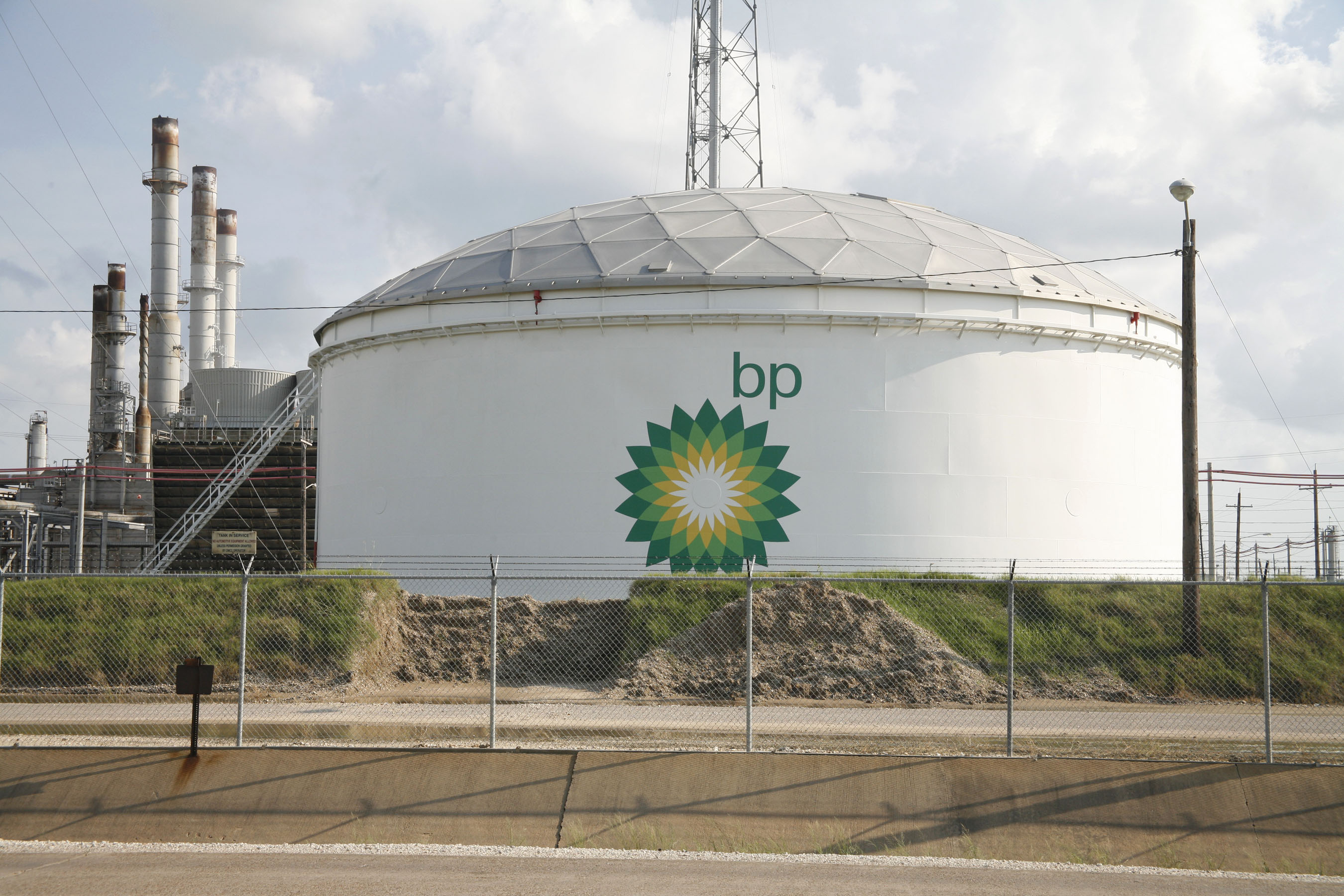
BP's Refinery
BP’s Refinery

Oil major BP is directing investment in advanced biofuels to the United States and South America due to uncertainty about the European Union’s future regulatory environment.

“At the moment we are not contemplating investing in second-generation cellulosic (ethanol) in Europe simply for the reason that there is not enough certainty on what the market conditions will be like,” Phil New, head of BP Biofuels, said in an interview with Reuters UK.

Continue reading

In Scotland Advanced Biofuels from the By-products of the Malt Whisky Industry

Lagavulin Distillery in Port Ellen (Scotland)

A Scottish energy start-up commercialises a process for producing a superior next generation biofuel (and other high value sustainable products) from the by-products of biological industries. The company – Celtic Renewables is its name – is initially focused on the £4 billion Scottish Malt Whisky industry as a ripe resource for developing bio-butanol – a next generation biofuel.  Biobutanol has 25% more energy per unit volume than bioethanol; it has a lower vapour pressure and higher flashpoint (making it easier to store and safer to handle); it can be blended without requiring modifications in blending facilities, storage tanks or retail station pumps; in sharp contrast to ethanol, it can run in unmodified engines at any blend with petrol and may also be blended with diesel and biodiesel; it is less corrosive than bioethanol and can be transported using existing infrastructures.  Biobutanol was legally recognised as a biofuel by incorporation in the 2009 amendment to the Road Transport Fuel Obligation (the UK implementation of the EU Renewable Energy Directive, which dictates that 5% of the UK’s transport fuel comes from a renewable source by 2013, and 10% by 2020).

Continue reading

Novozymes and Novo Nordisk utilize wastewater to produce biogas

Novo Nordisk's production site in Kalundborg
Novo Nordisk’s production site in Kalundborg

Novozymes and Novo Nordisk, Danish big companies, have in collaboration installed a 36 meter tall, high-performance biogas reactor. The new biogas reactor utilizes wastewater from both Novo Nordisk and Novozymes’ large production in Kalundborg for an efficient production of biogas.
There are two specific reasons for Novozymes’ investment in the new biogas reactor. “Firstly, we can reduce CO2 emissions from our production. This enables us to reduce our CO2 emission with 21,000 tons annually, equivalent to emissions from 12,000 households or 1000 trucks each driving a 1000 kilometers,” explains Line Sandberg, Vice President in Novozymes’ Danish production.

Continue reading

In Vienna Molecular Switch for Cheaper Biofuel

Vienna University of Technology

At the Vienna University of Technology, genetic engineers have found a trick, thanks to which fungi can be used for the production of biofuels far more cost effectively than before.

Lignocellulosic waste such as sawdust or straw can be used to produce biofuel – but only if the long cellulose and xylan chains can be successfully broken down into smaller sugar molecules. To do this, fungi are used which, by means of a specific chemical signal, can be made to produce the necessary enzymes. Because this procedure is, however, very expensive, Vienna University of Technology has been investigating the molecular switch that regulates enzyme production in the fungus. As a result, it is now possible to manufacture genetically modified fungi that produce the necessary enzymes fully independently, thus making biofuel production significantly cheaper.

Continue reading

BASF announced new investments in Asia Pacific

BASF-Innovation-Campus-Asia-Pacific-and-Greater-China-headquarters_-inaugurated.jpgToday BASF’s Crop Protection division (with sales of around €4.7 billion in 2012) presented its solutions for the future of food availability and quality of life in Asia Pacific. BASF aims to address these challenges by introducing new technologies, broadening farmer education and co-creation initiatives, increasing investments in production capacity and R&D as well as collaborating with food value chain partners. These initiatives will enable BASF to support growers in Asia Pacific more efficiently and broadly.

From 2008 to 2012, the Crop Protection division’s R&D expenditures have grown annually by 7% on average, from €325 million to €430 million. The company will continue to invest heavily in R&D projects in the future. Over the next few years, BASF also plans to spend on average €300 million annually on additional production capacities globally for its portfolio of agricultural solutions. “These investments mean that BASF can continue to support food availability in Asia Pacific and around the world more broadly,” said Markus Heldt, President of BASF’s Crop Protection division. “We are specifically investing in research, development and production in Asia Pacific as part of BASF’s globalization efforts, which will enhance our collaboration with growers in the region.”

Continue reading

Interview with Simão Soares, Ceo of SilicoLife. The bioeconomy is the key to overcome the economic crisis in Portugal

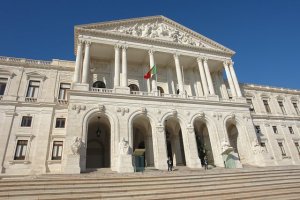
parliament in lisbonIn Portugal, the unemployment rate has reached a record level of 17.7 percent, the highest in the European Union after Greece (26.4%) and Spain (26.3%), compared to an EU average of 10.9%. 952,000 people are unemployed, out of a total population of 10,5 million inhabitants.

For 2013, the center-right government led by Pedro Passos Coelho provides additional anti-crisis measures to comply with the financial assistance program of the Troika (EU, ECB, IMF), whose inspectors have already been twice in Lisbon to control the progress of the accounts. Among the measures there is the reduction of approximately 5 percent of public employees (30,000 of 700,000).

The bioeconomy could also be for Portugal an important way out of the crisis. We speak with Simão Soares, Ceo of the young company SilicoLife, one of several companies involved in the fields of bioeconomy created in Portugal in recent years, specialized in bioinformatics.

Interview by Mario Bonaccorso

Continue reading

Bioeconomia: il rilancio italiano passa da Massa Marittima

platea.jpgIn Italia si comincia a parlare seriamente di bioeconomia. L’ultima occasione è stata offerta da un seminario che si è tenuto lo scorso 9 maggio a Massa Marittima, organizzato dalla Fondazione Arare dell’ex presidente di Confagricoltura, Federico Vecchioni, con la partecipazione di esperti, accademici, imprenditori e politici. Tra questi Paolo Bortolozzi, relatore al Parlamento europeo della Comunicazione sulla bioeconomia.

Proprio Bortolozzi nel suo intervento ha sottolineato come il settore della bioeconomia sia stimato oggi in Europa in 2000 miliardi di euro e dia lavoro a 22 milioni di persone. Si tratta perciò di un’area su cui investire con forza per generare lavoro e nuovi posti di lavoro. La Commissione europea stima inoltre che per ogni euro investito nei settori della bioeconomia oggi si possa generare un valore aggiunto di 10 euro entro il 2025.

A Massa Marittima si è discusso di come l’Italia possa agganciare questo sviluppo grazie all’uso intelligente delle risorse biologiche e rinnovabili, provenienti dalla terra e dal mare, finalizzato ad uno sviluppo industriale ed energetico ecologicamente e socialmente sostenibile. La Commissione europea sta sostenendo infatti un processo decisionale volto a tradurre in atti normativi coordinati una strategia indirizzata all’innovazione per una crescita sostenibile dell’economia continentale, rendendola più efficiente e competitiva, con un positivo e significativo impatto sui livelli occupazionali.

Continue reading

Now is the time in Europe to bring advanced second-generation biofuels to the market

mazda_bp_biobutanol.jpgThe Leaders of Sustainable Biofuels (LSB), a group composed by the Chief Executive Officers of seven Leading European biofuel producers and European airlines, met the European Parliament (EP) in Brussels last week. The meeting was hosted by the ITRE (Industry, Research and Energy) Committee, chaired by Mrs Amalia Sartori, to discuss the positions of the EP ITRE Committee on the European Commission revision of the Renewable Energy Directive – RED. The positions expressed by Mr Alejo Vidal Quadras, the Rapporteur of the ITRE Committee, and reported in his draft ITRE Draft Opinion, were supported by the Leaders of Sustainable Biofuels.

The Leaders, whose chairman is Guido Ghisolfi, President of Mossi & Ghisolfi Group, headquartered in Tortona (Piedmont, Italy), sent a clear message to the Parliament members: “Second Generation Advanced Biofuel technologies are ready to compete with conventional biofuels, with companies keen to invest in commercial projects given appropriate conditions”.

Continue reading

Solazyme and AkzoNobel enter into an agreement targeting the development of advanced tailored oils

AkzoNobel.jpgSolazyme, Inc., a renewable oil and bioproducts company headquartered in South San Francisco (California, USA), and AkzoNobel, a leading global paints and coatings company and a major producer of specialty chemicals headquartered in Amsterdam (The Netherlands), announced that they have entered into an agreement targeting the development of advanced tailored oils and commercial sales for near-term product supply.

“Tailored oils – is written in a press release of both companies – can enhance or replace petroleum-derived chemicals, and improve upon the performance of plant oils and animal fats”. The Solazyme and AkzoNobel agreement is rooted in a shared commitment to sustainability and high-performance products derived from triglyceride oils.

Continue reading

EFIB 2013: Brussels world capital of the bioeconomy from 30 September to 2 October

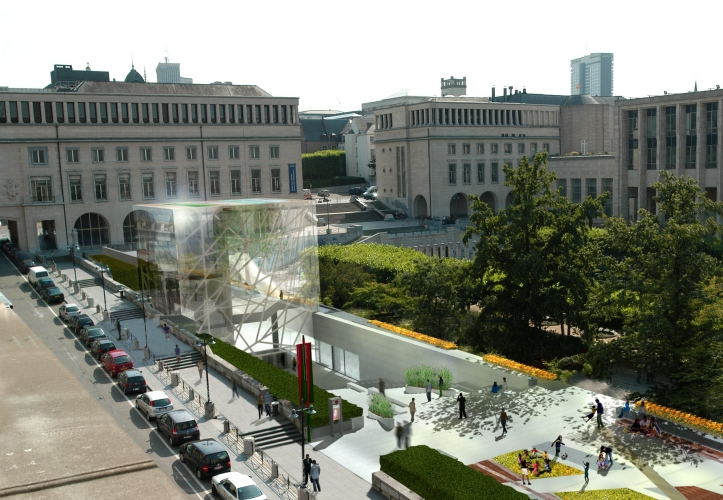
square-brussels-cube-by-dayEuropaBio, The European Association for bio-industries, and Smithers Rapra unveil highly-anticipated agenda for the European Forum for Industrial Biotechnology (EFIB) from 1-2 October 2013 taking place in the heart of Brussels at SQUARE. Officially launched by Elio di Rupo, Prime Minister of Belgium, EFIB’s opening plenary brings together a host of keynote speakers including Rudolf Strohmeier, Deputy Director General R&I at the European Commission; Maria da Graça Carvalho, Rapporteur on Horizon 2020 in the European Parliament and CEOs of Ecover and Galactic. Followed by exciting partnership perspectives from the Plant PET Technology Collaborative and a session lead by Ian Hudson, President of DuPont EMEA, examining the triggers for big business to make the shift towards the biobased economy. All speakers set the scene for another outstanding year, and transform the event from conference to congress.

Continue reading