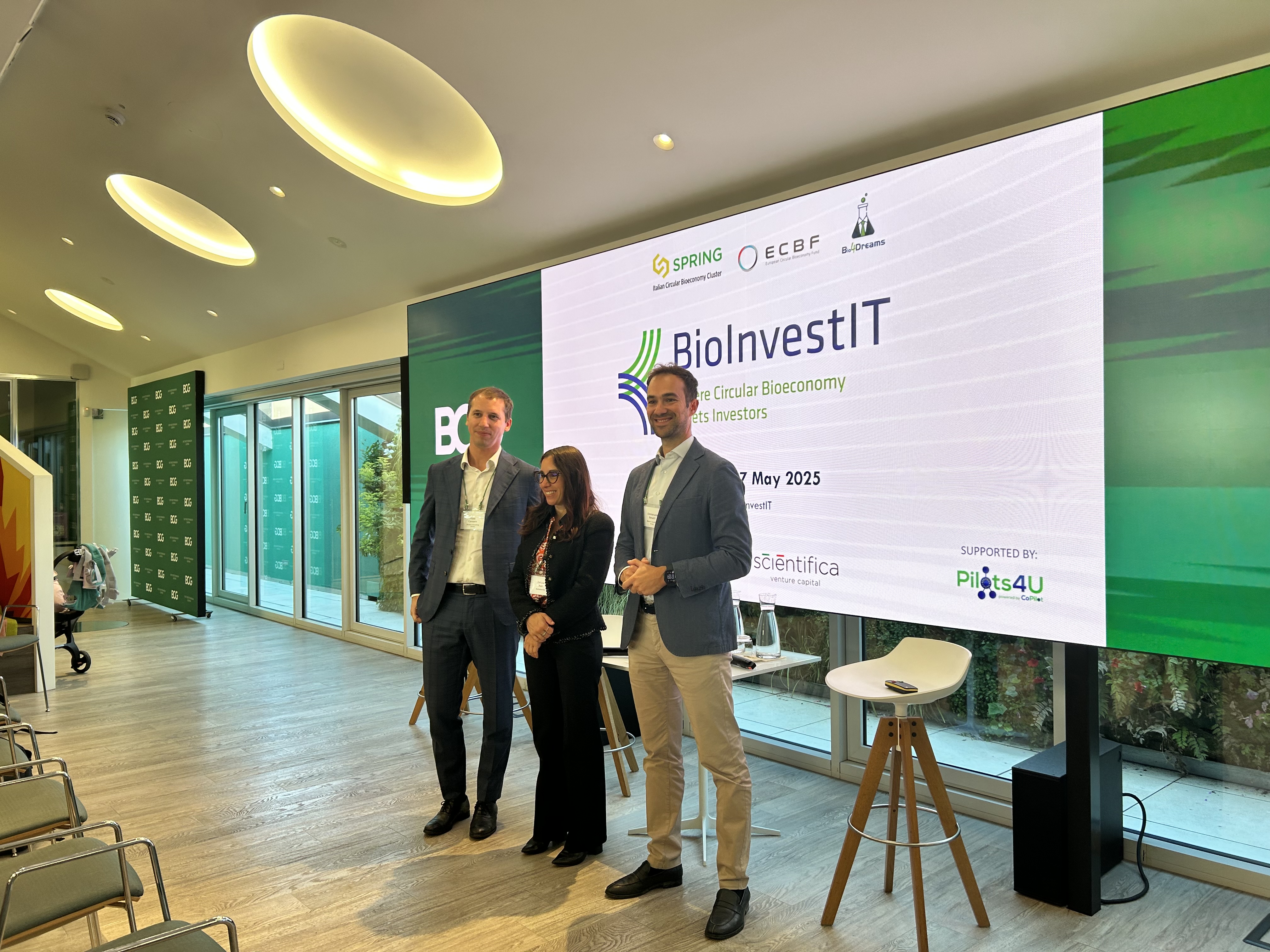
Milano is hosting today the third edition of BioInvestIT, the key investment forum for circular bioeconomy organized by Italian Circular Bioeconomy Spring together with the European Circular Bioeconomy Fund (ECBF) and Bio4Dreams and the support of TerraNext, LCA and Bioinvest Europe. The event brings together innovative businesses and projects seeking capital with financial and corporate investors from all over Europe.
Jennifer Holmgren, CEO LanzaTech, at IFIB 2019 in Naples
BRIGHT, the Novo Nordisk Foundation Biotechnology Research Institute for the Green Transition at the Technical University of Denmark (DTU) and LanzaTech Global, Inc., a global leader in gas fermentation, have entered a multi-year agreement to accelerate development of technologies that convert carbon emissions into valuable products.
The European Investment Bank (EIB) and Eni signed a 15-year loan for €500 million to convert selected units of Eni’s Sannazzaro de’ Burgondi refinery, located in the Italian province of Pavia, into a biorefinery. The agreement was signed by EIB Vice-President Gelsomina Vigliotti and Eni CEO Claudio Descalzi.
UPM Adhesive Materials, a global supplier of self-adhesive paper and film products, and Mark Andy, a leading manufacturer of narrow- and mid-web printing and finishing equipment, announce the renewal of their strategic partnership in the Americas for the seventh consecutive year. This global collaboration leverages UPM’s extensive portfolio of more sustainable labeling materials and Mark Andy’s cutting-edge printing technologies to deliver high-quality, innovative label printing solutions to the Americas and European markets.
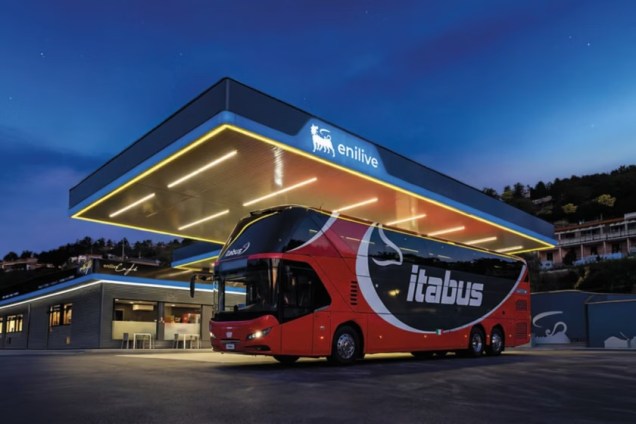
All the 100 vehicles in the Itabus fleet run on Enilive’s HVOlution diesel, a biofuel made from 100% renewable raw materials (in accordance with the European Renewable Energy Directive). Produced at Enilive’s biorefineries in Venice and Gela mainly from waste, such as used cooking oil and animal fats, and residues from the agri-food industry, HVOlution is a hydrogenated vegetable oil that can be used in all validated diesel engines and is available in more than 1,550 Enilive service stations in Italy. HVO diesel biofuel – according to the Italian company – contributes to the decarbonization of the transport sector, including heavy-duty vehicles: across the entire supply chain, in 2025 the average CO₂eq emissions reduction from Enilive HVO for traction use was 79.5%, if compared to the reference fossil mix.
IFF — a global leader in flavors, fragrances, food ingredients and health & biosciences — is enhancing regional production and innovation capabilities to better support the continued growth of its Health & Biosciences (H&B) business in Latin America, one of the fastest-growing markets for the company. The effort includes the transformation of the Arroyito site in Argentina into IFF’s first full fermentation‑based enzyme production hub in the region and the opening of a household care application laboratory at IFF’s Innovation Center in Brazil. Together, these enhancements expand IFF’s regional footprint and are expected to improve speed, reliability and locally relevant solutions for markets including brewing, animal nutrition, biofuels and home care.
Equal opportunity and equal treatment in the labour market are at the core of decent work. Unfortunately, women around the world still face additional hurdles to access employment, and once in employment, to access decision-making positions and jobs in certain sectors or of certain characteristics. This horizontal and vertical gender segregation of employment, combined with the unequal distribution of unpaid work (including household and childcare activities), results in differences in working conditions such as the gender pay gap and the over-representation of women in part-time jobs.
There is a further important strategic investment in biorefining for Eni, the Italian petrochemical giant. In addition to the Priolo project, the final investment decision (FID) has also been approved for Eni’s plan to convert certain units of the Sannazzaro de’ Burgondi refinery (Pavia, Lombardy) into a biorefinery.
Both projects represent a significant step forward in developing Enilive’s biofuel production capacity. The two biorefineries will be completed by 2028 and will offer maximum flexibility in producing both HVO diesel (Hydrogenated Vegetable Oil) and SAF-biojet, Sustainable Aviation Fuel.
The new biorefinery in Sannazzaro de’ Burgondi will not affect the plant’s existing traditional fuels production capacity. Instead, it will introduce additional biofuel production from renewable raw materials, further diversifying the range of products available to the market.
The project involves the conversion of the Hydrocracker (HDC2) unit using Ecofining™ technology as well as the construction of a pre-treatment unit for waste and residues, which are the main feedstocks used by Enilive to produce HVO biofuels. The hydrogen required will be supplied by existing plants, while supporting infrastructure, including logistics and connections to airports in Lombardy, will be adapted for the new production setup. The new biorefinery in Sannazzaro de’ Burgondi will have the capacity to produce 550,000 tonnes/year of feedstock, with the flexibility to produce SAF-biojet and HVO diesel.
The Priolo biorefinery, for which preparatory activities are underway ahead of the award of procurement and construction contracts for the new units, will have a capacity of 500,000 tonnes/year and will also have extensive operational flexibility for the production of HVO diesel or SAF-biojet, in line with market dynamics and demands. The Priolo biorefinery is part of Versalis’ basic chemicals transformation plan and will be built within the existing site, replacing the cracking plant that ceased operations last year and that is currently being dismantled.
Through Enilive, Eni is the second largest producer of hydrogenated biofuels HVO, both diesel and biojet (SAF), in Europe and plans to increase its biorefining capacity from the current 1.65 million tonnes/year to over 3 million in 2028 and over 5 million in 2030, with the potential to produce up to 2 million tonnes of SAF by 2030.
Neste and World Fuel Services (World Fuel) have extended their existing relationship with a five-year agreement that will expand the availability of Neste-supplied sustainable aviation fuel (SAF) at more than 100 airports across World Fuel’s UK and European network.
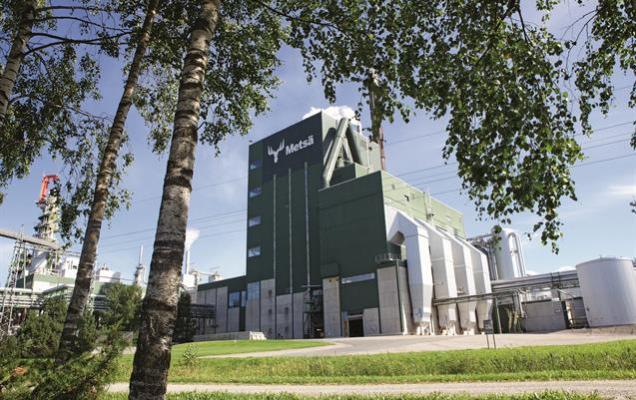
Metsä Group’s demo plant for a new lignin product has started up in Äänekoski. The plant uses lignin extracted from the bioproduct mill’s production process as its raw material and it has a nameplate capacity of two tons of a new type of lignin product per day. The plant was built in cooperation with the equipment supplier ANDRITZ. Dow, a leading materials science company, is a key partner. Metsä Group’s new lignin products are called Metsä LigO™.