Neste is focusing its raw materials research on waste plastics

Neste’s headquarter in Espoo, Finland

Finnish Neste is focusing its raw materials research on waste plastics as a substitute for crude oil in the manufacture of oil products. The idea of “one’s waste is a valuable raw material to another” is central to the circular economy, and, for over a decade, it has inspired Neste’s development and production of renewable fuels. The company headquartered in Espoo already produces enough Neste MY Renewable Diesel, produced of waste and residues, to power more than two million cars for a year. This will enable Neste’s customers to reduce their greenhouse gas emissions by almost 7 million tons this year. Underpinning this progress is the company’s patented NEXBTL technology for refining low-quality waste fats into high-quality, fully renewable fuel. The same technology can be used to produce other renewable products also, such as renewable aviation fuel and raw material for bioplastics.

Continue reading →

The bioeconomy is now: aniline can now be derived from biomass thanks to Covestro

Covestro, the leading supplier of high-tech polymers headquartered in Leverkusen, Germany, has scored a research breakthrough for the use of plant-based raw materials in plastics production: aniline, an important basic chemical, can now be derived from biomass. The German materials manufacturer achieved this by collaborating with partners on the development of a completely new process, initially in the laboratory. Until now, only fossil raw materials had been used for the production of aniline, which plays an important role in the chemical industry and is used as starting material for numerous products.
Continue reading →

Finnish KaiCell Fibers makes a further step forward

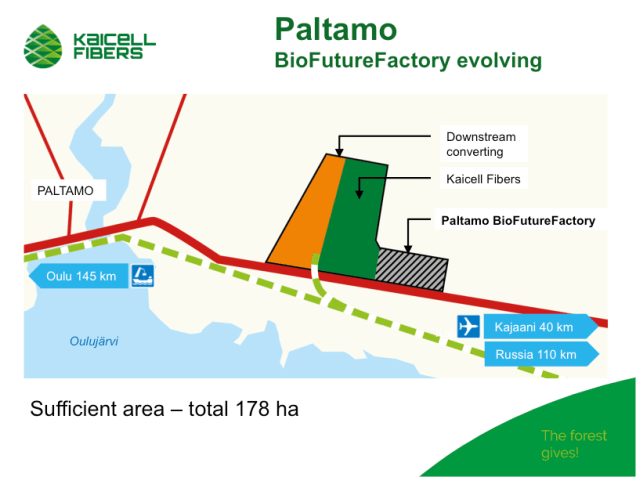
Finnish company KaiCell Fibers completed a technical-commercial feasibility study (FS), mainly delivered by CTS Engtec Oy, and now is ready for the next steps towards making the biorefinery in Paltamo, northeast Finland, a reality.
Continue reading →

The bioplastic produced by Synvina is recyclable in the European bottle recycling market

Avantium and Basf set up the JV Synvina

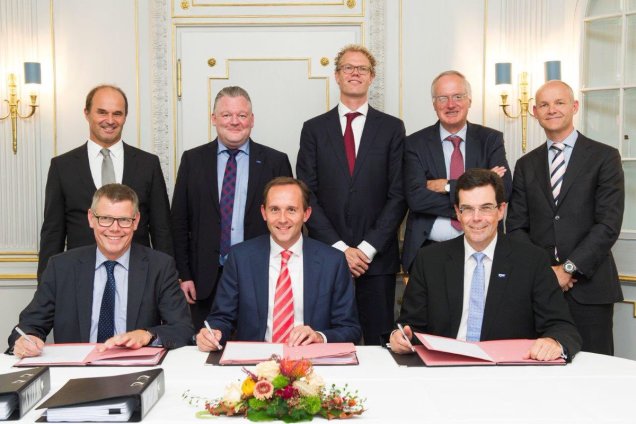
The bioplastics industry moves another step forward: the European PET Bottle Platform (EPBP) – a voluntary initiative of industry organizations representing waste collectors, plastic recyclers, PET material producers and brand owners – has given interim approval for the recyclability of polyethylenefuranoate (PEF), produced by Synvina, the Joint Venture between Avantium and Basf, in the European bottle recycling market.

Continue reading →

The Bio-based Material of the Year 2017 Award to Bio-lutions, Paptic and Phytowelt Green Tech

Maternushaus, venue of the conference in Cologne

Bio-lutions, Paptic and Phytowelt GreenTechnologies. The Innovation Award “Bio-based Material of the Year 2017” was awarded to these three innovative companies for their materials in specific applications. The competition focused on new developments in the bio-based economy, which have had (or will have) a market launch in 2016 or 2017. The winners were elected by the participants of the 10th International Conference on Bio-based Materials in Cologne, Germany.

Continue reading →

Royal DSM to make an equity investment in Amyris

John Melo, President & Ceo of Amyris

Amyris, Inc., the U.S. industrial bioscience company, and Koninklijke DSM N.V. (Royal DSM), the Dutch global science-based company active in health, nutrition and materials, have agreed for DSM to make an equity investment in Amyris. At the same time, the companies will enter into a development cooperation focused on products for the global health and nutrition markets (including vitamins and other nutritional ingredients).
Continue reading →

Bolloré collaborates with Braskem as its supplier for green PE

Bolloré, the French pioneer in ultra-thin packaging, launched the first ultrathin packaging shrink film on a basis of green polyethylene called B-Nat®.

Continue reading →

Ford is increasingly bio-based: the new frontier is bamboo

“You’ve probably sat on it, built with it, and maybe even eaten it, but did you know that your car could be next to benefit from bamboo, one of the world’s strongest natural materials?” This question is asked by the Ford Motor Company, the global automotive and mobility company based in Dearborn, Michigan, with about 201,000 employees and 62 plants worldwide. While investment in research has led to breakthroughs in new materials like super strong carbon fiber and lightweight aluminum, nature’s wonder material may have been growing all along and as much as three feet in a day. Soon, some surfaces inside Ford’s vehicles could be made from a combination of bamboo and plastic to create super hard material.

Continue reading →

Elevance Renewable Sciences partnered with Chemtura for lubricant applications

Elevance building in Illinois
Elevance Renewable Sciences, Inc., a leader in natural oil metathesis that produces novel, high-performing specialty chemicals from renewable feedstocks, partnered with Chemtura, a global specialty chemicals company recently acquired by German Lanxess, for Elevance Aria® WTP technology and market development.

Continue reading →

A new biogas plant will convert residues from the factories of Novozymes and Novo Nordisk

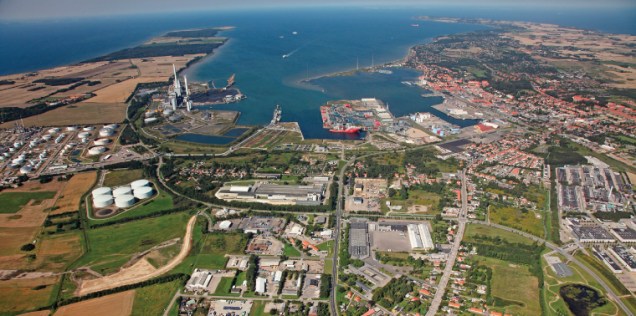
Aerial view of Kalundborg sustainable industry complex

DONG Energy and Bigadan is to build a large-scale biogas plant that will reuse residues from the production facilities of Novozymes and Novo Nordisk in Kalundborg on Zealand. The four companies have just signed an agreement which, from spring 2018, will carry yet another significant contribution to the Danish production of green energy from biogas. The new biogas plant in Kalundborg will convert residues from the factories of Novozymes and Novo Nordisk in Kalundborg to bio natural gas which can be fed directly into the Danish natural gas grid.

Continue reading →