
Finnish Neste is focusing its raw materials research on waste plastics as a substitute for crude oil in the manufacture of oil products. The idea of “one’s waste is a valuable raw material to another” is central to the circular economy, and, for over a decade, it has inspired Neste’s development and production of renewable fuels. The company headquartered in Espoo already produces enough Neste MY Renewable Diesel, produced of waste and residues, to power more than two million cars for a year. This will enable Neste’s customers to reduce their greenhouse gas emissions by almost 7 million tons this year. Underpinning this progress is the company’s patented NEXBTL technology for refining low-quality waste fats into high-quality, fully renewable fuel. The same technology can be used to produce other renewable products also, such as renewable aviation fuel and raw material for bioplastics.
 Finland is the cradle of the bioeconomy. And maybe someone could someday propose to change the name from Finland to Bio-land. The latest news is that buses in the Helsinki region and most of machinery and trucks used by the City of Helsinki are switching to waste and residue-based biofuels. Helsinki Region Transport HSL, the City of Helsinki and the producers of renewable fuels involved in the project are all pioneers in carbon-neutral transport. The project is internationally significant.
 Covestro, the leading supplier of high-tech polymers headquartered in Leverkusen, Germany, has scored a research breakthrough for the use of plant-based raw materials in plastics production: aniline, an important basic chemical, can now be derived from biomass. The German materials manufacturer achieved this by collaborating with partners on the development of a completely new process, initially in the laboratory. Until now, only fossil raw materials had been used for the production of aniline, which plays an important role in the chemical industry and is used as starting material for numerous products.
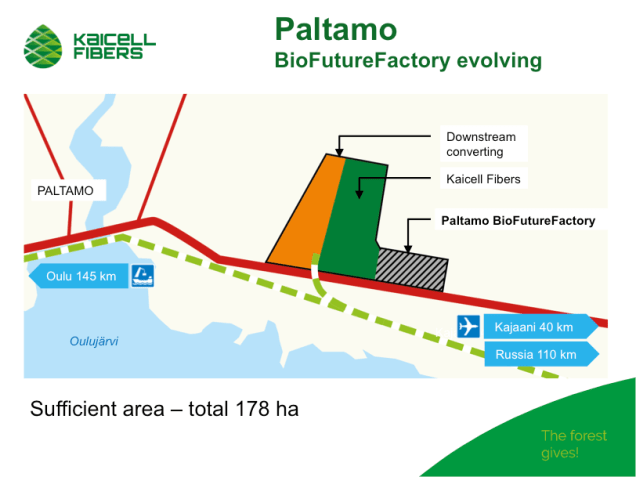 Finnish company KaiCell Fibers completed a technical-commercial feasibility study (FS), mainly delivered by CTS Engtec Oy, and now is ready for the next steps towards making the biorefinery in Paltamo, northeast Finland, a reality.
 Used vegetable oils can be transformed into biofuels. Eni and CONOE, the Italian Consortium for the Collection and Treatment of Used Oils and Fats, signed a Memorandum of Understanding to promote and increase the collection of vegetable oils that will supply Eni’s Venice biorefinery and, from 2018, Gela. The Minister for the Environment and the Protection of Land and Sea Gian Luca Galletti and the Director General for Energy Supply Security and Infrastructure of the Ministry of Economic Development Gilberto Dialuce were present at the event.



 IL BIOECONOMISTA