Gevo, a leading renewable technology, chemical products, and next generation biofuels company, announced yesterday that it has entered into a license agreement and a joint development agreement with Porta Hnos (“Porta”), one of the leading alcohols companies in Argentina, producing almost 100 million liters annually, to construct multiple isobutanol plants in Argentina using corn as a feedstock.
“Outside of Brazil, today Europe has the most existing infrastructure, some of the most developed technologies and the most favorable policy supporting the bioeconomy. However, theoretical concerns about land use are being allowed undue sway, which makes the outlook uncertain. Climate change deniers are having a similar effect in America. In contrast, China is showing singular resolve in its commitment to climate and carbon”. To say it – in this interview with Il Bioeconomista – is Anna Rath, founder and Ceo of NexSteppe, the U.S. company dedicated to pioneering the next generation of scalable, reliable, cost-effective feedstock solutions for the biofuels, biopower and biobased products industries. Using advanced breeding techniques and cutting-edge analytical technologies, NexSteppe is developing Malibu sweet sorghum and Palo Alto biomass sorghum to produce feedstocks tailored for these biobased industries. With Anna we talk about biomass and bioeconomy at a Global level.
Alexander Stubb, Finnish minister of Finance and former prime minister
“Bioeconomy need to be communicated and actualized for the citizens of EU.” Jukka Kantola, Chief Executive Officer of NC Partnering, a Finnish bioeconomy advisory company, talks to Il Bioeconomista regarding the state of the art of the bioeconomy in Finland.
Starting from last Friday, jet biofuel is offered to all airlines that refuel at Oslo Airport, making the airport the world’s first to offer this service through the normal supply mechanism. Air BP is the supplier of the jet biofuel and Lufthansa Group, SAS and KLM have already signed agreements to purchase the fuel.
The Italian green chemistry will speak American. Eni confirms that it is in search for a partner for Versalis, its synthetic rubber and chemicals company. In a meeting at the Italian Ministry of Economic Development (Mise), between Mise, Eni, Versalis and representatives from the National Confederation of Industry and Trade Unions regarding the prospects for Eni’s petrochemical business, the Italian oil and gas company said it intended to retain a “significant stake” of Versalis in the partnership to “ensure its objectives are successfully met”.
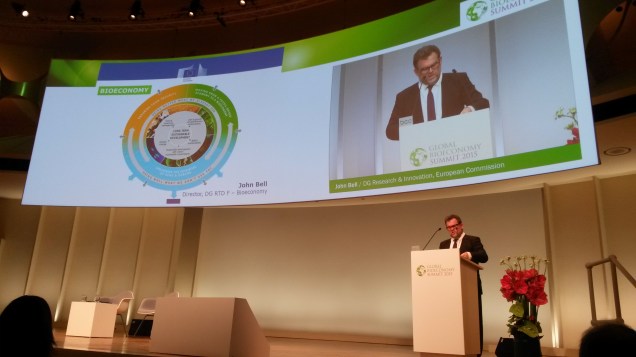
John Bell at Global Bioeconomy Summit in Berlin (25 November 2015)
“The shift to a European bioeconomy is now irreversible and this transition will now accelerate after the COP21”. John Bell, Director of Bioeconomy Directorate of the European Commission, talks to Il Bioeconomista. In this long exclusive interview, the man who is leading the implementation of the European bioeconomy addresses different topics related to this new industrial revolution based on renewable biological resources.
“The sustainability of the bio-based solutions – Bell says – will have to be constantly demonstrated, communicated and debated with stakeholders if we want to convince policy-makers and embed the bioeconomy across Europe. This can happen at different levels. The European Commission is devoting resources to better study the overall biomass available in Europe and its uses, and to assess the efficiency of the bio-based solutions through life-cycle analysis.”
Marco Reus. Evonik is popular as main sponsor of German Football team Borussia Dortmund
Evonik expands its green venture capital activities into Asia. The German company announced last Thursday an investment in the Chinese venture capital fund GRC SinoGreen Fund III (GRC III). The parties agreed to not disclose the amount of the investment. As a result, the company is now represented in the most important venture capital regions of North America, Europe, and Asia. GRC invests in private, green technology companies with unique strengths and substantial growth potential in Greater China. Target sectors include energy and resource efficiency, cleaner transportation, sustainability, and climate change mitigation and adaptation.
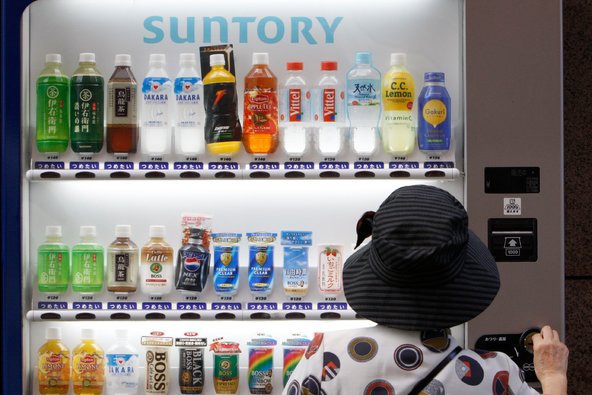
Anellotech, a U.S. sustainable technology company focused on producing cost-competitive renewable chemicals from non-food biomass, announced that the company has entered into the next phase of its strategic partnership with Suntory Holdings Limited, one of the world’s leading consumer beverage companies. Suntory’s diverse market-leading beverage brands include Orangina, Schweppes, Ribena, Lucozade and BRAND’S, as well as major alcohol brands, Yamazaki, Hibiki, Jim Beam, Courvoisier, and Château Lagrange.
The partnership, which began in 2012 under a collaboration agreement that has provided more than $15 million in funding to date, is focused on advancing the development and commercialization of cost-competitive 100 percent bio-based plastics for use in beverage bottles as part of Suntory’s commitment to sustainable business practices. Suntory, headquartered in Japan, currently uses 30 percent plant-derived materials for their Mineral Water Suntory Tennensui brands and is pursuing the development of a 100 percent bio-bottle through this partnership.
Sustainable Intesa Sanpaolo’s Pavillion at Expo 2015 in Milan
In 2013, bioeconomy in Italy has shown a production potential amounting to 244 billion euro, equal to 7.9% of the total value of national production, employing approximately 1.5 million people. Italy – only country among EU5 still without a National strategy on bioeconomy – is in third position. Germany is first with a production worth €343 billion and France second with €295 billion. Spain is fourth (€219 billion) followed by the UK (€170 billion). In these five countries, the bioeconomy is worth €1.27 trillion and employs 7 million people.
The Intesa Sanpaolo Research Department (Intesa Sanpaolo is one of the major banking group in Europe) and Assobiotec presented their second report dedicated to bioeconomy, which, in line with the definition of the European Commission, was defined as the set of activities using renewable natural resources to produce goods and energy, generating great advantages in terms of sustainability.
Global Bioenergies and LanzaTech announce the signature of a new collaboration agreement to broaden the feedstock flexibility of Global Bioenergies’ Isobutene process and the product-portfolio of LanzaTech’s carbon capture technology.





 IL BIOECONOMISTA