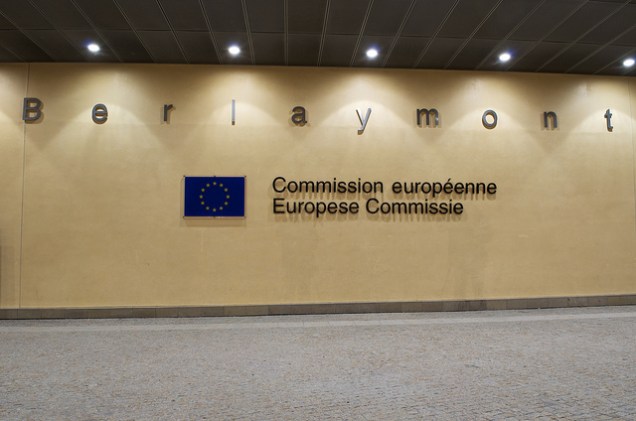
Berlaymont, European Commission’s Headquarter in Brussels
The EU-funded ShapingBio project has released a comprehensive policy brief outlining key recommendations to support the European Commission in creating an optimal framework for a sustainable and competitive European bioeconomy. The recommendations feed into the upcoming New EU Bioeconomy Strategy, expected to play a crucial role in advancing Europe’s transition towards a circular, climate-neutral economy.
Berlaymont, European Commission’s Headquarter in Brussels
Today is the last day to participate to the online consultation for the new EU bioeconomy strategy using the Have Your Say portal. The Commission launched a public consultation on the upcoming EU Bioeconomy strategy on Monday (31 March). It marks a significant step forward in harnessing the opportunities of the bioeconomy to support European businesses and drive progress towards the EU’s environmental, climate and competitiveness objectives.
Stuttgart, Germany, is the first city in Europe to launch its own bioeconomy strategy. Il Bioeconomista has interviewed Dr. Max Schuchardt, who developed the bioeconomy strategy of the City of Stuttgart, and Dr. Elisabeth Saken-Braunstein, who is leading the bioeconomy team at the Ministry of Environement, Climate and Energy and the strategic development of the urban and industrial bioeconomy strategy section in the Amendment of the bioeconomy strategy of Baden-Württemberg.
We receive and publish this post by Jukka Kantola, the founder of the World BioEconomy Forum. The World BioEconomy Forum is a global platform for circular bioeconomy stakeholders to share ideas and promote bio-based solutions.
We have witnessed that several economies are putting more efforts into the bioeconomy. Only in the last half year alone there have been multiple examples of work being carried out, despite other challenges, including the tail end of the pandemic, geopolitical tensions and energy prices.
John Bell is the Healthy Planet Director in DG Research and Innovation (R&I). He leads R&I transitions on climate change, bioeconomy, food systems, environment, biodiversity, oceans, Arctic, circular economy, water and bio-based innovations. This includes harnessing investments for Horizon Europe, the Circular Bioeconomy and the EU Bioeconomy Strategy. In this exclusive interview with IlBioeconomista, he talks about the bioeconomy strategy 10 years after its first launch and the ecological transition at EU level.
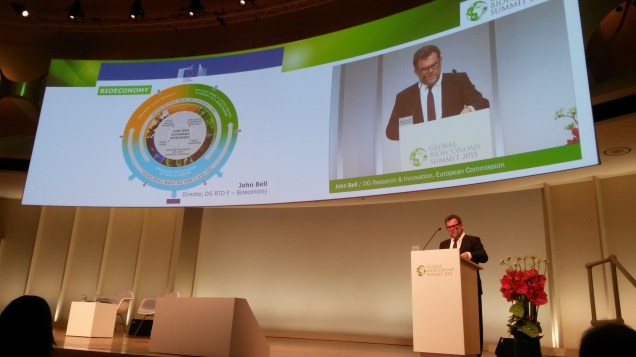
John Bell, European Commission, at Global Bioeconomy Summit in Berlin (25 November 2015)
“Europe needs an ambitious ‘Green Innovation Deal’ to accelerate towards our 2030 goals and to become the world’s first climate-neutral continent by 2050. Our 2030 and 2050 goals require decarbonisation at a speed at least six times faster than anything globally achieved so far.” John Bell, Director Healthy Planet at the DG Research & Innovation of EU Commission, talks to Il Bioeconomista. In this long and exclusive interview, he talks about the EU Updated Bioeconomy Strategy one year later its presentation in Brussels. “The main task for us in the next years – he says – will be the implementation of the updated European Bioeconomy Strategy. However, to fully deploy the bioeconomy across all of Europe, we need the help and engagement of the Member States and regions”.
Canada has its own bioeconomy strategy. Canada’s first national Bioeconomy Strategy released yesterday by Bioindustrial Innovation Canada, reflects the views of more than 400 industry representatives from across the country.
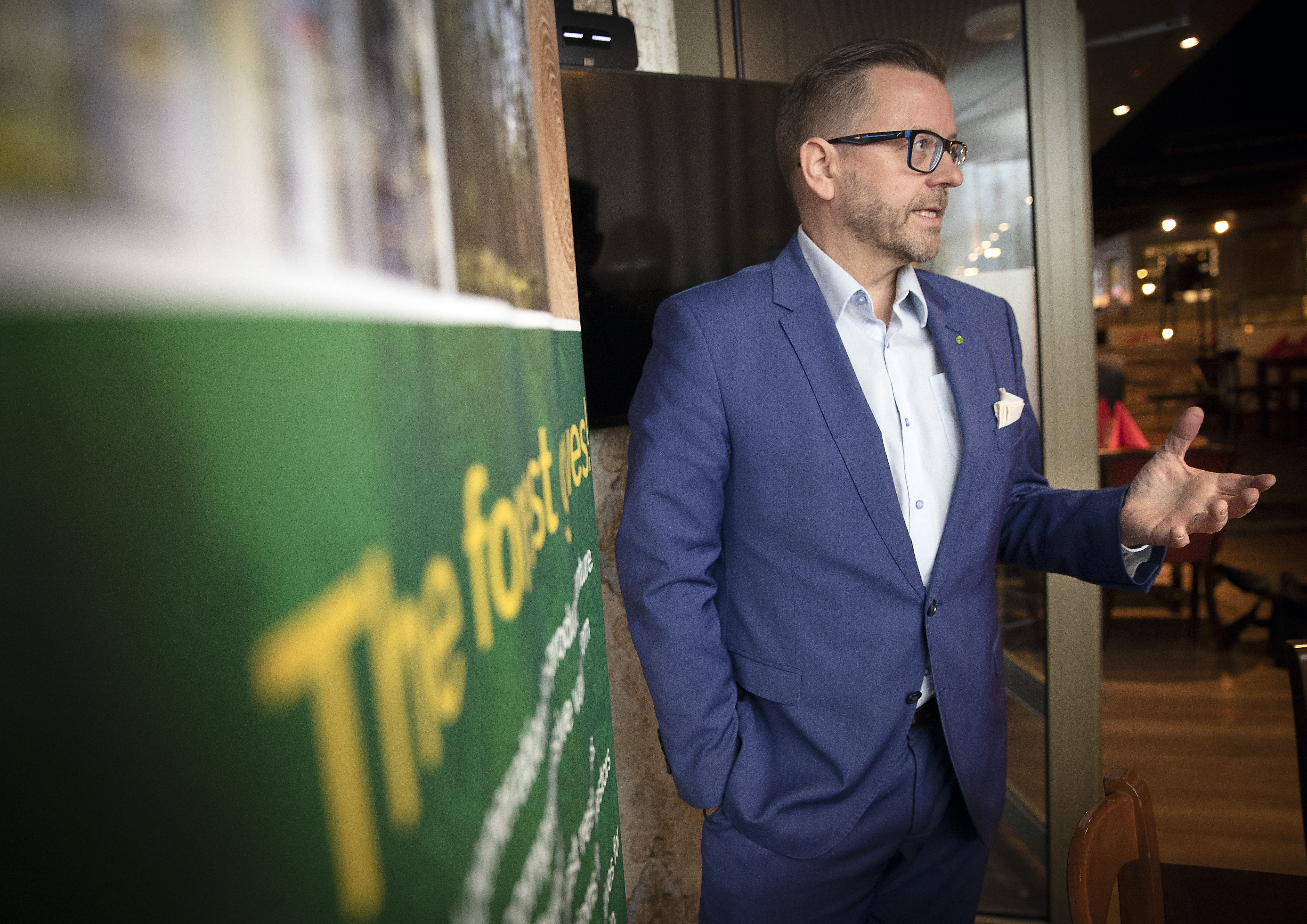
Marc Palahi at the European Bioeconomy Summit in Helsinki
“We need to put emphasis in ensuring that the areas and actions identified in the new Bioeconomy Strategy arestrategically integrated in other European policies and Programmesto ensure coherence, scale and synergies; CAP; Industrial Policy, EuropeanInvestment Bank portfolio, Strategic Partnership for the Implementation of the Paris Agreement, etc.” To say it – in this exclusive interview with IlBioeconomista – is Marc Palahí, director at the European Forest Institute. He talks with us, on his way to China, just after the publication of the updated EU bioeconomy strategy.
“We expect full support for the bioeconomy in close connection with the circular economy. Together they can tackle two very pressing societal issues i.e. climate change (through lowering carbon footprint) and the plastic waste problem (through collection, reuse and recycling)”. Marcel Lubben, President of Reverdia, the JV between Royal DSM and Roquette which is producing bio-based succinic acid, talks to Il Bioeconomista. In this exclusive interview he talks about Reverdia and his expectations related to the new EU bioeconomy strategy that will be presented next October 22 in Brussels.


 Canada has its own bioeconomy strategy. Canada’s first national Bioeconomy
 IL BIOECONOMISTA