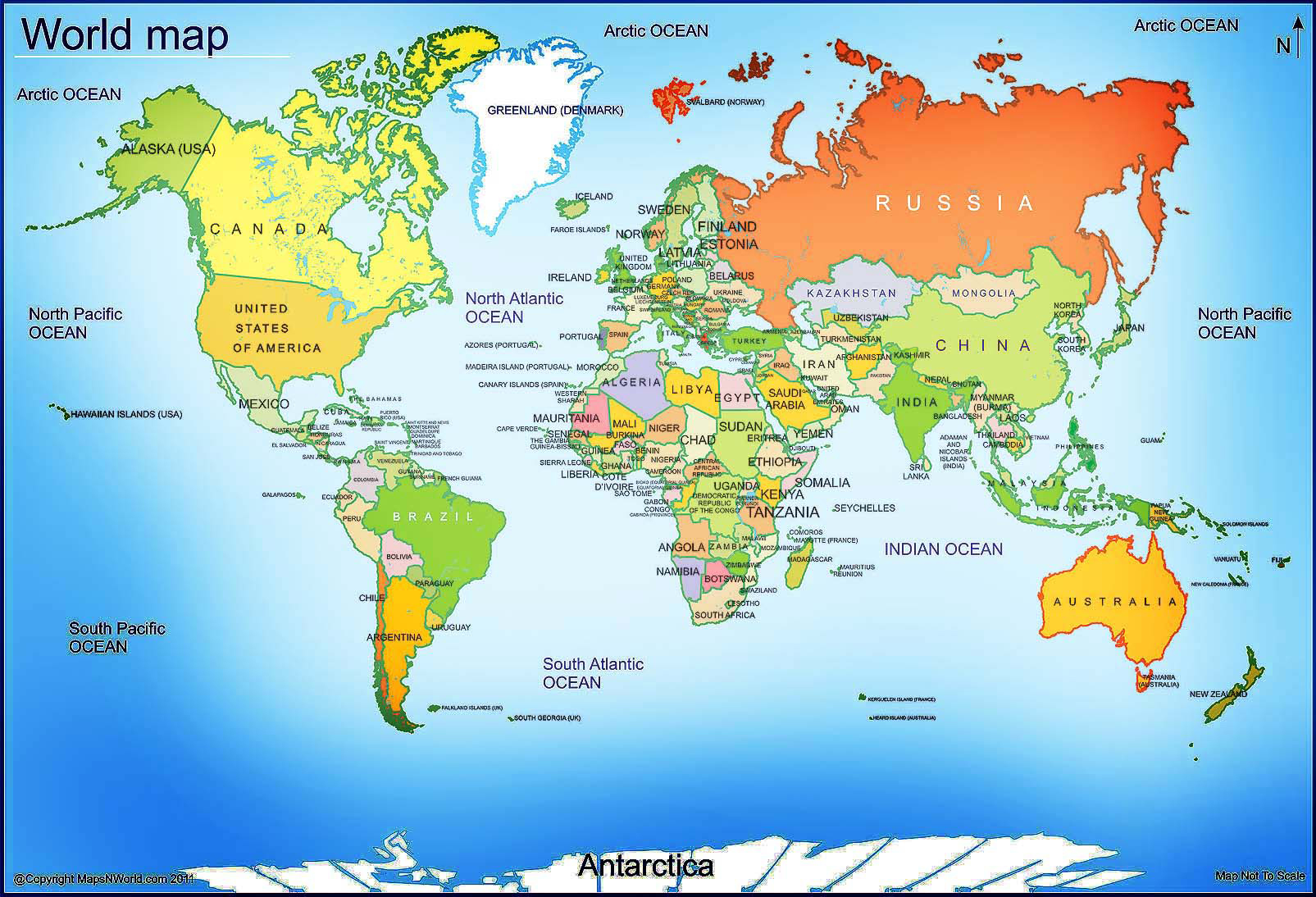
According to the Global Renewable Fuels Alliance, a global biofuels federation representing over 65% of the world’s renewable fuels production from 44 different countries, 62 countries now have biofuels friendly policies in place whose ethanol production alone has replaced the need for over 2 million barrels of crude oil per day.
A fungus and E. coli bacteria have joined forces to turn tough, waste plant material into isobutanol, a biofuel that matches gasoline’s properties better than ethanol. University of Michigan research team members said the principle also could be used to produce other valuable chemicals such as plastics.
Naples, Southern Italy. In that part of the country that governments, since the Unification of Italy, have consciously and culpably left behind. Naples, a city that is the mirror of the Italic contradictions and of a South which is struggling to emerge: Naples the Rich, Naples the Poor, Naples the Noble, Naples the Plebeian, Naples and its many colors, Naples in black like the pitch which is brought by the boats of its sea.
The University of California-Berkeley, University of Minnesota, Northeastern University and 10 other colleges and universities that have signed the Green Chemistry Commitment, intended to increase the number of green chemists and scientists in the US and the business opportunities available to them.
Robert Lewandowski, striker of Borussia Dortmund sponsored by Evonik
Another step in the bioeconomy for Evonik, the German company based in Essen, which is one of the world’s leading specialty chemicals companies, with sales of 13.6 billion euros and an operating result (adjusted EBITDA) of 2.6 billion in 2012. In early 2013, Evonik Industries began operating a pilot plant for ω-amino lauric acid (ALS) in Slovenska Lupca, Slovakia. The effort represents Evonik’s next step forward in the production of sustainable high-performance plastics.
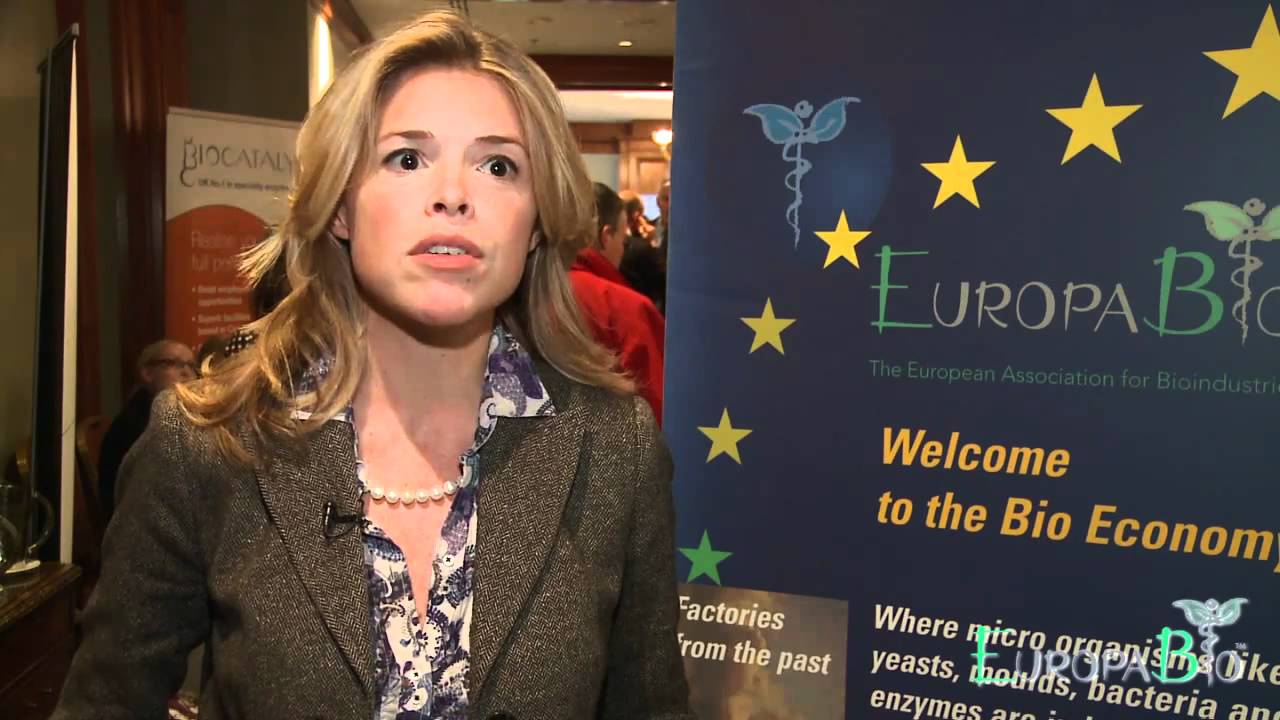
“We believe that EFIB (European Forum for Industrial Biotechnology and Bio-based Economy, editor’s note), taking place during the first European Biotech Week, contributes to increase the awareness of Europeans to the bioeconomy.” To say it is Nathalie Moll, Secretary General of EuropaBio, The European Association for Bioindustries, one of the organizers, with Smithers Rapra, of the event which will be held in Brussels from 30 September to 2 October. In this interview with Il Bioeconomista, Moll talks about EFIB – “a single platform for European business leaders, innovators and policymakers to meet, discuss and shape the future of the bioeconomy” – and the latest development of European Bioeconomy, focusing on the Public Private Partnership for Biobased industries (Bridge), “a multisector initiative whose vision is that of a society and economy which increasingly makes everyday products, such as food, feed, textiles, chemicals and fuels, from locally sourced biomass and wastes, rather than from fossil fuels.”
Alaska Airlines, a subsidiary of Alaska Air Group, and Hawaii BioEnergy LLC announced yesterday they have signed an agreement for the carrier to purchase sustainable biofuel for its aircraft. Founded in 2006, Hawaii BioEnergy is a consortium of three of Hawaii’s largest landowners (Kamehameha Schools, Grove Farm Company Inc., and Maui Land & Pineapple Inc.) and three venture capital companies who plan to use locally grown feedstocks to produce biofuels.
Europe’s first multi-purpose fermentation plant for the continuous production of bio-based chemicals has been recently inaugurated in Leuna, Saxony-Anhalt (Germany). Built at a cost of around 20 million euros, the facility will enable the German multinational conglomerate corporation ThyssenKrupp, one of the world’s largest steel producers (more than 43 billion euros in revenue), to further expand its research and development activities in the area of biochemicals based on renewable raw materials.
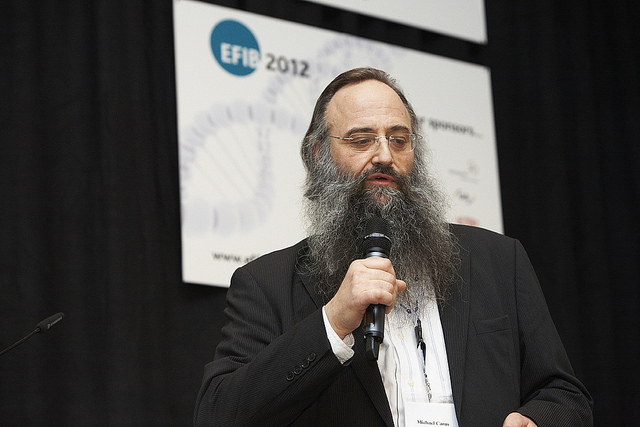
Michael Carus, managing director of the nova-Institut
Food or non-food: Which agricultural feedstocks are best for industrial uses? This is the title of the new paper published by the German nova-Institut led by Michael Carus, who is one of the author, together with Lara Dammer. In less than ten pages the two authors analyze one of the most controversial issues of the bioeconomy, also underlined by the recent decision of the European Parliament’s environment committee to limit the share of food-based biofuel used in cars and trucks to 5.5% of the total consumption. Continue reading →
The European Parliament’s environment committee voted last Thursday in favor of limiting the share of food-based biofuel used in cars and trucks to 5.5% of total consumption. It said the change would address concerns that biofuels of this kind are raising food prices and may not be as environmentally beneficial as originally hoped. However, it means that to meet its 2020 mandate that 10% of Europe’s transport energy comes from renewable sources, the bloc will be relying on a much-faster expansion of electric cars and commercially unproven biofuels made from nonfood crops.

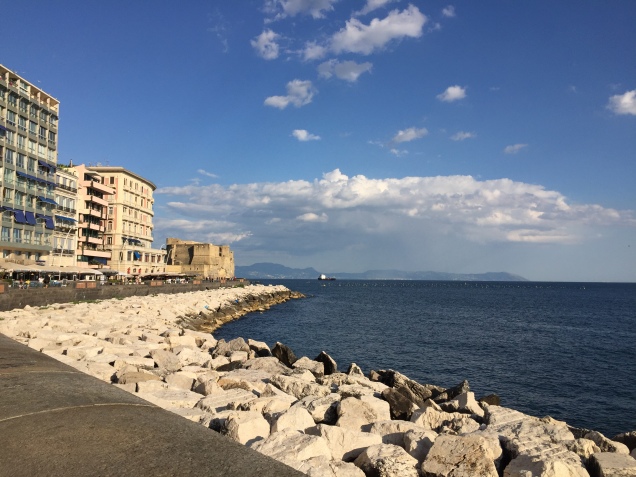 Naples, Southern Italy. In that part of the country that governments, since the Unification of Italy, have consciously and culpably left behind. Naples, a city that is the mirror of the Italic contradictions and of a South which is struggling to emerge: Naples the Rich, Naples the Poor, Naples the Noble, Naples the Plebeian, Naples and its many colors, Naples in black like the pitch which is brought by the boats of its sea.




 IL BIOECONOMISTA