Cardia Bioplastics sets up a new plant in Brazil

image
Perth, the capital of Western Australia

Australian headquartered Cardia Bioplastics announced that it is setting up its own film and bag manufacturing plant in São Paulo, Brazil. New purpose-built facilities have been leased and production commencement is scheduled for September 2014. The production machinery costing A$750,000 is funded using vendor finance over a twelve months period. The new factory is expected to deliver a production capacity of 500 million retail carry bags per year. This capacity is over four times greater than that of the current Cardia Bioplastics manufacturing plant in Nanjing, China.


Continue reading →

The new Ford is tomato-based

image
Tomato ketchup by Heinz

Ford, the global automotive industry leader based in Dearborn, Michigan, and H.J. Heinz Company, one of the world’s leading marketers and producers of healthy, convenient and affordable foods specializing in ketchup, sauces, meals, soups, snacks and infant nutrition, explore the use of tomato fiber to develop a more sustainable bio-plastic material for vehicles. It might seem that tomatoes and cars have nothing in common. But researchers at Ford Motor Company and H.J. Heinz Company see the possibility of an innovative union.

Continue reading →

The 87th Alpine Corps National muster is bio-based

image
Alpine corps muster in Novara

They made history in Italy with memorable feats of heroism, driven by the love for their country and by values that make theirs a unique outfit: this is the Alpine Corps, also known as the Black Feathers, which is holding its 87th muster from the 9th to the 11th of May 2014 in Pordenone. With 450,000 participants expected, producing around 350,000 kg of waste, the event has the potential to create a significant environmental impact. In order to alleviate the effect on the Pordenone ecosystem, the ANA (National Alpine Corps Association), the COA (Muster Organising Committee) and GEA, the Pordenone environmental services company, in collaboration with Novamont, global leader in the bioplastics field, have introduced different ecosustainable initiatives.

Continue reading →

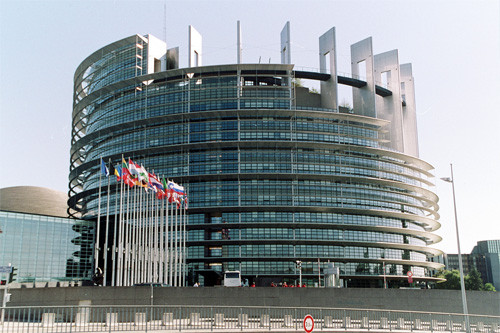
The EU Parliament voted on new legislation aimed at reducing the use of single-use plastic carrier bag

image
European Parliament, Strasbourg

Europeans use about 100 million plastic carrier bags every year. Some of these are dropped as litter, ending up in the environment, where long-standing plastics accumulate and harm wildlife. The European Parliament today voted on new EU legislation aimed at reducing the use of single-use plastic carrier bags.

Continue reading →

The biopolymers market is expected to generate global revenue of 3.67 billion US dollars by 2018

Novamont's Headquarter in Novara (Italy)
Novamont’s Headquarter in Novara (Italy)

The biopolymers market growing at a compound annual growth rate of 14.5% is expected to generate global revenue of 3,668.6 million US dollars by 2018. It’s what emerges from the new Report on “Biopolymers/Bioplastics Market by Type (Bio PET, Bio PE, PLA, PHA, Bio PBS, Starch Blends, and Regenerated Cellulose), by Application (Packaging, Bottles, Fibers, Agriculture, Automotive, and Others) & by Geography – Trends & Forecasts to 2018” published by Research and Markets, the Irish company which is the leading source for international market research and market data.

Continue reading →

Mitsubishi Chemical develops a high-transparency bio-based engineering plastic

Mitsubishi Asx interior

Mitsubishi Chemical Corporation, Japanese chemical giant based in Tokyo, announced the development of a new grade of high-performance, high-transparency bio-based engineering plastic called DURABIOTM, using plant-derived isosorbide as its raw material. The new material features excellent optical properties and high resistance to heat and humidity.

Continue reading →

Bio-on and Magna sign agreement to advance R&D on bioplastics for the automotive industry

Marco Astorri, Ceo and co-founder of Bio-on

Bio-on, an Italian company founded in 2007 to create 100% natural products based on renewable resources or agricultural processing waste materials, and Magna International Inc., a leading global automotive supplier, have signed a cooperation agreement to start exclusive R&D activities on the use of bioplastics for the automotive industry.

Bio-on has developed a new kind of bioplastic created through the use of naturally occurring bacteria which feed off sugar beet by-products. In the process of fermentation, the material is turned into plastic (polyhydroxyalkanoate or PHA). The result is fully biodegradable in water and soil, an environmentally friendly product that does not rely on food as a natural resource and could provide alternatives to conventional plastics for the automotive industry.

Continue reading →

The new Kia Soul EV is bio-based

Chicago Auto Show (February 8-17, 2014)

Korean automaker Kia has revealed that the company’s new Soul EV (electric vehicle), which will have its world premiere at the 2014 Chicago Auto Show starting later this week (February 8-17), has achieved UL (Underwriter Laboratoires) Environment validation for bio-based organic carbon content for ten per cent of its interior materials. UL Environment describes itself as a global independent safety science company.

Continue reading →

Australian Bioeconomy: Leaf Energy to fund first trial program on Actinogen’s bioethanol project

Perth, the capital of Western Australia

Actinogen Limited, heaquartered in Western Australia, has entered into a collaborative and royalty agreement with Leaf Energy Ltd in the company’s Bioethanol project. Under the terms of the agreement Leaf Energy, an Australian company focused on turning waste into biofuels, bioplastics and green chemicals, will fund further studies in Actinogen’s Bioethanol project; in which the company previously identified strains of actinomycetes capable of producing cellulases. Cellulase are enzymes used to breakdown cellulose from plant material, papers and industrial waste glycerols (biomass), and are an important step in the production of second generation bioethanols.

Continue reading →

Global demand for bioplastics will rise 19% per year to 950,000 metric tons in 2017

Gold Plast Collection, Materbi by Novamont

According to a new study on “World Bioplastics” published by The Freedonia Group, global demand for biobased and biodegradable plastics will rise 19 percent per year to 950,000 metric tons in 2017. The bioplastics industry, while still in the emerging growth phase, has established itself as a fixture in a number of commercial markets and applications. Robust growth in demand is expected in virtually all geographic markets, stimulated by consumer preferences for sustainable materials, the increased adoption of bioplastics by plastic processors and compounders, and new product development that expands the range of uses for bioplastics.

Continue reading →