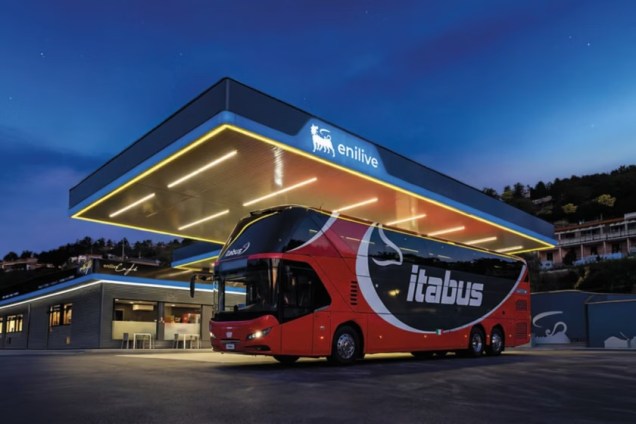
All the 100 vehicles in the Itabus fleet run on Enilive’s HVOlution diesel, a biofuel made from 100% renewable raw materials (in accordance with the European Renewable Energy Directive). Produced at Enilive’s biorefineries in Venice and Gela mainly from waste, such as used cooking oil and animal fats, and residues from the agri-food industry, HVOlution is a hydrogenated vegetable oil that can be used in all validated diesel engines and is available in more than 1,550 Enilive service stations in Italy. HVO diesel biofuel – according to the Italian company – contributes to the decarbonization of the transport sector, including heavy-duty vehicles: across the entire supply chain, in 2025 the average CO₂eq emissions reduction from Enilive HVO for traction use was 79.5%, if compared to the reference fossil mix.
There is a further important strategic investment in biorefining for Eni, the Italian petrochemical giant. In addition to the Priolo project, the final investment decision (FID) has also been approved for Eni’s plan to convert certain units of the Sannazzaro de’ Burgondi refinery (Pavia, Lombardy) into a biorefinery.
Both projects represent a significant step forward in developing Enilive’s biofuel production capacity. The two biorefineries will be completed by 2028 and will offer maximum flexibility in producing both HVO diesel (Hydrogenated Vegetable Oil) and SAF-biojet, Sustainable Aviation Fuel.
The new biorefinery in Sannazzaro de’ Burgondi will not affect the plant’s existing traditional fuels production capacity. Instead, it will introduce additional biofuel production from renewable raw materials, further diversifying the range of products available to the market.
The project involves the conversion of the Hydrocracker (HDC2) unit using Ecofining™ technology as well as the construction of a pre-treatment unit for waste and residues, which are the main feedstocks used by Enilive to produce HVO biofuels. The hydrogen required will be supplied by existing plants, while supporting infrastructure, including logistics and connections to airports in Lombardy, will be adapted for the new production setup. The new biorefinery in Sannazzaro de’ Burgondi will have the capacity to produce 550,000 tonnes/year of feedstock, with the flexibility to produce SAF-biojet and HVO diesel.
The Priolo biorefinery, for which preparatory activities are underway ahead of the award of procurement and construction contracts for the new units, will have a capacity of 500,000 tonnes/year and will also have extensive operational flexibility for the production of HVO diesel or SAF-biojet, in line with market dynamics and demands. The Priolo biorefinery is part of Versalis’ basic chemicals transformation plan and will be built within the existing site, replacing the cracking plant that ceased operations last year and that is currently being dismantled.
Through Enilive, Eni is the second largest producer of hydrogenated biofuels HVO, both diesel and biojet (SAF), in Europe and plans to increase its biorefining capacity from the current 1.65 million tonnes/year to over 3 million in 2028 and over 5 million in 2030, with the potential to produce up to 2 million tonnes of SAF by 2030.
LG Chem’s Daesan Chemical Complex in Seosan, South Korea. Source: Eni
South Korean LG Chem and Italian Enilive have taken a major step toward biofuels growth by breaking ground on Korea’s first hydrotreated vegetable oil (HVO) and Sustainable Aviation Fuel (SAF) production plant in LG Chem’s Daesan Chemical Complex located in Seosan, Chungcheongnam-do, 80 kilometers southwest of Seoul. The plant is going to be constructed by the LG Chem and Enilive joint venture, called LG-Eni BioRefining, and it is scheduled for completion in 2027 and will annually process approximately 400,000 tons of renewable bio-feedstock.
Massimiliano Di Silvestre, President and CEO of BMW Italia and Claudio Descalzi, CEO of Eni. Source: Eni
Eni and BMW Italia signed a Letter of Intent (LOI) to develop joint initiatives aimed at supporting the energy transition of the road transport sector. In particular, this agreement seeks to integrate biofuels with an increasingly broad offering of electric mobility services. HVO (Hydrotreated Vegetable Oil), the diesel biofuel produced by Enilive from 100% renewable raw materials (In accordance with the EU Renewable Energy Directive), represents a solution already available that contribute to transport decarbonization. Pure HVO can currently be used by validated engines and is distributed through existing infrastructure.
Eni and KKR have closed the transaction contemplated by the investment agreement, announced last February, for the increase of KKR’s stake in Enilive through the purchase of Enilive’s shares from Eni representing 5% of the share capital, for a consideration of approximately 601 million euros.
Enilive commissioned its first plant to produce Sustainable Aviation Fuel (SAF) at the Gela biorefinery, in Sicily. Production has started at the plant, which has a capacity of 400,000 tonnes per year, representing almost a third of the expected European SAF demand in 2025 (Source: Wood Mackanzie), following the implementation of the ReFuelEU Aviation regulation.
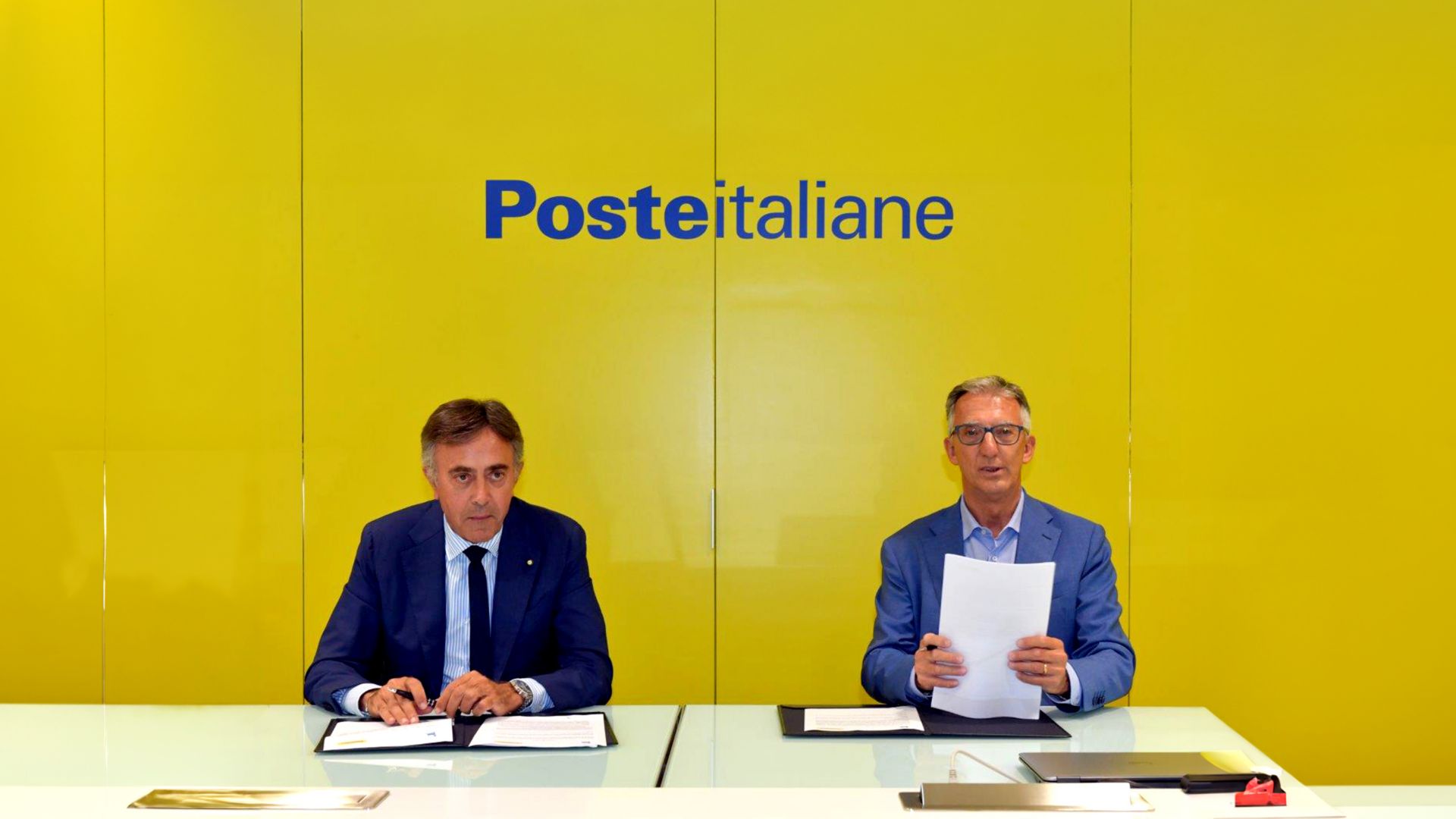
Poste Italiane’s ground and air fleet will run on biofuels supplied by Enilive, Eni’s company dedicated to mobility services and products. This will accelerate Poste Italiane’s progress towards achieving its energy transition and carbon neutrality goals set for 2030.
FS Italiane Group and Eni have signed a Letter of Intent with the objective of developing joint initiatives aimed at accelerating the energy transition towards new energy sources. The collaboration between the two industrial groups will involve identifying new opportunities in the transport, energy and materials sectors through feasibility studies, analysis and experimentation with innovative technological solutions.
Ryanair, Europe’s no.1 airline, and Enilive, a company directly controlled by Italian company Eni which holds 100% of its share capital, signed a Letter of Intent (LOI) for the long-term supply of Enilive sustainable aviation fuel (SAF) at selected Ryanair airports across Italy, further advancing the airline’s Pathway to Net Zero by 2050 decarbonization strategy. This agreement with Enilive would enable Ryanair to access to up to 100,000 tons (33m gallons) of SAF between 2025 and 2030 (equiv. to 20,000 flights from Milano Malpensa Airport to Dublin).



 IL BIOECONOMISTA