
BP, Virent Inc. and Johnson Matthey (JM) signed an agreement that will further advance the commercialization of Virent’s Bioforming® process for production of bio-paraxylene (PX), a key raw material for the production of renewable polyester.
BP, Virent Inc. and Johnson Matthey (JM) signed an agreement that will further advance the commercialization of Virent’s Bioforming® process for production of bio-paraxylene (PX), a key raw material for the production of renewable polyester.
 More and more women are protagonists of the bioeconomy. This year, as every year, for the International Women’s Day, we dedicate a tribute to all women who are making the bioeconomy happen all around the world. With their huge competences and their infinite passion, they are the stars of the world bioeconomy. Our best and warmest wishes to all women.
This is just a partial list.
 Royal DSM and Cargill established Avansya V.O.F. The 50:50 joint venture is a partnership between the two companies. Both parties announced their intention to establish this joint venture on 8 November 2018 subject to regulatory approvals. Avansya will produce zero-calorie, great-tasting sweeteners through fermentation and will be headquartered at the Biotech Campus Delft (Netherlands).
 Nouryon (formerly AkzoNobel Specialty Chemicals) and Gasunie have agreed to supply green hydrogen to BioMCN for the production of renewable methanol from CO2. The companies say it marks the next step in the sustainability of processes in the industry.

U.S. sustainable technology company Anellotech and its joint development partners IFPEN and Axens have processed renewably-sourced aromatics made at Anellotech’s TCat- 8® pilot plant to successfully recover high-purity bio-based paraxylene – a key component for making 100% bio- based PET bottles a reality.

“I also believe that we need to embrace genetic technologies, rather than be fearful of them, to enable the greatest beneficial outcomes in the shortest time”. To say it – in this interview with Il Bioeconomista – is William Cracroft-Eley, chairman of Terravesta, a leading miscanthus supply chain specialist, producing sustainable energy from marginal land. In this interview he talks about miscanthus and the role of farmers in the bioeconomy, the BBI JU Demo Project GRACE, “which is demonstrating the feasibility of 10 bio-based value chains for hemp and miscanthus biomass at an industry relevant scale”, the bioeconomy in UK after Brexit and the Vivergo’s case.
Interview by Mario Bonaccorso
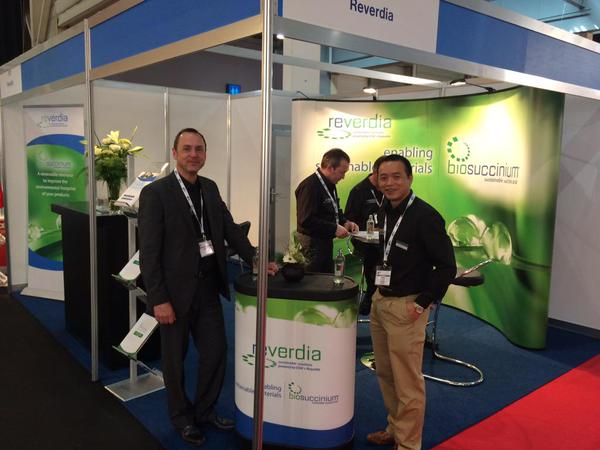 Effective 1 April 2019, the joint venture between Royal DSM and Roquette, Reverdia, will be dissolved and the partners will transfer the rights and obligations related to Reverdia’s Biosuccinium® plant in Cassano, Italy to Roquette. Under a non-exclusive license from DSM, Roquette will operate the plant and continue serving customers of Biosuccinium®. Customer service, order processing, and marketing and sales will be integrated into Roquette’s existing business to ensure a smooth transition. DSM, the original developer of the Biosuccinium® technology, will assume the role of exclusive licensor, in line with its business model in this field.
Italian Biotech company Bio-on and Innova Imagen, a company of the Himes Group, with operations in the textile sector in Mexico and the United States with particular attention to eco-sustainable innovation, signed an exclusive agreement to design the realization of the first plant in Mexico for the production of 100% natural and biodegradable bioplastic, obtained from agro-industrial residues and by-products. Continue reading

French Industrial biotech company Afyren, which produces high-value bio-based building blocks to manufacture acids using fermentation technologies, has completed a 21 million euro round of fundraising, led by Sofinnova Partners and Valquest Partners, bringing on board Supernova, Crédit Agricole Création and Crédit Agricole Centre France alongside its historical shareholders AFY Partners and Sofimac Régions (Sofimac and the Jérémie Innovation 1 and 2 funds).
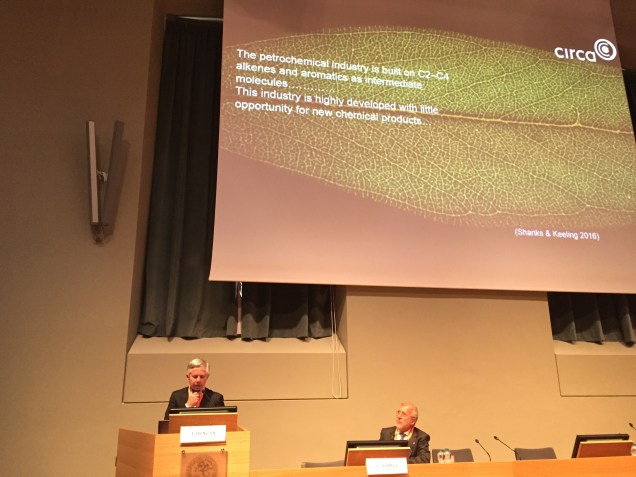
Australian biotech company Circa Group’s FC5 commercial demonstration plant is now online, paving the way to a regular supply of Circa’s bio-based solvent CyreneⓇ. A joint venture between Circa and Norwegian pulp and paper company Norske Skog, the FC5 plant is located in Tasmania, Australia. Now successfully commissioned and operated end-to-end, FC5 is starting to produce a steady stream of 99% pure CyreneⓇ, a non-toxic solvent made from certified and renewable cellulose waste.
 IL BIOECONOMISTA