Global Bioenergies, the French company which is developing a process to convert renewable resources into hydrocarbons through fermentation, have delivered isobutene produced at its industrial pilot to Arlanxeo, a world leader in high‐quality synthetic rubbers headquartered in the Netherlands.
Comet Biorefining, the Canadian bio-based company, has signed an off-take agreement with bio-succinic acid producer BioAmber for high-purity dextrose from Comet’s planned commercial plant in Sarnia, Ontario.
The dextrose will be produced from agricultural residues using Comet’s innovative technology.
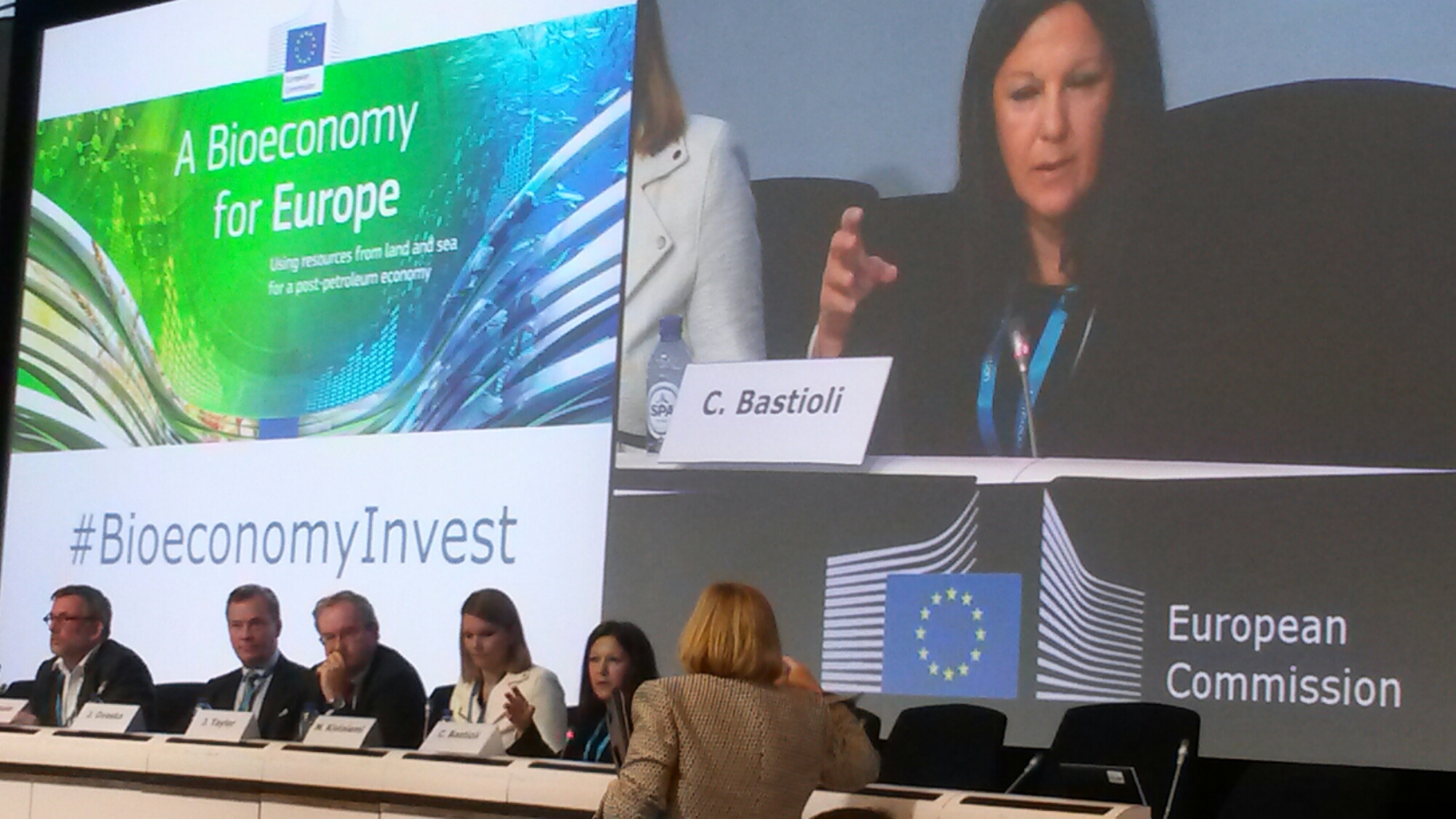
“To pass laws that can make a difference means overcoming the braking action of those who defend and feed the advantageous position, put into practice the good industry and multiply virtuous cases there are in our country. Much of the Italian industry has invested and is investing in the development of new products and “green” technologies, and now considers sustainability as an opportunity rather than a constraint”. Catia Bastioli talks to Il Bioeconomista. In this exclusive interview with the Chief Executive Officer of Novamont, considered as the beacon of Italian bioeconomy, we talk about bioeconomy, circular economy and climate change. A few days before the 4th EU Bioeconomy Stakeholders’ Conference in Utrecht, Bastioli gives us her vision to fully realize in Italy and Europe the new economy based on biological resources, able to create wealth and jobs, starting from the local areas.
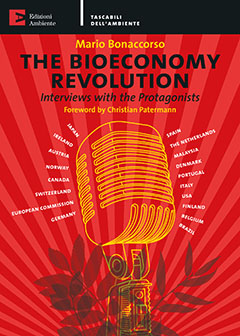
The ebook has the privilege of hosting the preface written by Christian Patermann, the man who is considered as the “father” of the European bioeconomy:
“The Bioeconomy Revolution” is not just another book to be added to the growing number of publications worldwide on the Bioeconomy and more recently on the so-called circular economy.
Metabolix, an U.S. advanced biomaterials company focused on sustainable solutions for the plastics industry, announced that it has entered into a Memorandum of Understanding with CJ CheilJedang Corporation (“CJ”) for a strategic commercial manufacturing arrangement for specialty PHAs, including the Company’s newly launched amorphous PHA (“a-PHA”).
CJ CheilJedang is a Korean-based food, feed, and bioscience company, and a subsidiary of the CJ Group. It is a global leader in the area of industrial biotechnology with innovations in fermentation and purification technologies.
FedEx, the global courier delivery services company headquartered in Memphis, Tennessee, entered into an agreement with Colorado-based Red Rock Biofuels to purchase alternative jet fuel made from wood waste. Starting in 2017, FedEx will blend the first 6 million gallons of this jet fuel at its Oakland hub, ultimately producing at least 48 million gallons over an 8 year term.
Aemetis, an advanced fuels and renewable chemicals company founded in 2006 and headquartered in Cupertino, California, announced last Thursday the acquisition of exclusive rights to award winning, carbon recycling company LanzaTech’s patented technology for the conversion of agricultural waste, forest waste, dairy waste and construction and demolition waste (CDW) to ethanol in California.
“They are on a journey of no return anyway. They are a “mining” industry, and all mines eventually become exhausted. The question is whether some or all of the petrochemical industry will realize this fact and act to change their feedstocks and practices so that their businesses can continue long term based on sustainable feedstocks and sustainable practices.” To say it – in this exclusive interview with Il Bioeconomista – is Bruce E. Dale, a highly-ranked academic in the Top 100 People in Bioenergy (Bioenergy Digest). Professor Dale received his doctorate in chemical engineering from Purdue University in 1979. He is currently University Distinguished Professor of Chemical Engineering at Michigan State University. He serves as Editor in Chief and Founding Editor of Biofuels, Bioproducts and Biorefining. Dale has won the Charles D. Scott Award (1996), the Sterling Hendricks Award (2007) and the Award of Excellence of the Fuel Ethanol Workshop (2011). He is a Fellow of the American Institute of Chemical Engineers (2011) and a Fellow of the American Institute of Medical and Biological Engineers (2016).
His research interests are cellulosic biofuels, the relationship between energy and societal wealth, life cycle assessment and the design of sustainable systems for producing fuels, chemicals, food and animal feed.
The site in Ontario where the plant will be located
“The bioeconomy is an important piece of the puzzle in creating a more sustainable future”. To say it – in this exclusive interview with Il Bioeconomista – is Andrew Richard, founder, chairman and Chief Technology Officer of Comet Biorefining, a Canadian provider of sustainable cellulosic glucose technology for applications in renewable biofuels and biochemical. With Richard, who received his B.E.Sc. degree in Chemical and Biochemical Engineering from The University of Western Ontario in 1990, an M.B.A. from the Richard Ivey School of Business in 1993, we talk about his company and the bioeconomy in Canada.
Stora Enso, the Northern European leading provider of renewable solutions in packaging, biomaterials, wood and paper on global markets, is investing a total of approximately 63 million euro to further improve competitiveness in strategic growth areas in China and Sweden in the Consumer Board and Biomaterials divisions. The Nordic company will invest 31 million euro in a new polyethylene (PE) coating line in the new consumer board mill in Beihai, China. The Beihai Mill is expected to be in operation during the second quarter of 2016, as communicated earlier. The investment will enhance Stora Enso’s strategy for profitable growth and supports competitiveness by enabling short lead-times and full quality control for PE-coated prime Food Service Board (FSB). The investment is expected to be completed in mid-2017.


 Metabolix, an U.S. advanced biomaterials company focused on sustainable solutions for the plastics industry, announced that it has entered into a Memorandum of Understanding with CJ CheilJedang Corporation (“CJ”) for a strategic commercial manufacturing arrangement for specialty PHAs, including the Company’s newly launched amorphous PHA (“a-PHA”).


 IL BIOECONOMISTA