 More and more women are protagonists of the bioeconomy. This year, as every year, for the International Women’s Day, we dedicate a tribute to all women who are making the bioeconomy happen all around the world. With their huge competences and their infinite passion, they are the stars of the world bioeconomy. Our best and warmest wishes to all women.
This is just a partial list.


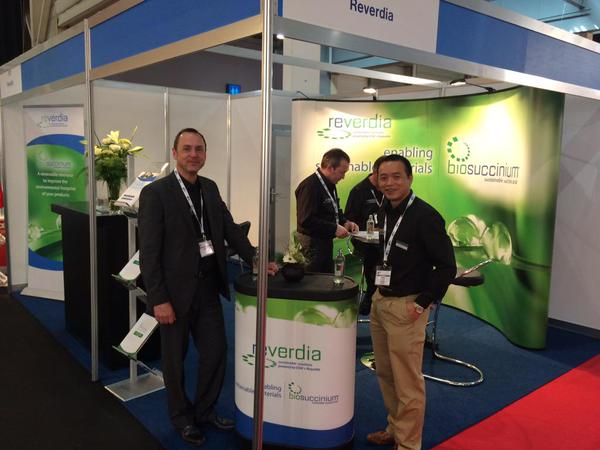 Effective 1 April 2019, the joint venture between Royal DSM and Roquette, Reverdia, will be dissolved and the partners will transfer the rights and obligations related to Reverdia’s Biosuccinium® plant in Cassano, Italy to Roquette. Under a non-exclusive license from DSM, Roquette will operate the plant and continue serving customers of Biosuccinium®. Customer service, order processing, and marketing and sales will be integrated into Roquette’s existing business to ensure a smooth transition. DSM, the original developer of the Biosuccinium® technology, will assume the role of exclusive licensor, in line with its business model in this field.
 According to a recent study conducted by Research Nester, the market for global waste to energy is expected to grow at CAGR of 8.7% during the forecast period 2018-2027. Worldwide awareness regarding depleting natural resources is major reason behind the fueling of global waste to energy market and is anticipated to generate USD 45 billion in revenue by the end of 2027. Based on technology type, the global waste to energy market is segmented into biological technology and thermal technology where thermal technology is estimated to dominate global waste to energy market in forecast period.
 In 2016 the International Hockey Federation announced a partnership with SportGroup’s leading brand, Polytan, as World Cup and Olympic Partner and supplier of hockey fields for the 2018 and 2022 hockey World Cups as well as the 2020 Olympic games in Tokyo.
 IL BIOECONOMISTA