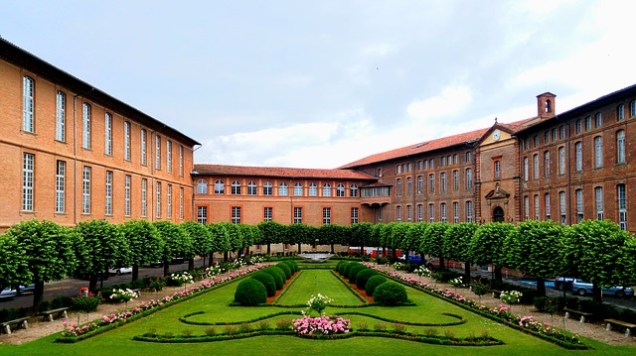
Turin will be the Euro-mediterranean capital of the bioeconomy for a couple of days. The International Forum on Industrial Biotechnology and Bioeconomy (IFIB) goes to the Italian historical first capital from 27 to 28 September at the Cavallerizza Reale, the Congress Center of the University of Turin.
Petronas Chemicals Group Berhad (PCG) and Leaf Malaysia have entered into a non-binding Memorandum of Understanding (MOU) in relation to Leaf’s proposed biorefinery project in Malaysia.
The Dow Chemical Company unveiled its Blueprint for Sustainable Watershed Management to a multi-stakeholder session of The CEO Water Mandate. Part of Dow’s 2025 “Leading the Blueprint” Sustainability Goal, the blueprint is built on the Company’s collaborative watershed management practices.
Court of Alessandria Bankruptcy Section Notice of initiation of a competitive procedure pursuant to art. 163 bisL.F.
Biochemtex S.p.A. (No. 9/17), Beta Renewables S.p.A. (No. 10/17), IBP Energia S.r.l. (No. 11/17) and the Italian Bio Products S.r.l. (No. 13/17) companies belonging to the industrial group Mossi & Ghisolfi S.p.A., with registered office in Tortona (AL), Strada Ribrocca 11
Large research infrastructures, a chemical and paper industry supporting a sector that is considered strategic, clusters that are able to build extended value chains, universities at the level of excellence and a federal government and provinces with a vision and an effective action plan. These are shortly all the strengths of the bioeconomy in Canada, as I saw them last week.
From Ruka, in Finland, to Turin, in Italy: September will be the month of the bioeconomy. The very first World BioEconomy Forum will be held in Ruka on 11-13 September. The Forum, born as an idea of Jukka Kantola, CEO of NC Partnering and KaiCell Fibers, will bring together professionals from the leading edge of the bioeconomy for face-to-face dialog in one of the world’s most beautiful areas of outstanding natural beauty. In Turin on 27-28 September will be held IFIB, the International Forum on Industrial Biotechnology and Bioeconomy.
LanzaTech, Virgin Atlantic and partners are one-step closer to building the world’s first large scale Alcohol to Jet (ATJ) facility producing commercial quantities of fuel in the UK. The commercial facility would convert low carbon ethanol produced from waste emissions, to jet fuel.
Italian company Saipem signed a Memorandum of Understanding as well as an exclusive agreement with California Ethanol & Power, LLC, for the realisation of a low carbon emission plant for the production of ethanol fuels, electricity from renewable sources, biomethane and other secondary products derived from sugar cane cultivated on site.
Amsterdam-based Avantium, a leading technology development company and forerunner in renewable chemistry, will officially open a pilot biorefinery for its Zambezi technology in Delfzijl, Netherlands. Opening ceremonies will take place in Amsterdam on 10 July and in Delfzijl on 13 July. The province of Groningen is supporting the pilot biorefinery with a RIG (‘Regionale Investeringssteun Groningen’) subsidy of €1.8 million.
“Cascade use and reuse/-cycling are important factors for the success of the bioeconomy, but the products need to be designed in an appropriate way for recycling. For sure, carbon storage in the material is a positive side effect, but I see this more as a leverage to increase competitiveness of bio-based products compared to fossil-based products, e.g. through a CO2tax for fossil-based products”. To say it – in this interview with Il Bioeconomista – is Andreas Kiesel, a researcher at the University of Hohenheim, who is coordinating the BBI JU Demo Project GRACE, “which is demonstrating the feasibility of 10 bio-based value chains for hemp and miscanthus biomass at an industry relevant scale”.