The chemical site of Leuna, Germany. Copyright InfraLeuna GmbH / Horst Fechner
Global Bioenergies, French biotech company that is developing a process to convert renewable resources into hydrocarbons through fermentation, and Audi announce the signature of a new collaboration agreement to further broaden the feedstock flexibility of Global Bioenergies’ Isobutene process.
thank you very much, heartily. 2015 ended with excellent results for Il Bioeconomista: over 46% more visits to our blog. It is a real boom, which shows how the bioeconomy is increasingly a phenomenon that attracts the attention of global public opinion and gratifies us as journalists, observers of a reality that we have always defined as the industrial revolution of the Third Millennium.
Bio-on and SECI Spa, part of Gruppo Industriale Maccaferri holding, signed an agreement to build the world’s first facility for the production of PHAs bioplastic from biodiesel production co-products, namely glycerol. The two companies will work together to build a production site with a 5 thousand tons/year output, expandable to 10 thousand tons/year.
Bioeconomy every day @ BioBased World 2015 in Frankfurt am Main
The bioeconomy is innovation, the result of the skills and passion of researchers and managers able to create value and new high-qualified jobs. At the end of 2014 Il Bioeconomista launched a new initiative: The 10 Most Innovative Bioeconomy CEOs. We ask a panel of world bioeconomy experts to tell us the Chief Executive Officers that have stood out as the most innovative during the last year.
Caserta re-starts from the bioeconomy. If the Southern Italian city between the Eighteenth and Nineteenth centuries was known everywhere for the quality of its silk, today can aspire to become a center of gravity of the new sustainable bio-based economy. Here, GF Biochemicals launched last July the commercial-scale production of levulinic acid, using biomass as feedstock. The levulinic acid is a chemical building block that is used in various industrial sectors, from pharmaceuticals to cosmetics, from personal care to flavors and fragrances, from coating to fuel additives. In 2015 the company has produced 2 thousand tons and aims at producing 10 thousand tons in 2017 and up 50 thousand tons by 2019. A revolution, if we think that the company located in Caserta is certain to offer to the market in a few years the bio-based levulinic acid to a price of one dollar per kilo, versus the current 4-5 dollars per kilo for the corresponding product from oil, offering the same performance.
The protagonists of this bio-revolution, which is a key to economic development crucial for Italy and the Southern Italy in particular, are Pasquale Granata, young local entrepreneur, and Mathieu Flamini, the famous Arsenal player, former AC Milan, who unveiled a few days ago his involvement in the company in an interview with the Sun on Sunday.
In this exclusive interview is Pasquale Granata to talk with us about GFBiochemicals and the bioeconomy, as a key to regional regeneration to create economic development and new jobs within a framework of eco-sustainability.
Another important step on the road to Stora Enso’s transformation into a renewable materials company. The pulp and paper manufacturer headquartered in Helsinki, Finland, inaugurated yesterday the new Innovation Centre for biomaterials in Stockholm, that will host research, application, business development and strategic marketing under one roof.
Ellen MacArthur and Carlo Messina yesterday in Milan
Intesa Sanpaolo, Italian major banking group, has become a Global Partner of the Ellen MacArthur Foundation, demonstrating its intention to become a key player in the network of stakeholders supporting the transition to a circular economy. The partnership was signed yesterday by Carlo Messina, CEO of Intesa Sanpaolo, and Ellen MacArthur, Chairman and founder of the Ellen MacArthur Foundation. In its role as Global Partner, Intesa Sanpaolo will help to redefine business strategies to capture new opportunities, and will ensure financial support for investments used to re-design the industrial system.
The new circular economy package “seems to me that it is mainly focused on recycling materials, and that is off course also important. But we should also be looking at sustainable production, reducing the amount of oil used and replacing them with biobased products, preferably with a negative CO2 print”. Arno van de Kant, business development director of the Bioprocess Pilot Falicity located in the Netherlands, talks to Il Bioeconomista about the Dutch bioeconomy and the European policies to support the field.
In the middle Tom van Aken, Ceo Avantium, selected by Cleantech Group as European Cleantech Company of the Decade
Avantium, a Dutch scale-up renewable chemicals company that develops and commercializes a next generation biobased chemicals and bioplastic, signed an agreement with Mitsui & Co. to commercialize 100% biobased chemicals FDCA (furandicarboxylic acid) and PEF (polyethylene furandicarboxylate) in Asia. As part of this agreement, Mitsui has been granted a right to pu rchase a sizable volume of FDCA from the first commercial FDCA plant to be constructed by Avantium.
“The bioeconomy can and should be the path for the re-industrialization of Brazil, fostering much needed innovations and development of products and processes that will fast-track the establishment of the this new norm in a global scale”. To say this – in this exclusive interview with Il Bioeconomista – is Bernardo Silva, Executive President at Brazilian Industrial Biotechnology Association (in Portuguese ABBI – Associação Brasileira de Biotecnologia Industrial), a trade association that brings together companies and institutions developing and using microorganisms and its derivatives to deliver renewable products for industries and consumers worldwide. The founding members of ABBI are Amyris, BASF, BioChemtex, BP, Centro de Tecnologia Canavieira, Dow, DSM, DuPont, GranBio, Novozymes, Raízen and Rhodia. With Silva we talk about Brazilian bioeconomy and the country’s national strategy to support the field. “The ambition to establish a vibrant bioeconomy in Brazil, which values our comparative advantages and is able to realize the opportunities arising from this new model of development, entails a joint effort between government, business and civil society to discuss, define and practice a plan that ensures the alignment of policies in place and long-term strategies, paving the way for Brazil fulfill its role as a leader a global bio-based economy.”

 Dear Readers,


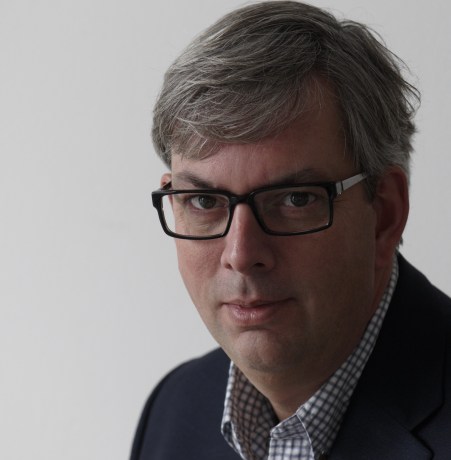

 “The bioeconomy can and should be the path for the re-industrialization of Brazil, fostering much needed innovations and development of products and processes that will fast-track the establishment of the this new norm in a global scale”. To say this – in this exclusive interview with Il Bioeconomista – is Bernardo Silva, Executive President at Brazilian Industrial Biotechnology Association (in Portuguese ABBI – Associação Brasileira de Biotecnologia Industrial), a trade association that brings together companies and institutions developing and using microorganisms and its derivatives to deliver renewable products for industries and consumers worldwide. The founding members of ABBI are Amyris, BASF, BioChemtex, BP, Centro de Tecnologia Canavieira, Dow, DSM, DuPont, GranBio, Novozymes, Raízen and Rhodia. With Silva we talk about Brazilian bioeconomy and the country’s national strategy to support the field. “The ambition to establish a vibrant bioeconomy in Brazil, which values our comparative advantages and is able to realize the opportunities arising from this new model of development, entails a joint effort between government, business and civil society to discuss, define and practice a plan that ensures the alignment of policies in place and long-term strategies, paving the way for Brazil fulfill its role as a leader a global bio-based economy.”
 IL BIOECONOMISTA