“We’re looking for a joint venture that will allow us to join forces to promote the business.” After days of rumors about the sale of its chemical division Versalis, yesterday the Ceo of Eni, Claudio Descalzi, gave this short answer to the reporters who urged him on the issue. It is at the same time a confirmation of the will of the Italian oil giant to back away from chemistry.
The advisor Barclays would then be at work not to look for buyers but partners and – if according to the agency Bloomberg would be affected several private equity firms – rumors in Italy say it has already started a negotiations with a private fund.
James Cogan, European Technology, Industry and Policy Analyst
We receive and publish with pleasure this comment by James Cogan. He is a technology, industry and policy analyst collaborating with PNO Innovation in Brussels and with a number of public and private organisations with stakes in the future of biofuels and transport energy. In the run up to the climate emergency conference in Paris he has been considering the options open to the designers of the new European governance system for climate and energy and to the 28 teams charged with creating member state climate and energy plans for publication by 2018. We are glad to promote the debate.
“At a time when carbon emissions should be dropping by 40%-80% EU transport emissions will actually increase by that amount, becoming the number one EU contributor to catastrophic global warming.
Transport emissions can only be reduced in the 2030 timeframe by traffic efficiencies, biofuels and lower tailpipe emissions. To date the EU has not taken bold measures to pursue such avenues and any gains have been offset many times over by traffic growth. Electric vehicles comprise only a miniscule fraction of the EU vehicle fleet, sales are under 1% and even the most optimistic forecasts for sales growth would not lead to an impact until well after 2040.
“EPA is proposing to change the rules in the middle of the game.” The representatives of advanced and cellulosic biofuels industry – a nonprofit educational organization advocates for the adoption of advanced biofuels as an energy security, military flexibility, economic development and climate change mitigation/pollution control solution – recently sent a letter to President Barack Obama regarding the U.S. Environmental Protection Agency’s renewable fuel standard (RFS) volume requirement proposal.
In the letter it was emphasized that the May 29th proposal represents a broken promise that is negatively impacting investments and partnerships in advanced biofuels, is sending projects and jobs overseas, and is at odds with the president’s initiatives to combat climate change.
“Biobased products are perfect examples of the shift towards a circular economy as they are made from renewable raw materials rather than from finite fossil carbon sources. However, the link between the bioeconomy and the circular economy is not always made and we need it to be better recognised in order to ensure that the right supportive measures are put in place to help enable this transition. This is why we are focusing on the circular economy in anticipation of the European Commission’s proposal which is due out towards the end of this year”. To say it in this exclusive interview with Il Bioeconomista is Nathalie Moll, Secretary General of EuropaBio, the European Association for Bioindustries. With Moll we talk about bioeconomy, biotechnology, circular economy and EFIB, the European Forum for Industrial Biotechnology and the Bioeconomy, which will take place next October 27-29 in Brussels.
Yesterday, the French parliament adopted the law on energy transition and green growth proposed by Ségolène Royal, Minister of Ecology, Sustainable Development and Energy.
The new law creates the opportunities to introduce biobased, compostable plastics to selected types of packaging as well as fruit and vegetable bags.
EuropaBio and Smithers Rapra unveil the agenda for the European Forum for Industrial Biotechnology and Bioeconomy (EFIB) 2015. Taking place on 27-29 October 2015 at Square, Brussels, EFIB combines high-level discussions on business and policymaking and is the perfect setting for businesses looking to benefit from the next wave of activity in Europe.
The Greek crisis is an opportunity to reflect again on our idea of Europe. In our opinion the euro is an irreversible process. But it is absurd to weigh on the ECB, in fact the only European institution truly federal, the task to deal with the crisis with the only instrument of monetary policy.
The Bio-based Industries Joint Undertaking, a public-private partnership between the EU and the Bio-based Industries Consortium (BIC), has approved the funding of 10 projects totalling €120 million to boost the EU capacity to stimulate growth and jobs via a more circular, low carbon and sustainable bioeconomy.
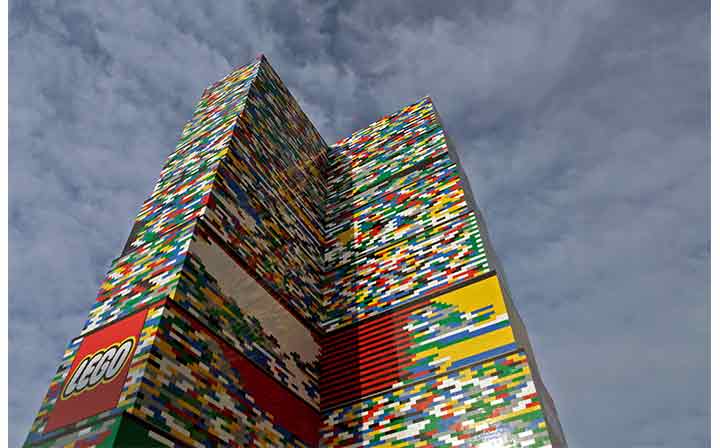
The LEGO Group announced a significant investment of DKK 1 billion (approximately € 135 million) dedicated to research, development and implementation of new, sustainable, raw materials to manufacture LEGO® elements as well as packaging materials. The LEGO Group believes a new sustainable material must have an ever-lighter footprint than the material it replaces across key environmental and social impact areas such as fossil resource use, human rights and climate change.
The European Investment Bank (EIB) and Metsäliitto Cooperative signed last Friday a EUR 75 million loan agreement for the construction of a new large-scale bio-product mill in Finland (Äänekoski). The financing will be submitted for backing by the EU budget guarantee under the European Fund for Strategic Investments (EFSI).






 IL BIOECONOMISTA