
The Eurozone economy expanded by 0.2 percent in the third quarter, official data showed Friday, a slight acceleration that will do little to quell fears that a sluggish Europe is hurting world growth, Agence France-Press reported.
The Eurozone economy expanded by 0.2 percent in the third quarter, official data showed Friday, a slight acceleration that will do little to quell fears that a sluggish Europe is hurting world growth, Agence France-Press reported.
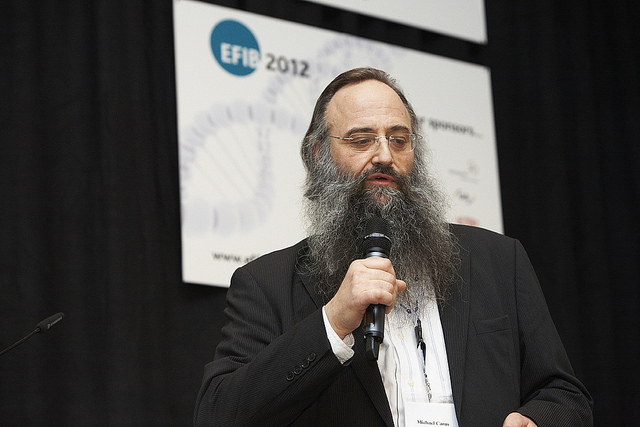
The European Union will need a new political framework for rolling out its bio-based economy by 2020 at the latest. The existing framework does not create sufficient market pull for implementing innovative, bio-based technologies. To say it are Michael Carus, Lara Dammer and Roland Essel in the latest policy paper of nova-Institute “Options for Designing a New Political Framework of the European Bio-based Economy – nova-Institute’s contribution to the current debate”.

Reverdia, the joint venture between Royal DSM and Roquette Frères, has earned the USDA Certified Biobased Product Label for its Biosuccinium bio-succinic acid. The USDA Certified Biobased Product Label verifies that the product’s amount of renewable biobased ingredients meets or exceeds levels set by US Department of Agriculture.
The U.S. Department of Agriculture (USDA) has released a comprehensive report synthesizing current literature that explores opportunities in the emerging bioeconomy. The report, entitled “Why Biobased?”, was created as a precursor for a more comprehensive economic study to be released in the coming months by the USDA BioPreferred program on the economic impacts of the biobased products industry.
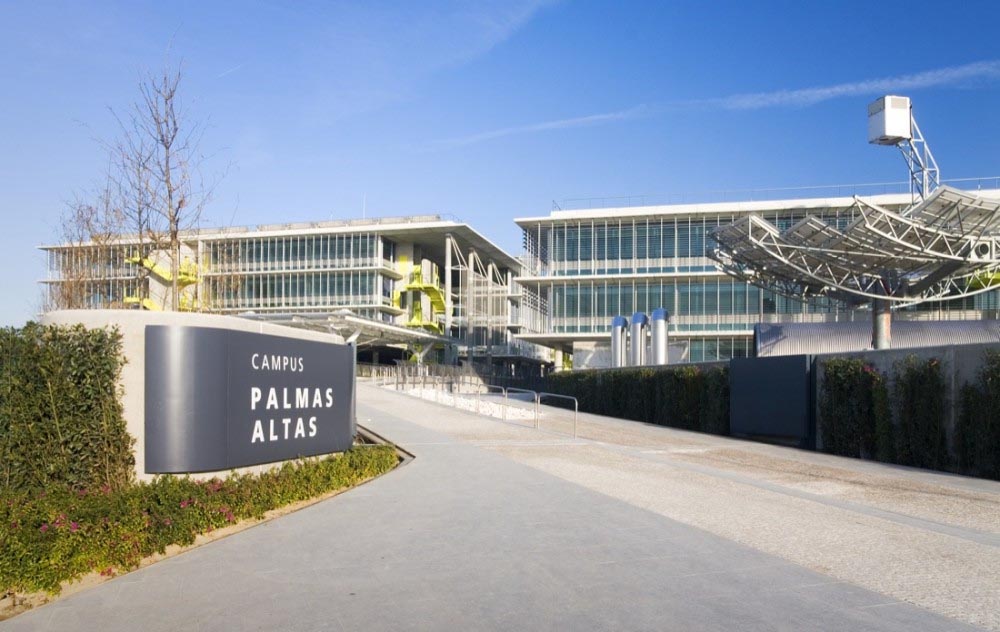
Abengoa – the international company that applies innovative technology solutions for sustainability in the energy and environment sectors, generating electricity from renewable resources, converting biomass into biofuels and producing drinking water from sea water – promotes the use of sustainable transport every day through various measures that it has implemented. These initiatives include a pedestrian walkway that Abengoa constructed in 2012 to link the Los Bermejales and Bellavista districts with Campus Palmas Altas.

Two companies have been announced as winners of EuropaBio’s Most Innovative Biotech SME Award 2014. The award ceremony took place yesterday in Brussels, as part of the second edition of the European Biotech Week.
US Department of Energy earmarks $25 million for biofuel research. The goal, according to the Department of Energy, is to reduce the cost of algal biofuels to less than $5 per gasoline gallon equivalent (gge) by 2019. What’s more, this funding supports the development of a bioeconomy that can help create green jobs, spur innovation, improve the environment, and achieve national energy security.
Following are nominees for the next European Commission. Job assignments were announced yesterday by the incoming president, Jean-Claude Juncker of Luxembourg. Juncker sailed through his European Parliament confirmation in July; hearings await the rest in late September, followed by a vote on the whole slate.
Il Bioeconomista’s list focuses on commissioners more involved in the Bioeconomy.

Everything is ready in Reims, France, to host the seventh edition of Efib. EuropaBio, the European Association for Bioindustries, and Smithers Rapra in association with IAR-Pole return in 2014 from 30 September to 2 October to deliver the European Forum for Industrial Biotechnology and the Biobased Economy. EFIB is the premier market place for the European Biobased economy. Over 800 professionals, working within the dynamic and sustainable biobased industries sector, will be in attendance.

Another brick towards the European Bioeconomy. The European Commission organises from 8 to 9 October in Turin the EU Bioeconomy Stakeholders Conference “From sectors to system, from concept to reality”.
Two years on from the launching of the EU’s Bioeconomy Strategy, Brussels in collaboration with the Italian Presidency analyses the achievements and the opportunities ahead in the two-day conference.
 IL BIOECONOMISTA