Elopak, an international supplier of paper based packaging solutions for liquid food, based in Norway and wholly owned by the Ferd Group, and Stora Enso has launched the first gable top carton made from natural brown unbleached paperboard, creating the Naturally Pure-Pak® carton with a highly distinctive, natural look and feel.
Cupertino-based Aemetis is producing cellulosic ethanol from orchard waste, utilizing technologies from Aemetis, LanzaTech and InEnTec, after successfully completing the construction and commencement of an Integrated Demonstration Unit.
Novozymes launched two new enzymes for the European ethanol market. The two products (Spirizyme® 2.0 T and Spirizyme Ultra T) are part of the Spirizyme T Portfolio, an advanced suite of glucoamylase enzymes with trehalase that deliver yield enhancing activities documented to provide the highest total sugar conversion in the industry.
The bioeconomy is today, in our everyday life: Reverdia’s Biosuccinium® has been used in the production of biobased materials for VAUDE’s new Skarvan range. As part of the completely redesigned Summer 2018 Shoe Collection, they offer consumers a sustainable choice of trekking shoe with high-end design.
Avantium, the Dutch forerunner in renewable chemistry, locates a new pilot biorefinery at Chemie Park Delfzijl, in the Netherlands. Avantium and chemical giant AkzoNobel have signed a contract for the pilot plant accommodation and the supply of various facilities and services. The pilot plant will validate the technical and economic feasibility of Avantium’s Zambezi process, which aims to convert woodchips and other second generation biomass into raw materials for the chemical industry. This is an essential step in scaling up the technology from lab to commercial operations.
Berlaymont, European Commission’s Headquarter in BrusselsThe European Commission’s Bioeconomy Knowledge Centre (BKC) will be launched tomorrow in Brussels as the Commission’s central knowledge hub on the bioeconomy.
Christophe Schilling, CEO of Genomatica during his speech at the Grand Opening of Mater Biotech’s plant in Bottrighe di Adria, Italy
Genomatica has strong results for its GENO BDO biobased process technology regarding overall process performance and production volume to date for bio-based 1,4-butanediol (BDO). Novamont, Genomatica’s first GENO BDO licensee, has officially confirmed that its new industrial plant in Bottrighe, Italy has met all performance guarantees committed to by Genomatica. The guarantees include technical and economic parameters, such as efficiency of converting feedstock sugars to Bio- BDO product and product quality. The process runs as designed, as modeled, and as represented.
Arkema will invest some 300 million euros over five years in the biosourced polyamide 11 chain. This major investment will enable the French chemical group to increase by 50% its polyamide 11 global production capacities. The project falls in line with Arkema’s strategy to speed up its development in advanced materials, one of the key pillars of its future growth, sustained by a unique portfolio of innovations around the main sustainable development trends.
Aerial view of Kalundborg sustainable industry complex
Novozymes, Novo Nordisk, Kalundborg Forsyning and DONG Energy signed a new 20-year agreement which enables Denmark’s largest coal-fired power station unit, the Asnæs Power Station, to phase out coal and replace it with wood chips. Novozymes sources steam from the power station.
“The UK cannot solve the problem on its own, and we will need to collaborate with foreign governments and companies if we are to truly tackle the crisis ahead.” To say it referring to Brexit – in this exclusive interview with Il Bioeconomista – is Jaymin Amin, COO at Ingenza, the spin-out from the University of Edinburgh founded in 2002, which is today one of the most dynamic European industrial biotech company. With Amin we talk about industrial biotechnology and bioeconomy in Scotland.

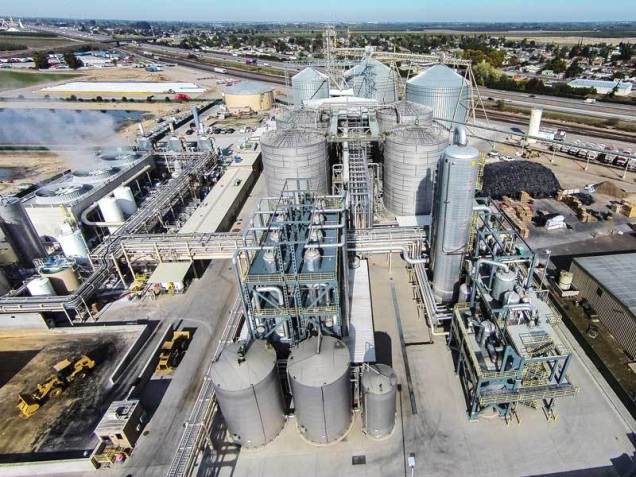 Ethanol Production Facility in Keyes, CA
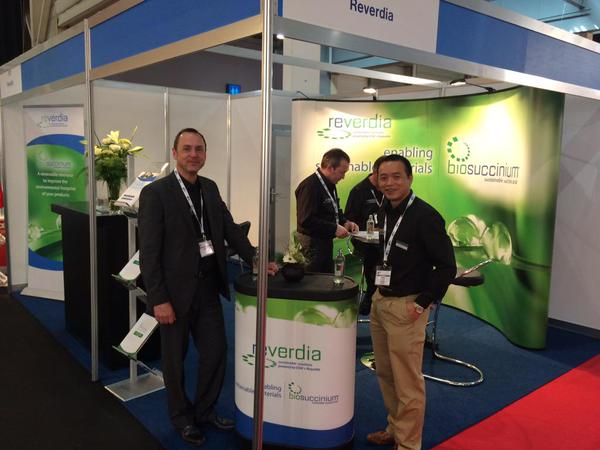 The bioeconomy is today, in our everyday life: Reverdia’s Biosuccinium® has been used in the production of biobased materials for VAUDE’s new Skarvan range. As part of the completely redesigned Summer 2018 Shoe Collection, they offer consumers a sustainable choice of trekking shoe with high-end design.


 Arkema will invest some 300 million euros over five years in the biosourced polyamide 11 chain. This major investment will enable the French chemical group to increase by 50% its polyamide 11 global production capacities. The project falls in line with Arkema’s strategy to speed up its development in advanced materials, one of the key pillars of its future growth, sustained by a unique portfolio of innovations around the main sustainable development trends.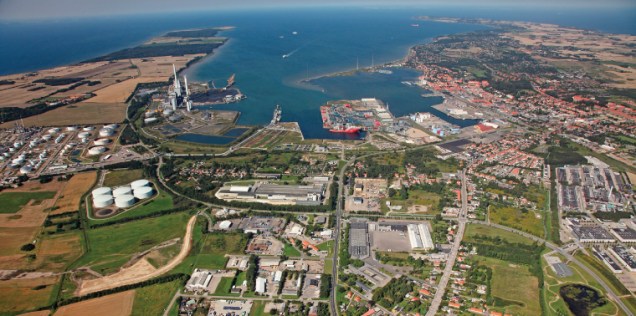

 IL BIOECONOMISTA