The UK Green Investment Bank (GIB) has announced £5 million of funding for a pipeline of energy efficiency projects at a number of Scottish distilleries. Half of this will come from GIB, with matched funding from the private sector. Aberfeldy distillery in Perthshire will be taking advantage of the new funding available. This follows GIB’s announcement last year of an investment at the Tomatin distillery, near Inverness. Tomatin is on track to reduce its greenhouse gas emissions by c. 80%.
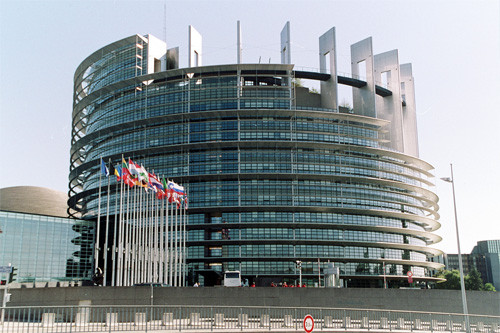
From Thursday to Sunday we European Union citizens will be called to elect a new parliament. These elections are important, not only because for the first time will decide who will lead the European Commission. But mostly because the next 5 years represent a crucial point to understand whether the European Union will remain nothing more than a geographical expression (as Metternich called Italy in the Nineteenth century, before its Unification), or will be able to achieve a common economic and monetary policy, and with it a tax policy, a labor policy, etc. In one word: Policies.
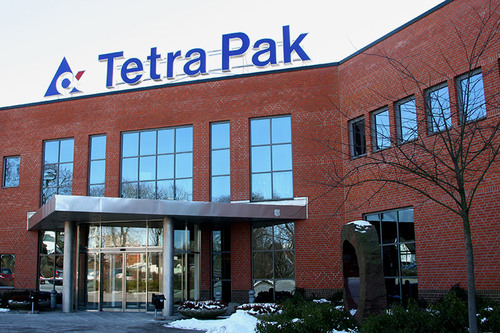
Tetra Pak, the world leader in food processing and packaging solutions, headquartered in Sweden, announced that all of the packages it produces in Brazil are now using bio-based low-density polyethylene (LDPE). Combined with paperboard, the use of bio-based LDPE made from sugar cane increases the content of materials from renewable sources to as much as 82% in a Tetra Brik Aseptic 1000ml Base package, the world’s best selling carton package range for beverages.
Hungary relies on the bioeconomy to grow. Its capital region has vast untapped biomass resources and R&D competencies, states a recent study on the future landscapes of bioeconomy. The paper was accomplished within the framework of the Bioeconomy platform of Climate-KIC, Europe’s largest public-private innovation partnership focused on mitigating and adapting to climate change.
The Bioeconomy platform aims to support the transition to a bio-based economy by developing an integrated, holistic approach across entire value chains from feedstock production to efficient processing and conversion, and ultimately the production and marketing of bio-based products. Along these lines the Hungarian study delivers an insight into the emerging field of bioeconomy with emphasis on the opportunities in Hungary by means of assessing natural endowments, key stakeholders and R&D infrastructure from the perspective of relevant Climate-KIC projects. The main European and global drivers as well as the basic technological knowledge are also presented.
“At the moment focus in European policies is to endorse biomass utilization for the energy applications. This is short-sighted, as on those applications biomass does not bring the best added value. Also there is not enough biomass in Europe to meet up all energy and climate target in EU-level. Biomass is more valuable on chemical and material applications”. To say it, in this exclusive interview with Il Bioeconomista, is Jukka Kantola, CEO of NISCluster, a Finnish private bioeconomy company with a focus on the woody biomass. With Kantola we talk about the bioeconomy in Finland, the EU policies and the different uses of biomass.
Air travel is more bio-based. Gevo, Inc., the world’s only commercial producer of renewable isobutanol, announced last Tuesday that it has come to an agreement with Lufthansa to evaluate Gevo’s renewable jet fuel with the goal of approving Gevo’s alcohol-to-jet fuel (ATJ) for commercial aviation use. Lufthansa’s testing is being supported through work with the European Commission.
Europeans use about 100 million plastic carrier bags every year. Some of these are dropped as litter, ending up in the environment, where long-standing plastics accumulate and harm wildlife. The European Parliament today voted on new EU legislation aimed at reducing the use of single-use plastic carrier bags.
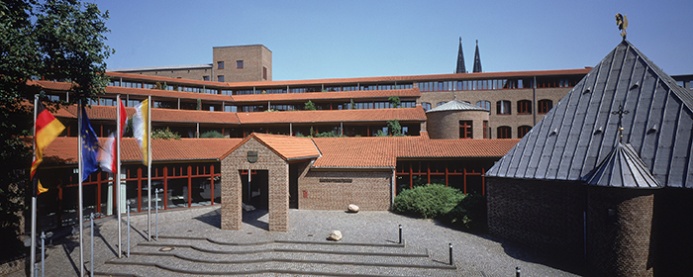
Three days of interesting debate with regard to the future development of bio-based materials. This was the Seventh International Conference on bio-based materials, organized by the nova-Institut from April 8 to 10 in Cologne. With the presence of some of the major European players – companies, univerties and research centers – the three days in the beautiful German city on the Rhine have been an opportunity to discuss on the progress of research on bio-based materials, the political support to the bio-based economy in Europe and in the member states and what measures are necessary to enable the Old Continent to be competitive in international markets.
The biopolymers market growing at a compound annual growth rate of 14.5% is expected to generate global revenue of 3,668.6 million US dollars by 2018. It’s what emerges from the new Report on “Biopolymers/Bioplastics Market by Type (Bio PET, Bio PE, PLA, PHA, Bio PBS, Starch Blends, and Regenerated Cellulose), by Application (Packaging, Bottles, Fibers, Agriculture, Automotive, and Others) & by Geography – Trends & Forecasts to 2018” published by Research and Markets, the Irish company which is the leading source for international market research and market data.
A new innovation centre for industrial biotechnology is forecast to increase industrial biotechnology-related turnover to up to £3 billion by 2030, create 1500 jobs within five years and put Scotland at the forefront of a global transformation. Funded by the Scottish Funding Council and supported by Scottish Enterprise and Highlands & Islands Enterprise, the new Industrial Biotechnology Innovation Centre (IBioIC) – hosted at the University of Strathclyde – is a key element of the National Plan for Industrial Biotechnology – Towards a Greener, Cleaner 2025. It brings together academic and private sector partners to play a leading role in the potential £360 billion global industrial biotechnology market. Industrial biotechnology is the use of biological substances, systems and processes to produce intermediate and final products such as pharmaceuticals, chemicals, materials and energy – both cost-effectively and with minimal adverse environmental impact.







 IL BIOECONOMISTA