
The Biotechnology Innovation Organization (BIO) urges U.S. Congress to advance a multi-year extension of renewable energy tax credits slated to expire at the end of 2016.
The Biotechnology Innovation Organization (BIO) urges U.S. Congress to advance a multi-year extension of renewable energy tax credits slated to expire at the end of 2016.

The British bioeconomy takes a step forward: five established R&D centres across the UK have today announced a new alliance, BioPilotsUK, to position Britain as a global leader in biorefining technology development and bio-based product manufacture, two key elements of the bioeconomy.

Another brick towards the European Bioeconomy, starting from regions. The European Commission together with the Slovak Presidency, and under the auspices of Standing Committee of Agricultural Research (SCAR), organised today in Bratislava a conference on the role of EU regions in developing a sustainable European Bioeconomy. The aim of the conference was “to discuss with national and regional stakeholders the new bioeconomy context for the agriculture, forestry and fisheries, the role of research and innovation to overcome the big societal challenges ahead of us and also to identify the barriers in the regions in adapting the bioeconomy strategy”.

Scotland is set to create waves among the global biotechnology arena as its Industrial Biotechnology Innovation Centre (IBioIC) announces over £3 million of investment across six game changing synthetic biology projects including greener skincare products, more sustainable plastics and improvements to personalised medicine therapies.

Regional stakeholders from Central and Eastern Europe must intensify cooperation. This is the strong message coming from the European Bioeconomy Congress, organised 6-7 October 2016 in Łódź, Poland. Alongside the publication of the Łódź Declaration of Bioregions, the Bio-Based Industry Consortium (BIC), the Bio-Based Industries Joint Undertaking (BBI JU) and eight Polish regions signed a Letter of Intent to develop new bioeconomy partnerships.
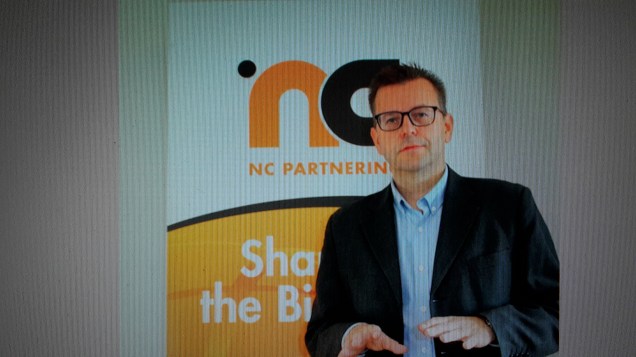
In Finland, NC Partnering has launched a new bio-ecosystem called the BioFutureFactory, “a highly fertile growing ground for a multitude of emerging bio-economy projects and applications, and with the added beauty of being a concept that is a perfect example of circular economy”, explains Jukka Kantola, CEO of the Finnish company in a talk with Il Bioeconomista about this new project, which aims at bringing costs of the feedstock down to enable bio-operators to build their operations on sustainable, renewable and economical premises.
Interview by Mario Bonaccorso

BASF and the Dutch leading chemical technology company Avantium yesterday announced that they have established a joint venture (JV) called Synvina for the production and marketing of furandicarboxylic acid (FDCA) produced from renewable resources (fructose from plants as feedstock rather than conventional oil derivatives), as well as marketing of polyethylenefuranoate (PEF), based on this new chemical building block.
Published “to take part in a severe contest between intelligence, which presses forward, and an unworthy, timid ignorance obstructing our progress.”
We can borrow this mission statement written on the contents page of the first issue of The Economist, published by James Wilson in September 1843, to define exactly the reason that today, 173 years later, leads to the launch of The BioJournal.

Ginkgo Bioworks and Genomatica announced an alliance to more rapidly deliver biology-based solutions for the world’s highest-volume intermediate and specialty chemicals. Mainstream chemical producers can now in-license technology to manufacture their widely-used chemicals with cost-effective and sustainable whole-process solutions that include engineered microorganisms, complete process designs and technology transfer support. The alliance is structured as a deep collaboration, with two-way sharing of technology and intellectual property, along with joint technology development, to provide a single unified offering to the market.
 She has created the Italian bioeconomy. Thanks to her passion, her tenacity, her ability, Italy today can rightly claim to be a leading country in this field. All this in the total lack of an Italian strategy on bioeconomy.
The inauguration last Friday of Mater Biotech’s plant in Bottrighe di Adria, the first in the world capable of producing butanediol from renewable sources, is her umpteenth great victory. The demonstration that the bioeconomy is a reality, that creates wealth and jobs in an environmentally friendly way. That the goals can be achieved with passion and determination, putting into practice a new idea of sustainable enterprise.

