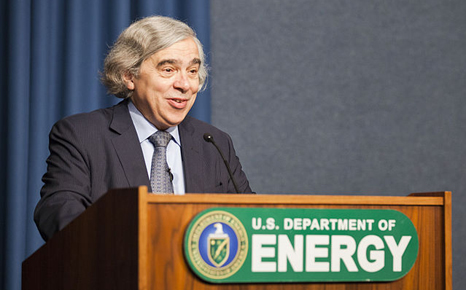
Building on President Obama’s plan to cut carbon pollution, the Energy Department announced last Tuesday four research and development projects to bring next generation biofuels on line faster and drive down the cost of producing gasoline, diesel and jet fuels from biomass. The projects – located in Oklahoma, Tennessee, Utah and Wisconsin – represent a $13 million Energy Department investment.
David Newman, Secretary General of Assobioplastiche
Marine litter caused by plastic bags is threatening the oceans and causing already an ecological disaster . The European Commission is pushing for an ambitious resource efficiency agenda and is struggling to reduce landfills and enforce waste prevention across all Member States. Europe is a leader in the bioeconomy. What do all these facts have in common? More than we think. Italy demonstrated to the world that substituting traditional plastic bags with reusable and biodegradable and compostable ones can be, even at times of crisis, a solution to trigger separate collection rates, enhance waste prevention and unleash new investments in ground breaking technologies. We discussed the Italian case study and the recent reaction of UK against the Italian ban on plastic bags recently reported by several UK media with David Newman, Secretary General of Assobioplastiche, the Italian Bioplastic and Biodegradable and Compostable material Association.
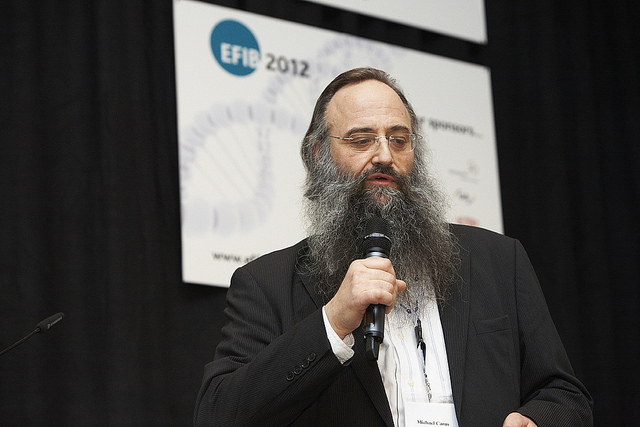
Michael Carus, managing director of the nova-Institut
Food or non-food: Which agricultural feedstocks are best for industrial uses? This is the title of the new paper published by the German nova-Institut led by Michael Carus, who is one of the author, together with Lara Dammer. In less than ten pages the two authors analyze one of the most controversial issues of the bioeconomy, also underlined by the recent decision of the European Parliament’s environment committee to limit the share of food-based biofuel used in cars and trucks to 5.5% of the total consumption. Continue reading →
National Prawn Company (NPC) of Saudi Arabia and German firm Basf have agreed to collaborate in the field of algae technology. “The signed contract is marking once more the ability of Saudi Companies to be equal partners with World Class enterprises like Basf. It also shows that we are capable of offering solutions for domestic and global needs,” said NPC’s chairman Sulaiman Bin Abdul Aziz Al Rajhi.
The European Parliament’s environment committee voted last Thursday in favor of limiting the share of food-based biofuel used in cars and trucks to 5.5% of total consumption. It said the change would address concerns that biofuels of this kind are raising food prices and may not be as environmentally beneficial as originally hoped. However, it means that to meet its 2020 mandate that 10% of Europe’s transport energy comes from renewable sources, the bloc will be relying on a much-faster expansion of electric cars and commercially unproven biofuels made from nonfood crops.
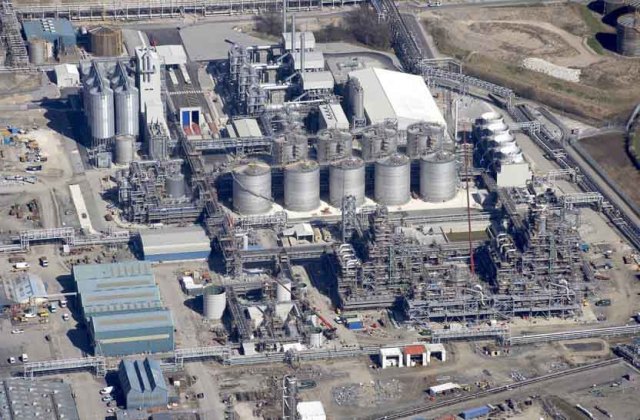
The £350 million Vivergo bioethanol plant in Hull (England) was officially opened this week by Vince Cable, Member of Parliament, Secretary of State for Business, Innovation and Skills. The new plant is the UK’s biggest bioethanol producer and largest single-source supplier of animal feed providing valuable commodities that the UK would usually import.
The Biobased Industries Consortium (BIC), a cross sector group of 48 large and small companies, has joined forces with the European Commission to set up an unprecedented Public Private Partnership worth 3.8 billion euros to accelerate the deployment of biobased products in Europe by 2020.
The Biobased Industries PPP is part of the European Commission’s Innovation and Investment Package that was released today in Brussels. The package is intended to stimulate the European economy, create jobs and tackle major societal challenges through research, innovation and deployment. Continue reading →
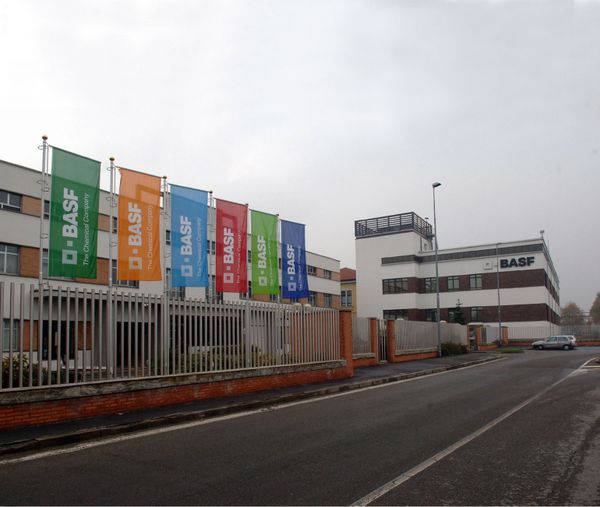
Italian Headquarter of Basf in Cesano Maderno (Milan)
Basf, Cargill and Novozymes have announced the achievement of an important milestone in their joint development of technologies to produce acrylic acid from renewable raw materials by successfully demonstrating the production of 3-hydroxypropionic acid (3-HP) in pilot scale.
3-HP is a renewable-based building block and one possible chemical precursor to acrylic acid. The companies also have successfully established several technologies to dehydrate 3-HP to acrylic acid at lab scale. This step in the process is critical since it is the foundation for production of acrylic acid. In August 2012, Basf, Cargill and Novozymes announced their joint agreement to develop a process for the conversion of renewable raw materials into a 100 percent bio-based acrylic acid.
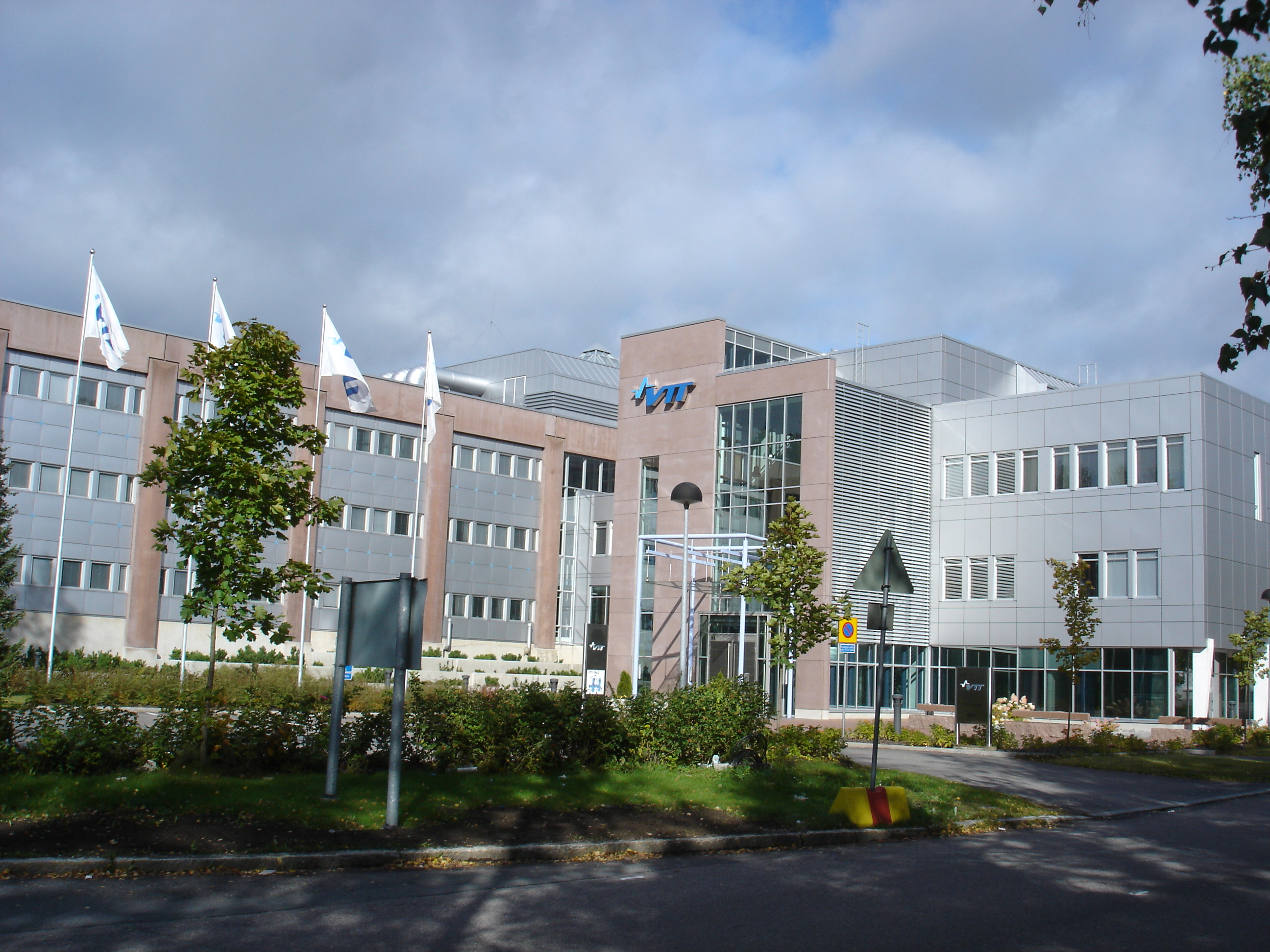
VTT Technical Research Center’s headquarter in Tampere
VTT Technical Research Center of Finland – the biggest multitechnological applied research organisation in Northern Europe, that provides high-end technology solutions and innovation services – has assessed the techno-economics of the production of renewable liquid transportation fuels from forest residues. The case studies focused on the production of four biofuels using a method based on pressurised fluidised-bed gasification. The fuels studied were methanol, dimethyl ether (DME), Fischer-Tropsch liquids and synthetic gasoline.
The European Environment Agency has published the Report “EU bioenergy from a resource efficiency perspective”. The report primarily looks at the potential for energy from agricultural land, although it includes forest and waste biomass in the overall analysis (Bioenergy refers to energy uses of any kind of biomass, whether for heating, power generation or transport).