
The U.S. Department of Agriculture (USDA) released a new report on the bioeconomy, “Indicators of the U.S. Biobased Economy”, which measures substantial economic growth, job creation, and household income for the agricultural sector from biofuel and bioenergy production. Moreover, it indicates great potential for additional prosperity from future growth in renewable chemicals and biobased products. BIO, the U.S. Biotechnology Innovation Organization, calculates that the global economic value of the biobased economy – including industrial biotechnology, renewable chemicals and polymers, biofuels, enzymes and biobased materials – is $355.28 billion.
 Around 700 high-ranking representatives from politics, science, civil society and the business sector and from more than 70 countries met in Berlin, Germany, from 19 to 20 April to discuss the latest developments and challenges in the global bioeconomy. This was the second time that German Bioeconomy Council had organized the Global Bioeconomy Summit in the German capital. “We created an event format in the Global Bioeconomy Summit that succeeds in bringing together broad international expertise on bioeconomy, innovation, biodiversity and sustainability.
 Bio-on launched a brand-new line of cosmetic ingredients for sun protection made from its 100% natural and biodegradable bioplastic. The new products are part of the minerv bio cosmetics family of bioplastic micro powders presented in Spring 2017 and designed for cosmetics that respect the environment and human health.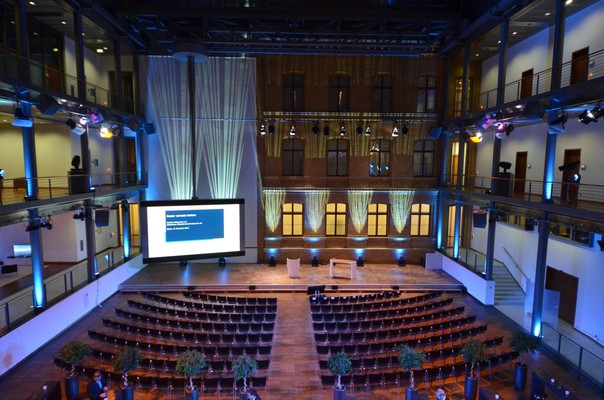

 With the Food is Precious initiative IKEA aims to cut food waste by 50% in all IKEA stores by August 2020. A little more than a year since the roll out of the initiative IKEA has diminished food waste that is equivalent to one million meals.To put that into a context; one million meals could feed one thousand people for a whole year.

 IL BIOECONOMISTA