Novamont’s bio-based butanediol (BDO) plant, established as a joint venture (Mater Biotech) with San Diego-based Genomatica, will come on stream next year. To say it was yesterday Alberto Castellanza, sales manager of the Italian company, at K 2013, the Trade Fair for Plastic materials and rubber, in Düsseldorf (Germany).
Cereplast’s plant in CaliforniaCereplast, a leading manufacturer of proprietary biobased, compostable and sustainable bioplastics, is advancing in the research and development stage in preparation to bring to the market a more sustainable and cost efficient process for the development of algae bioplastic resins. Continue reading →
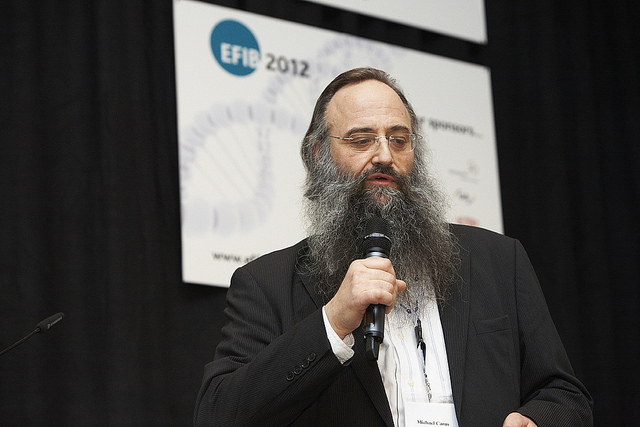
Michael Carus, managing director of the nova-Institut
“A comprehensive analysis of hurdles carried out by nova-Institut shows that the RED (which will in future be associated with the FQD – Fuel Quality Directive 9870 – in the transport sector) is one of the main causes of the longstanding and systematic discrimination between material and energy uses. The RED hinders the development of material use and therefore that of the whole bio-based economy. Unfavorable framework conditions combined with high biomass prices and uncertain biomass supplies deter investors from putting money into bio-based chemistry and plastics – even though these would produce higher value and greater resource efficiency”. To say it is Michael Carus, physicist and managing director of the nova-Institut, the German private and independent Scientific Institute specialized in the bioeconomy, one of the most prestigious at the European level. In this interview with Il Bioeconomista, Carus uses the phrase “Misallocation of biomass” to define the effects of the RED (Renewable Energy Directive), since “this is blocking higher value material uses like chemicals and plastics from coming to fruition”. And explains his point of view on the first generation vs. second generation biofuels issue.
It’s a revolution in the world of plastics: plastic coming from food waste. To achieve it is an Italian company in the province of Bologna: Bio-On. The owners of the company, set-up in 2007, are Marco Astorri and Guy Cicognani, former entrepreneurs in the field of electronic components for ski passes. Where is the link? Seeing those little cards abandoned in the valley, never decomposing, Astorri wondered if they could melt, like snow in the sun.
Robert Lewandowski, striker of Borussia Dortmund sponsored by Evonik
Another step in the bioeconomy for Evonik, the German company based in Essen, which is one of the world’s leading specialty chemicals companies, with sales of 13.6 billion euros and an operating result (adjusted EBITDA) of 2.6 billion in 2012. In early 2013, Evonik Industries began operating a pilot plant for ω-amino lauric acid (ALS) in Slovenska Lupca, Slovakia. The effort represents Evonik’s next step forward in the production of sustainable high-performance plastics.
David Newman, Secretary General of Assobioplastiche
Marine litter caused by plastic bags is threatening the oceans and causing already an ecological disaster . The European Commission is pushing for an ambitious resource efficiency agenda and is struggling to reduce landfills and enforce waste prevention across all Member States. Europe is a leader in the bioeconomy. What do all these facts have in common? More than we think. Italy demonstrated to the world that substituting traditional plastic bags with reusable and biodegradable and compostable ones can be, even at times of crisis, a solution to trigger separate collection rates, enhance waste prevention and unleash new investments in ground breaking technologies. We discussed the Italian case study and the recent reaction of UK against the Italian ban on plastic bags recently reported by several UK media with David Newman, Secretary General of Assobioplastiche, the Italian Bioplastic and Biodegradable and Compostable material Association.
Novamont, the Italian leading company in the development and production of materials and biochemicals, with a turnover of 135 million euros in 2012, has unveiled the first product made from 4th generation Mater-Bi®, the family of biodegradable and compostable bioplastics designed to go beyond the product itself and become an opportunity to develop circular bioeconomies. It also aims to stimulate reindustrialisation through the development of integrated Biorefineries. It’s what was announced by the company in a statement.
The Canadian Government, led by Stephen Harper, is enabling a company to commercialize a “green” bio-plastic, using innovative technology that was developed at the University of Guelph, Member of Parliament Dave Van Kesteren (Chatham-Kent-Essex) announced yesterday, on behalf of Agriculture Minister Gerry Ritz.
EuropaBio, The European Association for bio-industries, and Smithers Rapra unveil highly-anticipated agenda for the European Forum for Industrial Biotechnology (EFIB) from 1-2 October 2013 taking place in the heart of Brussels at SQUARE. Officially launched by Elio di Rupo, Prime Minister of Belgium, EFIB’s opening plenary brings together a host of keynote speakers including Rudolf Strohmeier, Deputy Director General R&I at the European Commission; Maria da Graça Carvalho, Rapporteur on Horizon 2020 in the European Parliament and CEOs of Ecover and Galactic. Followed by exciting partnership perspectives from the Plant PET Technology Collaborative and a session lead by Ian Hudson, President of DuPont EMEA, examining the triggers for big business to make the shift towards the biobased economy. All speakers set the scene for another outstanding year, and transform the event from conference to congress.
Cereplast, Inc., a leading manufacturer of proprietary biobased, compostable and sustainable bioplastics, has announced a new bioplastic resin grade Biopropylene(R) A150D, an injection molding grade manufactured with 51% post-industrial algae biomass.
The post-industrial algae grade is the first offering with 51% algae content and will be commercially available this quarter. Additionally, the biomass content dramatically reduces the carbon footprint of the final product while reducing the petroleum-based plastic content. Biopropylene A150D has low to no odor due to the discovery of a post-industrial process that significantly reduces the distinctive smell that is inherent to algae biomass.







 IL BIOECONOMISTA