The partnership project between Stora Enso, the International Union for Conservation of Nature (IUCN) and Newcastle University that was initiated in early 2024 to advance positive impacts on forest biodiversity has been completed. The aim of this collaboration was to create a framework for the forestry sector to reach a net positive biodiversity impact with active forest management by reducing threats to species and conserving and restoring ecosystems.
UPM Raflatac and WWF Poland have renewed their contract to build a smarter future beyond fossils together. During the new three-year contract period the collaboration will focus on enabling the development of circular economy and promoting privately protected areas, especially wetlands in Poland. The three-year contract will also involve UPM Raflatac’s internal and external stakeholders to increase engagement and support for these two important initiatives given the challenges we are facing today.
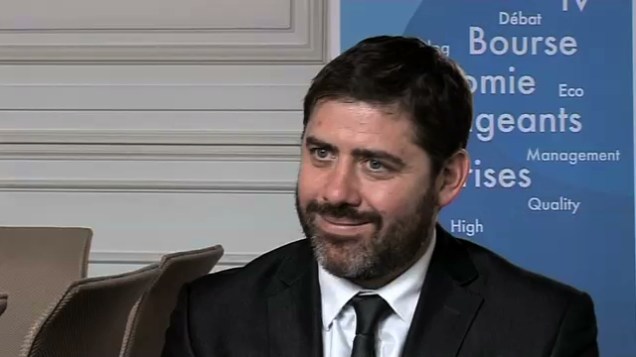
Marc Delcourt, co-founder and CEO of Global Bioenergies
Global Bioenergies, Preem, Sekab and Sveaskog yesterday announced having joined forces to develop a high-performance fuel entirely based on forest resources. The consortium has signed a collaboration agreement to carry out a conceptual scope study for a first plant in Sweden. This work will be carried out as part of the “Bio-Based Gasoline Project” with support from the Swedish Energy Agency.
“Building on a strong and competitive agricultural and forest sector as well as on its technological expertise, the strategy should fully engage France on the bioeconomy road and position the country as a global leader in this field”. Boris Dumange, Director General of IAR Pole (French Cluster Industries and Agro Resources), talks to Il Bioeconomista about the bioeconomy in France, where the government announced its own strategy by the end of this year, the role played by IAR Pole, the goals of the intercluster 3BI and the measures the European Union needs to be more competitive. “We believe – Dumange says – actions such as a European preferred public procurement programme or temporary tax incentives for bio-based products could help to bridge the gap between innovation and market uptake and allow sufficient economies of scale to make bio-based products a competing alternative to fossil-based equivalents.”


 IL BIOECONOMISTA