Braskem is to become a Green Plastic supplier for the Rio de Janeiro-based brand Café Favorito

Braskem is to become a Green Plastic supplier for the traditional Rio de Janeiro-based brand Café Favorito. The first polyethylene of renewable origin to be produced in the world, the resin will be applied in the 500 g coffee pillow packs.

“We produce over one million metric tons of coffee annually, sold mainly in the Lagos and Serrana regions and in the south of the state of Rio de Janeiro. The use of Green Plastic in our packaging reinforces our effort in the search for sustainable performance,” explained Adriana de Oliveira, Chief Commercial Officer of Café Favorito.

Continue reading

An interview with Marcel Lubben, Reverdia. “The bioeconomy is a long-term commitment”

Marcel Lubben

“We expect full support for the bioeconomy in close connection with the circular economy. Together they can tackle two very pressing societal issues i.e. climate change (through lowering carbon footprint) and the plastic waste problem (through collection, reuse and recycling)”. Marcel Lubben, President of Reverdia, the JV between Royal DSM and Roquette which is producing bio-based succinic acid, talks to Il Bioeconomista. In this exclusive interview he talks about Reverdia and his expectations related to the new EU bioeconomy strategy that will be presented next October 22 in Brussels.

Interview by Mario Bonaccorso

Continue reading

Eni and AMA to launch collection points for waste cooking oil in Rome

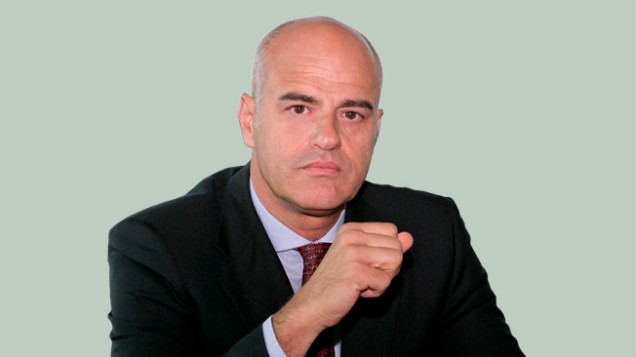
Claudio Descalzi, CEO of Eni

Eni and AMA, a public company of Roma Capitale, signed an agreement to launch collection points for waste cooking oil produced in the homes of its employees at Eni’s Rome offices in Piazzale Mattei and Via Ribotta, which will then be converted into high quality biofuels.

Continue reading

Jennifer Holmgren: the gentle woman who is making a carbon smart future possible

Jennifer Holmgren at IFIB 2018 in Turin, Italy

She fascinated everyone with her key note speech last Thursday in Turin (Italy) at the International Forum on Industrial Biotechnology and Bioeconomy (IFIB). Presenting the results achieved by her company, LanzaTech, she has clearly paved the way for a carbon smart future. Because climate change is happening right now and is producing very evident catastrophic effects on the whole planet. Jennifer Holmgren is the classic example of a leader driven by a gentle force able to realize the changes that the historians of the French Annales would have call structural.

Continue reading

IFIB in Turin: the bioeconomy is cool. More than Cristiano Ronaldo

More than 300 delegates from EU, USA, Indonesia, Australia, Latin America and Canada. High relevant speakers such as Jennifer Holmgren, Ceo LanzaTech, Tony Duncan, CEO Circa Group, Philippe Mengal, Executive Director at BBI JU, Mieke De Schoenmakere at European Environment Agency, Elisabetta Balzi at European Commission, and many others.  Two round tables focused on Investments and the role of clusters in the bioeconomy. This is IFIB, the International Forum on Industrial Biotechnology and Bioeconomy, which opens today in Turin at the Congress Center of Cavallerizza Reale (University of Turin).
Continue reading

Clariant started construction of the first large-scale commercial sunliquid plant in Romania

Courtesy of Clariant

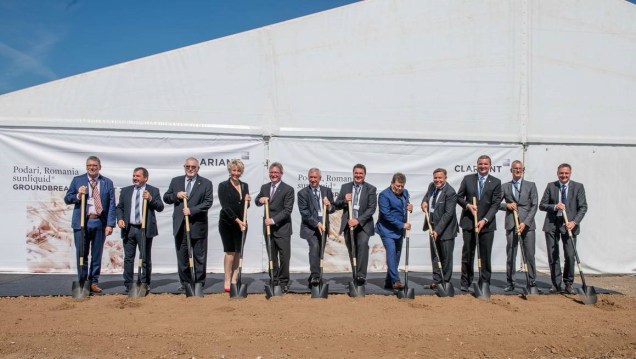
Clariant, a world leader in specialty chemicals, officially started construction of the first large-scale commercial sunliquid plant for the production of cellulosic ethanol made from agricultural residues. At the flagship facility, the sunliquid technology developed by the company is being used on an industrial scale for the first time. The occasion was marked with a traditional groundbreaking ceremony in Podari near Craiova in southwestern Romania, which was attended by official representatives of the Romanian government, the Swiss Ambassador Urs Herren, and a Clariant representation headed by Christian Kohlpaintner, Member of the Executive Committee.

Continue reading

Enerkem has successfully produced a clean, renewable bio-dimethyl ether

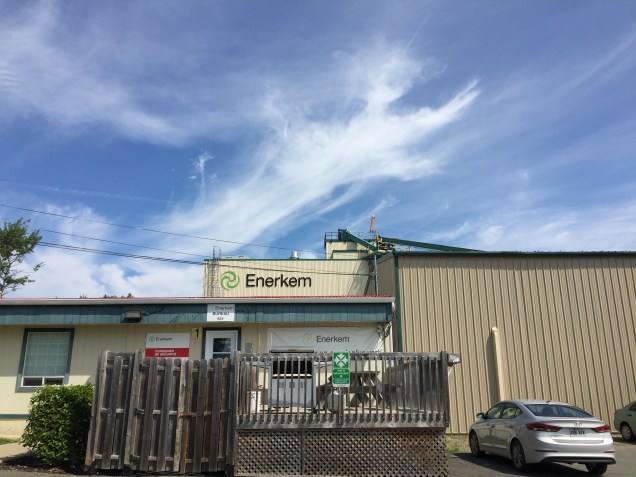
Enerkem Inc., a world-leading waste-to-biofuels and chemicals producer headquartered in Canada, has successfully produced a clean, renewable bio-dimethyl ether (Bio-DME), a by-product of biomethanol, that could help address global climate change efficiently by replacing the use of diesel fuel in the transportation sector.

Continue reading

The Philadelphia Eagles go green with Braskem

A quarterback in action

Braskem, the world’s leading biopolymer producer and the largest polypropylene producer in the Americas, will join the Philadelphia Eagles as a partner in recycling. Braskem enters into a nine-year sustainability-focused partnership with the Eagles,  a professional American football franchise based in Philadelphia (Pennsylvania), building on the team’s long-standing commitment to environmental and community development programs.

Continue reading

An interview with Markus Mannström, Executive VP, Stora Enso Biomaterials Division. “Anything made from fossil-based materials today can be made from a tree tomorrow”

Markus Mannström. Courtesy of Stora Enso

“At Stora Enso, we believe that anything made from fossil-based materials today can be made from a tree tomorrow. Our work in the Biomaterials division strives to make this a reality as soon as possible”. To say it – in this exclusive interview with Il Bioeconomista – is Markus Mannström, Executive VP at Stora Enso Biomaterials Division. The Nordic company is one of the main players of the bioeconomy at global bioeconomy. With Markus Mannström we talk about what Stora Enso is doing in the field, the role of pulp and paper industry and his expectations related to the announced new EU bioeconomy strategy.

Interview by Mario Bonaccorso

Continue reading

The circular economy and the bioeconomy. Partners in sustainability. New report by EEA


The European Environment Agency (EEA) has published its report on the circular economy and the bioeconomy. The circular economy and the bioeconomy — Partners in sustainability shows that the two policy agendas have similar objectives and areas of intervention, including food waste, biomass and bio-based products, and that they would benefit from stronger links, particularly in product and infrastructure design, and collaboration throughout the value chain.

Continue reading